
What Not to Pack on a Moving Truck: The Essential 2026 Non-Allowables Guide
That half-empty bottle of pool cleaner or your favorite collection of aerosol sprays could be the single reason your moving day comes to a grinding halt. You've likely spent weeks organizing boxes, yet the fear that a professional mover might reject your items at the last minute is a valid source of anxiety. It's often confusing to realize that everyday household staples are classified as hazardous materials under federal safety regulations. Mastering the list of what not to pack on a moving truck isn't just about following rules; it's a proactive strategy to protect your entire life's inventory during transit.
We understand that a long-distance move is a complex operation that requires precision and care. You deserve a transition that's both safe and legally compliant, free from the stress of unexpected delays. This guide delivers a definitive list of prohibited items for 2026, including hazardous chemicals and perishable goods. You'll also discover professional safety protocols for handling high-value assets and find reliable alternative transport solutions for the items that can't go in the van. Let's ensure your journey to a new beginning is seamless and secure.
Key Takeaways
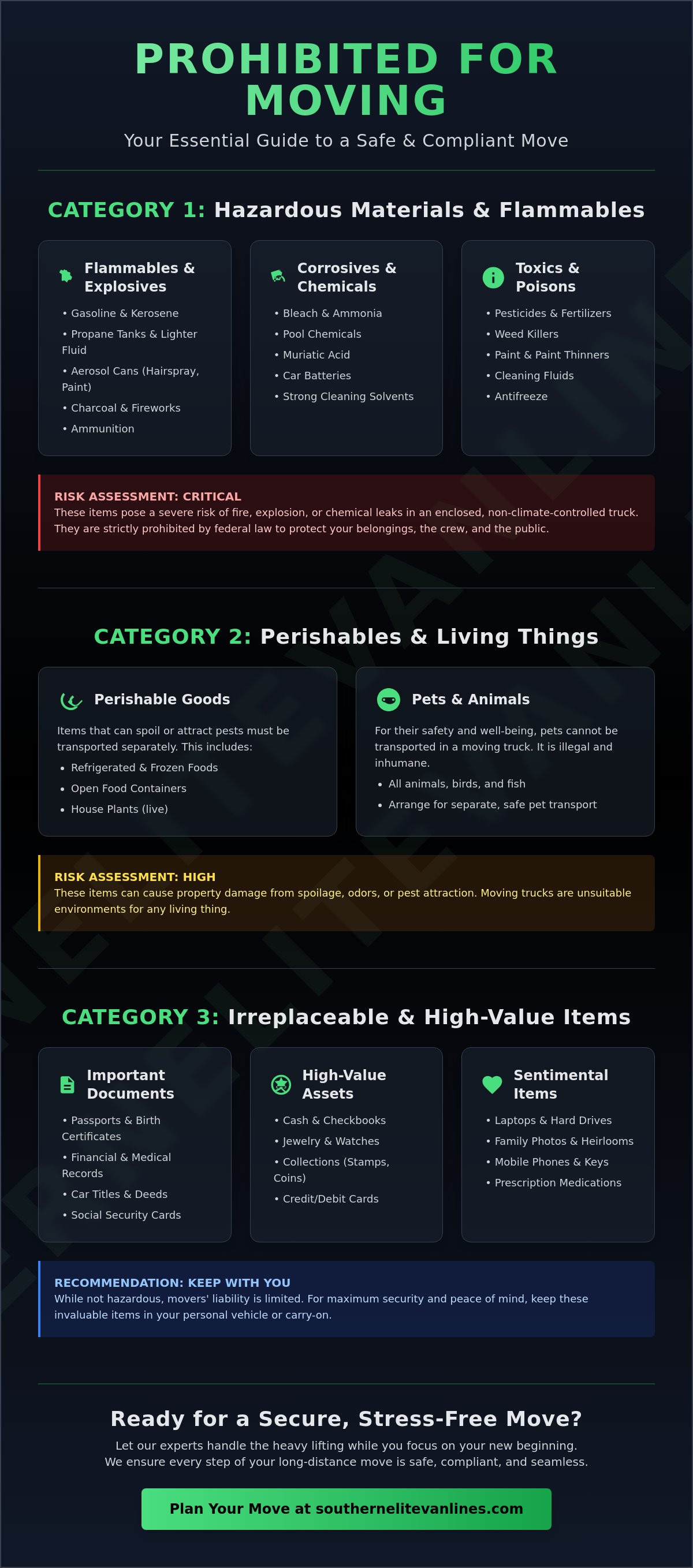
Identify common household flammables and corrosive items that federal regulations prohibit to ensure the safety of your entire shipment.
Learn why perishable goods and living things are restricted to prevent property damage from spoilage, odors, or pest attraction.
Discover which high-value documents and sentimental assets should remain in your personal possession for maximum security.
Master the comprehensive 2026 list of what not to pack on a moving truck to avoid last-minute rejections and moving-day stress.
Understand how professional packing services help you accurately sort inventory and maintain compliance with industry safety standards.
Table of Contents
Understanding 'Non-Allowables': Why Movers Have Strict Restrictions
Moving is more than just a logistical shift; it's a process governed by safety and legal compliance. Professional movers use the term "non-allowables" to categorize items that are strictly prohibited from being transported on a commercial vehicle. These restrictions aren't arbitrary rules designed to make your move more difficult. Instead, they serve as a vital safety framework. The U.S. Department of Transportation (DOT) sets rigorous standards for the transportation of hazardous materials to prevent accidents on public highways. Defining "non-allowables" serves as the industry standard for risk mitigation.
When you understand Understanding 'Non-Allowables', you see that these items fall into categories that pose a threat to the truck, the crew, and your other belongings. For instance, common household chemicals can react under the pressure and heat of a long-haul journey. By learning exactly what not to pack on a moving truck, you take the first step toward a secure relocation. This knowledge prevents the frustration of having items rejected on moving day and keeps your entire inventory protected from preventable damage.
The Legal Framework of Long-Distance Moving
The Bill of Lading is the official contract between you and your moving company. It outlines every aspect of the service, but it also contains critical exclusions regarding liability. If you pack prohibited items, you effectively void your valuation coverage or insurance. Federal law is clear about the transportation of hazardous materials; movers face steep fines and legal penalties for carrying unauthorized goods. If an incident occurs involving a non-allowable item you packed, the financial and legal responsibility often shifts directly to you as the homeowner. Adhering to these regulations isn't just about safety; it's about maintaining the integrity of your legal protections throughout the move.
Protecting Your Inventory and the Moving Crew
Safety risks extend far beyond legal paperwork. A single leaking bottle of bleach or a poorly sealed container of engine oil can ruin an entire truckload of furniture and family heirlooms. Cross-contamination is a primary concern in a tightly packed trailer. Consider these physical risks:
Chemical Leaks: Corrosive liquids can eat through cardboard boxes and stain upholstery or wood finishes.
Combustion: Trailers aren't typically climate-controlled. Internal temperatures can rise significantly during a cross-country haul, creating a risk of explosion for aerosol cans or propane tanks.
Fume Accumulation: In an enclosed space, even small leaks can create toxic environments for the crew during unloading.
Southern Elite Van Lines prioritizes your peace of mind by maintaining strict safety protocols. Our team focuses on providing an uninterrupted experience, which begins with a shared understanding of safety. By excluding high-risk items, we protect your belongings, our professional crew, and the public. This proactive approach ensures your journey remains on schedule and your assets arrive in the same condition they left.
Hazardous Materials and Flammables: The Safety Deal-Breakers
Safety on the road begins in your garage and under your kitchen sink. When you're determining what not to pack on a moving truck, flammables and explosives sit at the top of the list. These aren't just industrial chemicals; they include common household items like gasoline, kerosene, lighter fluid, and even charcoal. If a trailer's internal temperature spikes during a summer relocation, these substances can ignite, leading to a catastrophic loss of your property. Corrosive items like pool chemicals, muriatic acid, and strong pesticides pose similar risks, as they can cause chemical fires or emit toxic fumes if a container cracks or leaks during transit.
Many homeowners overlook "hidden hazards" that seem harmless in a kitchen cabinet but become dangerous in a moving van. Items like nail polish remover, hairspray, and spray paint are high-risk aerosols that can explode under pressure. Fertilizers are another frequent culprit, as certain nitrogen-based compounds are highly reactive when confined. Understanding Why Movers Have Strict Restrictions is essential for every family planning a long-distance relocation. Before your moving day, contact your local waste management facility to locate a hazardous waste drop-off point. This ensures you dispose of these items responsibly rather than leaving them behind or risking a safety violation on the truck.
Modern Battery Risks: Lithium-Ion and Beyond
The 2026 moving landscape includes new challenges, specifically large lithium-ion batteries found in e-bikes, electric scooters, and portable power stations. These high-capacity batteries are prone to thermal runaway, a condition where a battery enters an uncontrollable, self-heating state that's nearly impossible to extinguish in a standard trailer. Because of this extreme risk, professional carriers often restrict these items from long-haul trailers. While small electronics like laptops or tablets are generally safe when packed in your personal vehicle, large-scale battery systems require specialized transport. If you're unsure about a specific device, our full packing services team can help you identify high-risk electronics during your initial inventory walkthrough.
Hobby and Maintenance Equipment
Outdoor equipment and specialized hobbies introduce unique "non-allowables" that require advance planning. Scuba tanks, propane cylinders, and ammunition are strictly prohibited due to pressure and explosive risks. For your lawnmower, leaf blower, or weed trimmer, you must drain all fuel and oil completely before loading. Professional long distant movers require all tanks to be purged and, in some cases, certified as empty by a professional technician. Taking these steps ensures that your move remains on schedule and your belongings stay protected from the risks associated with what not to pack on a moving truck.
Perishables and Living Things: Protecting Health and Home
While flammables and batteries pose immediate physical threats, organic items introduce biological risks to your shipment. Perishable goods are a major category of what not to pack on a moving truck because they inevitably decay in a non-climate-controlled environment. This decay leads to foul odors, mold growth, and the attraction of pests like rodents or insects. Once an infestation starts in a single box of food, it can quickly spread to your mattresses, upholstered furniture, and clothing, causing irreversible damage to your most valuable possessions.
Movers also enforce a strict "Open Box" rule for dried goods. Even items like cereal, flour, or rice that seem shelf-stable are prohibited if the original factory seal is broken. These open containers are highly susceptible to spilling and attracting vermin during the vibrations of a long-haul journey. Beyond food, living things like indoor and outdoor plants are often restricted due to state-specific agricultural quarantines designed to prevent the spread of invasive species. Pets, of course, must never be placed in a moving van; they require the safety and climate control of your personal vehicle or a specialized pet relocation service.
The Long-Distance Factor: Time and Temperature
A typical 5-day cross-country trip exposes your belongings to extreme environmental shifts. Inside a steel trailer, temperatures can soar well above the outside ambient air, causing canned goods to swell and glass jars of preserves to burst. These failures create a sticky, acidic mess that ruins surrounding boxes. Temperature fluctuations can turn a "pantry box" into a biohazard. This risk is why professional carriers prioritize the integrity of the entire load by excluding any item that can rot or ferment during the journey.
What to Do with Your Fridge and Pantry
Managing your kitchen inventory requires a strategic approach starting at least three weeks before moving day. Implement an "Eat-Down" strategy where you plan meals specifically to finish open frozen goods and refrigerated items. For unopened, non-perishable cans and boxes you choose not to take, consider donating them to a local food bank. This move-out phase is the perfect time to evaluate What to Keep With You and what to let go for a fresh start in your new home.
Preparation of your appliances is equally vital. After you've emptied your refrigerator and freezer, you must deep clean every surface and allow the units to dry completely for at least 24 to 48 hours. Leaving even a small amount of moisture inside a sealed appliance for a week-long trip results in heavy mold and mildew growth. By taking these proactive steps, you protect your health and ensure your appliances arrive ready for immediate use.
Irreplaceable and High-Value Items: What to Keep With You
Security during a long-distance relocation involves more than just physical safety; it's about protecting the items that money cannot replace. While professional movers are experts at handling heavy furniture and household goods, certain assets should never leave your sight. When considering what not to pack on a moving truck, prioritize items with high sentimental or legal value. This includes vital records like birth certificates, property deeds, passports, and social security cards. Losing these documents creates a significant administrative burden that no insurance policy can truly resolve.
Physical valuables also require personal oversight. Jewelry, cash, and small family heirlooms are prime examples of items you should carry in your own vehicle. Similarly, your health depends on having immediate access to prescription medications and essential medical technology. If you rely on daily treatments or specialized medical devices, keeping them with you ensures your routine remains uninterrupted, regardless of the truck's arrival time. These items aren't just valuables; they are the foundational pieces of your daily life and legal identity.
The Personal Essentials Box
We recommend creating a "First-Night" kit that stays with you throughout the journey. This box should contain your most sensitive electronics and digital backups. External hard drives and laptops are particularly vulnerable to the extreme heat found in non-climate-controlled trailers. High temperatures can cause sensitive electronic components to warp or fail, leading to permanent data loss. By keeping these devices in the climate-controlled environment of your car, you mitigate the risk of technical failure and keep your private information secure.
Managing High-Value Inventory
For high-value items that are permitted on the truck, such as fine art or antique furniture, a formal declaration is necessary. You must list these items on a High-Value Inventory form to ensure they receive the appropriate level of valuation coverage. Our team provides meticulous care for these pieces, often utilizing specialized crating or double-padding techniques. You can learn more about our southern elite van lines standards for high-value care to understand how we protect your premium assets.
If you have questions about specific collectibles or fragile instruments, don't hesitate to ask for a professional assessment. Our full packing services are designed to provide the highest standard of protection for your property. We work as your strategic partner to identify which items belong in our expert hands and which items should stay in yours to ensure complete peace of mind.
Preparing for a Seamless Relocation with Southern Elite Van Lines
Relocating across the country requires a strategist who understands every nuance of the journey. At Southern Elite Van Lines, we don't just provide a vehicle; we offer a comprehensive safety framework that begins long before the first box is loaded. Our specialists work closely with you to identify exactly what not to pack on a moving truck, ensuring your inventory meets all federal safety standards. This collaborative approach eliminates the last-minute stress of rejected items and provides a clear, logical path to a successful move.
We prioritize transparent communication throughout the entire process. During your initial consultation, we provide a detailed overview of non-allowable items and discuss practical alternatives for the goods you must transport yourself. Our team maintains a standard of perfection that ensures every permitted item is accounted for and packed with meticulous care. By the time we perform our final walkthrough on moving day, you'll feel a sense of calm confidence knowing your shipment is fully compliant and ready for safe transit.
Expert Packing and Storage Solutions
Our full packing services remove the guesswork from your relocation. We utilize premium materials and industry-specific techniques to secure your belongings for the rigors of long-distance moving. For sensitive items that are permitted but require extra protection, we offer short-term and long-term storage solutions. These facilities maintain stable environments to protect wood finishes, delicate electronics, and high-quality fabrics from the effects of humidity and temperature shifts. This level of personalized assistance is a hallmark of our high-end service model.
Start Your Journey with Confidence
A successful move is built on a foundation of exactness and moral character. We invite you to leverage our expertise to transform a complex logistical task into an effortless, uninterrupted experience. By requesting a detailed inventory assessment, you gain a supportive partner committed to your satisfaction and peace of mind. Our strategists help you manage the transition with ease, ensuring every detail is handled with precision. Don't leave your most valuable assets to chance. Get your personalized long-distance moving quote today and begin your next chapter with the steady hand of an industry leader.
Secure Your Seamless Transition Today
Mastering the comprehensive list of what not to pack on a moving truck provides the clarity you need for a successful relocation. You now have the tools to identify hazardous household chemicals, manage perishable goods, and secure your most precious personal documents. This proactive preparation protects your inventory and ensures a safe journey across state lines. It's the final, essential step in transforming a complex task into a well-organized operation that prioritizes safety and legal compliance.
As nationwide long-distance specialists, Southern Elite Van Lines brings an A+ rated professional service to every client we serve. Our meticulous packing standards reflect our commitment to perfection and your total peace of mind. We stand ready to guide you through every logistical detail of your move with precision and care. Plan your effortless move with Southern Elite Van Lines to experience a higher standard of relocation. Your new beginning is just a step away, and we're honored to be your dependable partner on this journey toward a fresh start.
Frequently Asked Questions
Can I pack cleaning supplies if they are unopened and sealed?
No, most household cleaning supplies are prohibited regardless of their seal. Items like bleach, ammonia, and aerosol disinfectants are classified as corrosive or flammable materials. Even unopened bottles can leak under the pressure of a long-distance journey or react to the high temperatures found inside a trailer. It's best to use these supplies before you move or donate them to neighbors to ensure your shipment remains safe.
What happens if I accidentally pack a prohibited item on the moving truck?
Packing a prohibited item voids your valuation coverage and shifts legal liability directly to you. If our crew identifies a restricted item during the loading process, they will leave it behind for your personal transport or disposal. If an undisclosed item causes a leak or fire during transit, the homeowner is often held responsible for damages to the truck and other customers' belongings. Clear communication is the best way to avoid these risks.
Are indoor plants allowed on a long-distance moving truck?
Professional movers generally don't transport indoor plants on long-distance hauls because they are living things that cannot survive in a dark, non-ventilated trailer. Many states also enforce strict agricultural regulations to prevent the spread of invasive pests and diseases. To protect your greenery, it's safer to transport small plants in your personal vehicle or gift them to loved ones before you relocate to your new home.
How should I transport my ammunition and firearms during a move?
You must transport all ammunition and firearms personally because they are strictly prohibited on commercial moving trucks. Ammunition presents an explosive hazard, while firearms involve significant liability and security protocols. We recommend researching the specific transport and permit laws for every state you'll pass through during your journey. Always use a locked, secure case within your personal vehicle to ensure compliance with federal and state safety laws.
Can movers take wine or liquor collections?
Movers can often transport alcohol collections, but you must adhere to strict state-specific laws regarding the transport of spirits. Ensure every bottle is perfectly sealed and packed in specialized wine shippers to prevent breakage. However, standard trailers aren't climate-controlled, and extreme temperatures can ruin the quality of high-end vintages. For rare or extremely valuable collections, a specialized climate-controlled transport service is often the most reliable solution for your peace of mind.
Why are lithium-ion batteries considered hazardous for moving trucks?
Lithium-ion batteries found in e-bikes and large power stations are prone to thermal runaway, a condition that can lead to intense fires. These batteries are a primary focus when discussing what not to pack on a moving truck due to the extreme risk they pose in enclosed, unmonitored trailers. While small batteries inside laptops are generally permitted, large-scale battery systems require specialized shipping protocols to maintain road safety and protect the integrity of the entire load.
What is the best way to move my high-value jewelry collection?
The most secure way to move jewelry is to keep it in your personal possession at all times. Professional moving companies typically exclude jewelry and precious metals from standard liability coverage due to their high value and small size. Use a portable safe or a secure travel bag that stays with you in your car. This ensures your most valuable sentimental assets remain protected and within your immediate control throughout the entire transition.
Does Southern Elite Van Lines provide a specific checklist for my move?
Yes, we provide a comprehensive inventory guide and a detailed list of non-allowables during your initial consultation. This resource helps you identify exactly what not to pack on a moving truck well before our professional crew arrives at your door. Our goal is to ensure a seamless experience by providing clear, actionable information from the start. This meticulous planning is part of our commitment to an effortless and stress-free relocation for every client.


Comments