
How to Pack Clothes for a Long Distance Move: The Professional 2026 Guide
- nadineharoon
- 2 hours ago
- 13 min read
What if the most expensive mistake in your upcoming relocation isn't the moving truck itself, but the way you've folded your favorite suits and dresses? You've likely spent years building a wardrobe that reflects your personal style and professional image. The thought of opening a box in a new state only to find wrinkled silks or damaged leather is enough to cause any homeowner significant stress. Learning how to pack clothes for a long distance move is about more than just filling boxes. It's a strategic operation designed to protect your investment and save you hours of frustration during the unpacking process.
We understand that a move across the country is a complex journey that requires a steady, expert hand. You want to avoid exceeding weight limits on your moving quote while ensuring you don't lose track of your daily essentials during that first week in a new home. This professional 2026 guide provides a clear, logical progression to master garment preservation and organizational efficiency. We will walk you through expert-led strategies for sorting, protecting high-end fabrics, and utilizing specialized supplies to make your transition feel effortless and secure.
Table of Contents
Strategic Preparation: The Wardrobe Purge and Inventory Phase
Efficiency begins long before the first strip of tape hits a box. When you are determining how to pack clothes for a long distance move, you must first address the sheer volume of your wardrobe. Unlike local moves where space is the primary constraint, long-distance relocations are heavily influenced by weight. Most professional moving services calculate interstate fees based on the total poundage of your shipment. Carrying an entire closet of unworn items across state lines is an expensive logistical error that complicates your transition.
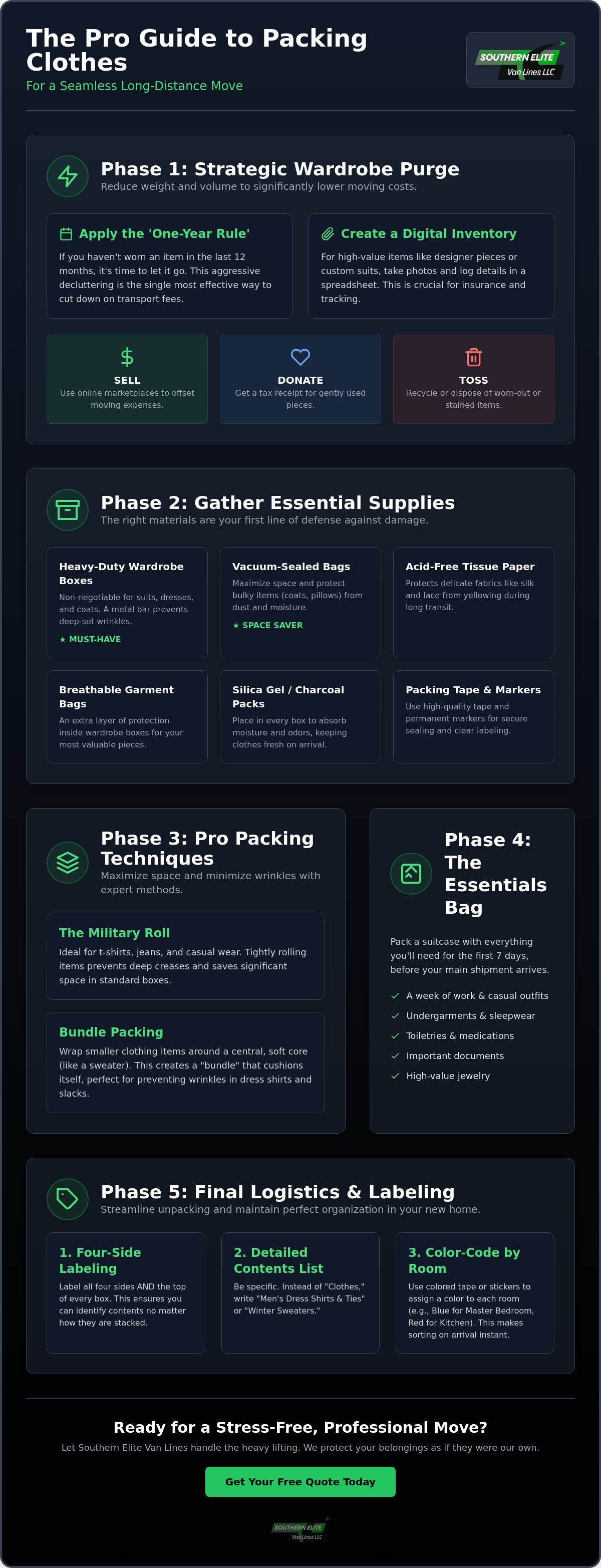
We recommend the 'One-Year Rule' as your primary filter for a successful purge. If a garment hasn't been worn in the last twelve months, it shouldn't occupy space in your moving truck. This aggressive decluttering ensures you are only paying to transport items that add value to your new life. For high-value pieces like designer gowns or custom suits, create a digital inventory. Take clear photos and log the brand, material, and condition in a secure spreadsheet. This provides a vital record for insurance purposes and helps you track your most prized possessions throughout the journey.
The Financial Impact of a Leaner Wardrobe
Reducing your clothing volume directly lowers your bottom line. Use a strict 'Sell, Donate, Toss' framework to process every drawer in your home. Items that are worn out or stained should be tossed or recycled immediately. Gently used pieces can be donated for a tax receipt or sold through online marketplaces to help offset moving expenses. It's often more cost-effective to donate bulky, low-value items like basic t-shirts or old gym gear and replace them at your destination rather than paying per-pound transport rates over 1,000 miles.
Sorting for a Staged Unpacking Process
Organize your remaining wardrobe by its relevance to your new climate and lifestyle. If you are moving from a snowy region to the Sun Belt, your heavy parkas should be categorized as long-term storage. Separate your professional attire from casual wear to ensure you are ready for work on Monday morning, even if the rest of your boxes remain stacked in the garage. Knowing how to pack clothes for a long distance move requires you to use three distinct priority levels for labeling:
Immediate: Essentials for the first week, including undergarments and sleepwear.
Secondary: Daily wear, professional clothing, and frequently used shoes.
Long-term: Out-of-season items, formal wear, and specialized athletic gear.
This methodical sorting ensures your move remains a well-planned operation. By categorizing garments by material sensitivity and frequency of use now, you prevent the stress of a chaotic search later. Your goal is a seamless arrival where every essential item is exactly where it needs to be.
Essential Supplies for Long-Haul Garment Protection
Long-distance transit exposes your wardrobe to environmental stressors that local moves simply don't encounter. When you're learning how to pack clothes for a long distance move, your choice of materials is the first line of defense against humidity, shifting loads, and the dreaded trailer smell that can permeate fabrics during multi-day hauls. High-quality supplies transform a risky transition into a well-managed operation.
Heavy-duty wardrobe boxes are non-negotiable for any high-end wardrobe. These double-walled containers provide the structural integrity needed to withstand the constant pressure of a stacked trailer over thousands of miles. They feature a sturdy metal bar that allows you to hang garments directly from your closet, preventing the deep creases that occur when clothes are folded for long periods. For items like linens, pillows, and heavy winter coats, vacuum-sealed bags are essential tools. They maximize space while creating a hermetic seal against dust, pests, and ambient moisture. This level of preparation is the hallmark of a professional-grade relocation.
Protect delicate silks and lace by layering them with acid-free tissue paper before placing them in breathable garment bags. Standard tissue paper contains acids that can yellow fabrics over time, especially during a multi-day move. To combat potential moisture during transit across varying climates, include silica gel packets or charcoal odor absorbers in every box. This small investment prevents mildew and ensures your clothes arrive smelling as fresh as they did when they left. Mastering how to pack clothes for a long distance move requires this meticulous attention to detail.
Choosing the Right Box for the Right Fabric
Select small cartons for heavy items like denim, leather jackets, and boots. Over-packing large boxes with heavy textiles leads to box failure and potential injury during the loading process. Medium boxes serve as the versatile workhorse for sweaters and casual wear. While plastic bins seem convenient, we often discourage them for long-distance trailer stacking. Plastic becomes brittle during temperature fluctuations and can crack under the weight of a professional load, potentially damaging the contents inside.
Specialty Tools for High-End Wardrobes
Utilize wardrobe bars to facilitate a seamless closet-to-closet transition. These bars allow you to move hanging items directly into the box without removing the hangers, saving hours of labor. Secure every seam with high-quality packing tape designed for temperature fluctuations. Standard tape often loses its grip during the heat of a cross-country trip. If your mover allows it, use stretch wrap to secure dresser drawers. This keeps clothes in place without the need to empty every piece of furniture. If the logistical complexity of gathering these supplies feels overwhelming, our full packing services offer a turn-key solution that utilizes professional-grade materials for every garment.
Advanced Packing Techniques for Maximum Space and Safety
Mastering the physics of a moving box is just as critical as choosing the right supplies. When you understand how to pack clothes for a long distance move, you treat your wardrobe like a high-stakes puzzle where every piece must be secured against the constant vibrations of an interstate journey. Casual items like t-shirts, jeans, and synthetic athletic gear benefit most from the Military Roll, also known as Ranger Rolling. This technique creates high-density cylinders that maximize every square inch of your carton while significantly reducing the likelihood of deep wrinkles. It transforms a messy pile of cotton into a structured, space-efficient layer.
Formal wear requires a more sophisticated approach. While many online forums suggest rolling everything, professional strategists know that suits, dresses, and delicate blazers demand Bundle Packing. This method involves wrapping garments around a soft central core to eliminate the sharp folds that cause permanent fabric stress. Because your boxes may remain packed for weeks during a cross-country transition, the tension-based protection of a bundle is far superior to standard folding. It ensures that your professional attire arrives ready for immediate use without a trip to the dry cleaners.
Structural integrity within the box is your final defense against shifting loads. Always place heavy, durable items like denim or winter coats at the bottom to create a stable foundation. Layer lighter, more delicate items on top. Fill any remaining 'dead space' with small rolled items like scarves or clean socks. A box that rattles is a box at risk; a properly packed container should feel like a single, solid unit that resists compression from other items in the trailer.
The Art of the Bundle Wrap
To execute a successful bundle, start with a flat surface and a central 'core' made of soft items like pajamas or undergarments. Lay your most structured garment, such as a suit jacket, flat and place the core in the center. Carefully wrap the sleeves and body around the core, layering additional garments like trousers or skirts over the initial piece. Use acid-free tissue paper between layers to prevent friction. This creates a cushioned 'pillow' of clothing that maintains its shape regardless of how the box is oriented in the truck.
Packing Shoes and Accessories for the Long Haul
Shoes carry dirt and oils that can easily ruin fine fabrics during a multi-day move. Wrap each shoe individually in packing paper or dedicated cloth bags before placing them in a box. You can utilize the interior of your shoes to store small accessories like belts or rolled ties, which helps the shoe maintain its form under pressure. For jewelry, prevent frustrating tangles by threading necklaces through drinking straws or securing earrings through the holes of large buttons. These small, exact steps provide the peace of mind that defines a premium moving experience.
Managing the Transition: The Essentials Bag and High-Value Items
The gap between your departure and the arrival of your household goods is often the most stressful part of an interstate relocation. When you master how to pack clothes for a long distance move, you must account for the multi-day transit times required for professional drivers to navigate across state lines safely. This requires a strategic 'First 7 Days' suitcase. This bag serves as your mobile wardrobe; it ensures you remain polished and functional while your primary shipment is in transit.
High-value items require a different level of care. Jewelry, family heirlooms, and irreplaceable sentimental garments should never be placed in a moving trailer. These items belong in your personal vehicle or carry-on luggage. Keep your designer appraisals and receipts in a secure folder within this bag. This documentation is vital for insurance purposes and provides an exact record of your investment during the transition. If you have questions about securing your most valuable assets, our long distance moving experts can provide personalized guidance on high-value inventory protocols.
Consider the potential climate shift during your journey. If you are moving from a temperate coastal city to a humid Southern state, your travel wardrobe must adapt to the destination. Layering is the most effective way to manage these transitions without the need to open sealed boxes. This approach maintains your comfort and your professional image from the moment you leave your old home until the final box is unpacked.
Building Your Long-Distance Survival Kit
Your survival kit should include enough undergarments, casual wear, and sleepwear for a full week. If you have immediate work commitments or interviews, include at least two professional outfits. Store these in a high-quality garment bag to prevent wrinkles. Don't forget travel-sized laundry supplies; a quick wash at a hotel or your new home can extend the life of your essentials bag during unexpected delivery delays. This proactive step ensures you aren't forced into emergency shopping trips during your first week.
Protecting Luxury and Sentimental Garments
For ultra-premium items like bespoke suits or vintage furs, standard boxes may not suffice. Specialized crating or climate-controlled storage is often necessary to prevent fabric degradation during long-haul transit. Under 2026 valuation standards, a 'High-Value Inventory' includes any single garment or accessory valued at more than $100 per pound, requiring specific declaration on your bill of lading to ensure full replacement coverage. This level of exactness protects your financial interest and provides peace of mind throughout the journey.
Final Logistics: Labeling and Professional Support
The final phase of a successful relocation involves precision in labeling and a clear understanding of when to leverage expert assistance. When you determine how to pack clothes for a long distance move, you must look ahead to the unloading day. Use the 'Four-Side' labeling method. Write the contents and destination room on every vertical side of the box. In a tightly packed trailer, top labels are often obscured. This simple step ensures that your wardrobe is identifiable regardless of how it is stacked within the vehicle.
Color-coding offers another layer of organizational efficiency. Assign a specific color to each family member or room. A quick glance at a colored sticker or marker stroke allows your moving team to move with speed and accuracy. This prevents the common frustration of searching through dozens of identical boxes for a single pair of shoes or a specific uniform during your first night in the new home. It turns a chaotic unloading process into a well-managed operation.
Strategic Labeling for a Faster Unpack
Go beyond generic descriptions like 'Clothes'. Label every container by its season and priority level, referencing the categories established during your initial inventory phase. Many homeowners now utilize QR codes or inventory apps to link physical boxes to digital lists. This is a critical tool for long distant movers during the unloading phase. It provides an immediate, transparent record of every item's location. Digital tracking ensures that your high-value garments are accounted for at every checkpoint of the journey.
When to Hire Professional Packers
Evaluating the cost-benefit of professional labor is essential for large estates or complex wardrobes. The time required to pack an entire household's worth of garments is significant. Professional labor provides an added layer of security through professional-grade materials and comprehensive liability coverage that DIY efforts lack. Southern Elite Van Lines simplifies the process with full-service packing options that eliminate the physical and mental burden of the move. Our premium nationwide relocation services handle specialty wardrobes, including furs and bespoke suits, with the meticulous care required for long-distance transit.
Before the truck departs, conduct a final walkthrough of your residence. Check the very back of walk-in closets and the highest shelves in your storage areas. These are the most common locations for forgotten items. Once you are confident the space is clear, you can begin your journey with the peace of mind that comes from a perfectly executed plan. Your transition to a new home should be a shared journey defined by clarity, security, and a fresh beginning.
Secure Your Wardrobe for the Journey Ahead
Your wardrobe represents a significant personal investment that deserves meticulous care during a relocation. By applying the 'One-Year Rule' for purging and mastering professional techniques like bundle packing, you ensure your garments arrive in pristine condition. Understanding how to pack clothes for a long distance move allows you to transition into your new home with organizational efficiency and complete peace of mind. Every well-labeled box and carefully rolled shirt brings you one step closer to a successful arrival in your new state.
While these strategies empower you to manage the process, large estates often benefit from a steady, expert hand. We provide specialized high-value item handling and climate-controlled storage solutions to protect your most sensitive fabrics throughout the journey. Our team utilizes premium materials and full-service packing to deliver an effortless experience from start to finish. Request a Free Professional Packing and Moving Estimate to secure your collection today. Your new beginning should be defined by excitement; we're here to ensure your transition is seamless and secure.
Frequently Asked Questions
Should I wash all my clothes before a long-distance move?
Yes, you should ensure all garments are clean and completely dry before packing. Moisture trapped in fabric can lead to mildew during multi-day transit across varying climates. Clean clothes also prevent the transfer of oils or odors to other items in the box. This simple step protects your wardrobe's integrity throughout the journey. For those starting their relocation in the Los Angeles area, utilizing a service like Laundry Breeze ensures your clothes are expertly cleaned and dried before being sealed away. It's a small task that yields significant peace of mind when you finally open your boxes in your new home.
Is it better to leave clothes in dresser drawers or pack them in boxes?
It's generally safer to pack clothes in boxes rather than leaving them in dresser drawers. While some movers allow lightweight items to remain, heavy clothing can strain the furniture's joints during transit. Removing items also makes the dresser lighter and easier for professionals to maneuver safely. Packing your wardrobe into sturdy boxes provides superior protection against dust and shifting loads over long distances, ensuring your furniture and clothing arrive undamaged.
How do I prevent my clothes from smelling musty in a moving truck for a week?
Place moisture absorbers and odor neutralizers inside every container to maintain a fresh scent. Silica gel packets or activated charcoal bags effectively manage humidity and prevent that common trailer smell. Additionally, ensuring every item is bone-dry before sealing the box is the most effective way to maintain freshness. This is a key part of learning how to pack clothes for a long distance move successfully and feeling settled immediately upon arrival.
What is a wardrobe box and is it worth the extra cost?
A wardrobe box is a tall, double-walled container equipped with a metal hanging bar for closet-to-closet transitions. It is absolutely worth the investment for high-end garments, suits, and dresses. These boxes allow you to move items directly from your closet without the need for folding. This eliminates deep wrinkles and saves you significant time on both ends of your relocation, making it a staple of any professional-grade move.
How many boxes of clothes does the average person have for a move?
The average person typically requires between seven and ten medium-sized boxes for their clothing. This estimate depends on your wardrobe's density and how many seasonal items you own. If you use wardrobe boxes, plan for two or three for every three feet of closet rod space. Aggressive purging before you begin, as we discussed in the preparation phase, will help you stay within these professional estimates and lower your costs.
Can I use trash bags to move my clothes long distance?
Trash bags are not recommended for long-distance relocations because they lack structural integrity and tear easily. They cannot be stacked in a trailer, which leads to wasted space and potential damage to your fabrics from shifting loads. When you're planning how to pack clothes for a long distance move, use heavy-duty boxes or vacuum bags instead. These professional supplies provide the security your wardrobe requires for a cross-country trip.
How do I pack delicate or expensive designer clothing for a cross-country move?
Protect delicate or expensive designer pieces by using the bundle packing method and acid-free tissue paper. Wrap each garment around a soft core to eliminate sharp creases and fabric stress. Place these bundles inside heavy-duty wardrobe boxes to ensure they aren't crushed by other items in the trailer. This high-level care preserves the value and condition of your most prized professional and formal attire during the thousands of miles of transit.
What should I do with hangers when packing for a move?
Leave your clothes on their hangers if you're using wardrobe boxes to save time and maintain organization. For items going into standard cartons, remove the hangers and bundle them together with rubber bands or zip ties. This prevents the hangers from tangling or breaking during the journey. Storing them separately in a small box keeps your packing process methodical and efficient, allowing for a much faster setup in your new closet.