
Expert Tips for Moving During the Winter: A 2026 Long-Distance Guide
- nadineharoon
- 3 hours ago
- 11 min read
While most people avoid a long-distance relocation when the mercury drops, the smartest move you can make in 2026 might actually be scheduled for January. It's understandable if you feel a sense of hesitation. You're likely concerned about icy road conditions, transit delays, or the risk of fragile items cracking in the deep freeze. These are valid anxieties, but with a strategic approach, a winter move becomes a highly efficient operation rather than a logistical hurdle. By utilizing professional moving during the winter tips, you can capitalize on off-season availability while ensuring your household goods remain perfectly protected throughout the journey.
We understand that your peace of mind depends on a damage-free move and a predictable timeline. This guide provides a clear, professional plan for mastering cold-weather logistics, from specialized packing techniques for temperature-sensitive inventory to protecting your home from salt and slush. We'll preview the latest 2026 transit safety regulations, including updated FMCSA electronic logging enforcement, and share expert strategies for maintaining a seamless long-distance schedule despite the forecast. You'll gain the confidence to lead a successful relocation that prioritizes safety, exactness, and a fresh start in your new home.
Table of Contents
The Strategic Advantage of Winter Relocation in 2026
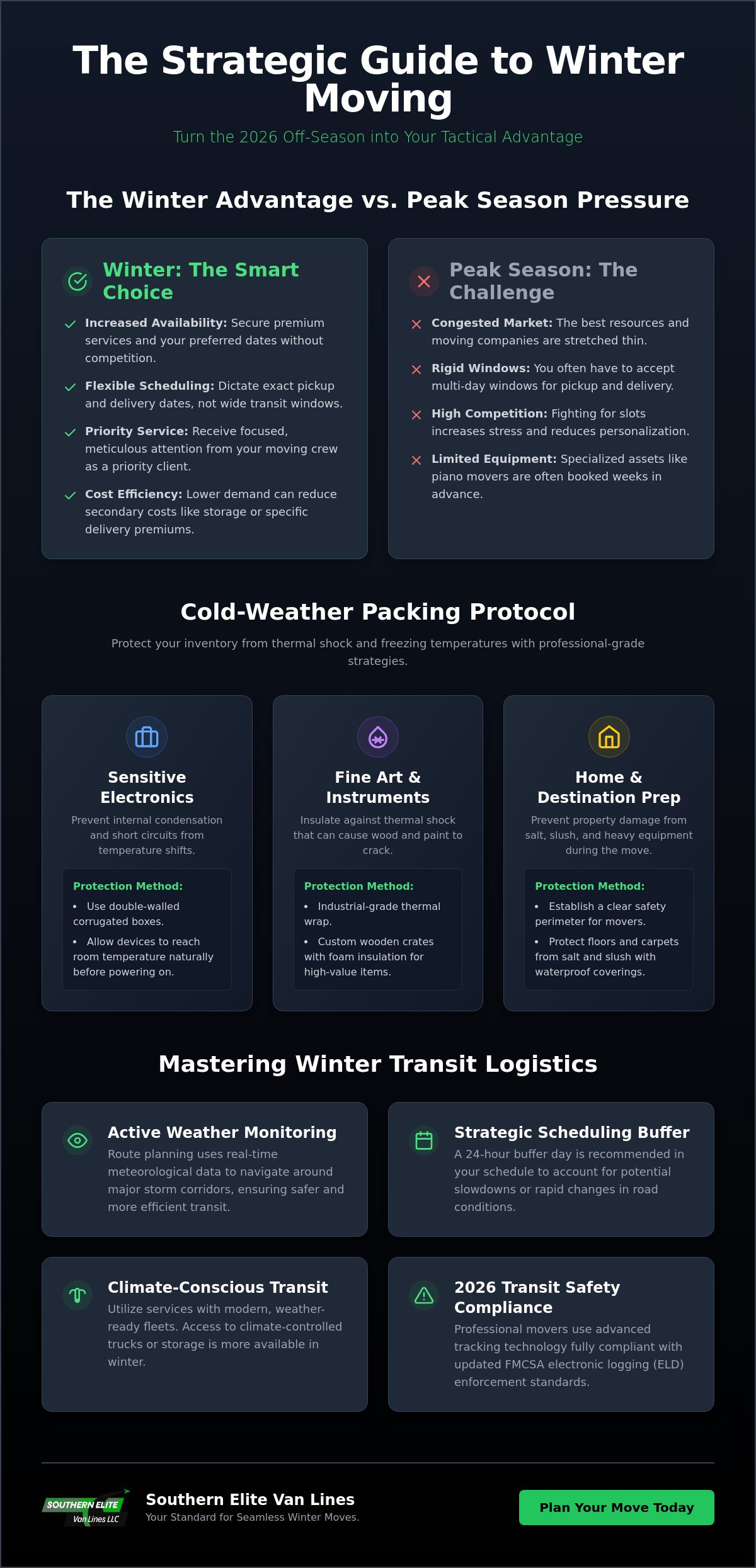
Choosing to relocate between December and March often feels counterintuitive. Most families wait for summer break. This creates a congested market where the best resources are stretched thin. In 2026, the winter moving window offers a unique strategic advantage for those prioritizing precision and personalized care. Because demand drops significantly during these months, premium long-distance movers have the capacity to provide a more meticulous level of service. Applying the right moving during the winter tips allows you to turn a perceived seasonal challenge into a calculated logistical win.
Financial logic also supports a winter timeline. While interstate fees are primarily calculated based on the weight of your shipment and the distance traveled, peak-season demand often drives up secondary costs like storage-in-transit or specific delivery window premiums. Moving in the winter allows you to secure your preferred dates without the stress of peak-period competition. It's an effective way to mitigate the psychological stress of moving by removing the uncertainty of availability. You aren't just one of many clients; you are the priority.
Why Moving in Winter Might Be Your Best Decision
The off-season gives you unprecedented flexibility. You can often dictate exact pickup and delivery dates rather than accepting a multi-day window. This precision is vital for professional relocations. Additionally, you'll have better access to specialized equipment, such as climate-controlled storage units or specialized piano moving tools. These assets are often booked weeks in advance during the summer. Using these moving during the winter tips helps you leverage lower demand into a higher standard of care and focused attention from your moving crew.
Monitoring the 2026 Weather Landscape
Success in the cold requires active strategy. Professional coordinators now use real-time meteorological data to plan routes that avoid major storm corridors. We recommend building a buffer day into your schedule. This extra 24-hour cushion accounts for potential slowdowns during state-line weather transitions where road conditions can change rapidly. Modern fleets are equipped with advanced tracking and safety technology, fully compliant with the 2026 ELD enforcement standards. This ensures that your inventory moves steadily toward its destination even when the temperature drops. Clear communication with your strategist will help you set realistic expectations for your transit window.
Protecting Your Inventory: Packing Strategies for Freezing Temperatures
While cold weather offers distinct scheduling benefits, it presents physical risks to your belongings that summer moves do not. Thermal shock occurs when materials expand or contract too quickly due to extreme temperature shifts. This is particularly dangerous for fine art, wooden musical instruments, and high-end electronics. Professional moving during the winter tips emphasize the use of double-walled corrugated boxes and industrial-grade thermal wrap to create a stable micro-environment for these assets. These materials act as a barrier, slowing the rate of temperature change and preventing structural damage.
Specialized crating offers the highest level of protection for your most valuable items. For assets like marble tabletops or oil paintings, custom wooden crates lined with foam insulation prevent physical impact and thermal fluctuations. This level of exactness is what separates a standard move from a premium relocation. If you have a collection of vintage instruments or high-value tech, our full packing services ensure every item is insulated against the elements before it ever leaves your home.
Insulating Electronics and High-Value Assets
Electronics require meticulous care during a long-distance transit. Condensation can form inside a cold device once it enters a warm room, leading to short circuits or permanent hardware failure. You must allow these items to reach room temperature naturally before attempting to power them on. Thermal acclimation is a critical safety step for 2026 home tech to prevent internal moisture damage during a transition. Following professional moving during the winter tips, such as using anti-static bubble wrap and heavy-duty thermal blankets, provides the necessary insulation against the bite of the exterior air. This methodical approach ensures your digital life remains uninterrupted.
Managing Liquids and Perishables
Liquids pose a hidden threat during interstate transit. Cleaning supplies, wine collections, and even certain beauty products can freeze and expand, causing containers to burst. This doesn't just destroy the item; it can also damage surrounding furniture or textiles. For these sensitive items, climate-controlled transport or personal transport is the safest route. Just as you would follow safe winter driving tips to prepare your personal vehicle for the road, professional movers prepare their fleets to handle these sensitive variables. Identifying which items are vulnerable to expansion allows for a more secure loading plan and prevents avoidable accidents during the journey.
Logistical Mastery: Navigating Long-Distance Routes in Winter
Moving across state lines in January requires more than a map. It demands a sophisticated understanding of shifting climate zones. A driver might begin a journey in a temperate coastal region and encounter a blizzard in the Midwest within 48 hours. Strategic moving during the winter tips focus on this inherent variability. Professional long distant movers utilize advanced weather tracking to anticipate these shifts before the truck leaves the driveway. This proactive approach ensures that your belongings are never caught off guard by predictable weather patterns.
Modern fleets are essential for interstate safety. As of February 7, 2026, tightened FMCSA Electronic Logging Device (ELD) enforcement ensures drivers remain within safe operating hours, providing an extra layer of oversight for long-haul transit. This regulation, combined with winter-ready equipment like specialized tires and engine heaters, creates a robust safety net for your belongings. These moving during the winter tips are part of a larger commitment to an effortless, uninterrupted experience for every client.
Cross-Country Route Optimization
Logistics coordinators analyze terrain and elevation changes with extreme care. High mountain passes are prone to sudden closures and ice. In many cases, we utilize a "southern route" strategy. This involves traveling further south to avoid the heaviest snow belts, even if it adds mileage to the trip. Safety dictates the path. By prioritizing clear roads over the shortest distance, we maintain a predictable timeline and protect the integrity of the load. Our drivers maintain constant communication, providing real-time updates so you are never left wondering about the status of your shipment.
The Importance of Climate-Controlled Storage
Sometimes, the safest choice is to pause. If a major storm system develops along the transit corridor, we utilize short-term storage as a tactical buffer. This prevents our teams from operating in hazardous conditions and keeps your inventory stationary until the risk passes. Our secure warehouse facilities offer consistent temperatures, protecting your household goods from the extreme humidity and freezing cycles found in standard units. Whether you require short-term or long-term storage, these climate-controlled environments ensure your inventory remains in pristine condition until the roads are clear for the final delivery.
Preparing Your Home and Destination for a Safe Transition
Your strategy for a successful relocation must extend beyond the packing tape and the transit route. The physical environments of both your origin and destination require specific preparations to mitigate the risks of ice, moisture, and extreme cold. Implementing professional moving during the winter tips ensures that your property remains as protected as your inventory. A well-prepared site allows the moving crew to operate with precision and momentum, reducing the time your home is exposed to the elements.
Establishing a safe perimeter is the first priority. When heavy equipment and large furniture are in motion, traction is non-negotiable. Professional runners and non-slip mats are far superior to cardboard, which becomes a sliding hazard when wet. Ensuring a clear, dry path from the threshold to the moving truck prevents accidents and keeps your interior floors pristine. For those managing a complex relocation, our residential moving services include the use of high-grade protective materials designed for these exact conditions.
Safety Protocols for Moving Day
Step 1: Clear snow and apply salt. Remove all accumulation from walkways, driveways, and loading zones at least two hours before the crew arrives. Use sand or salt to ensure a slip-free surface for heavy foot traffic.
Step 2: Establish a warm room. Designate one area of the house, ideally near the main exit, to remain closed off. This keeps the crew warm during breaks and provides a staging area for sensitive items like electronics that shouldn't be exposed to the cold for long periods.
Step 3: Lay down professional floor protection. Use heavy-duty, adhesive-backed runners throughout high-traffic hallways. These stay in place better than traditional drop cloths and provide a waterproof barrier against slush.
The Destination Arrival Strategy
The greatest challenge of a long-distance move is preparing a home you haven't moved into yet. You must coordinate with local services or a trusted neighbor to ensure the driveway and sidewalks at your new residence are cleared before the truck arrives. A snow-covered driveway can lead to significant delays if a multi-ton moving vehicle cannot safely park near the entrance. Confirm that your HVAC system is fully functional at least 24 hours in advance. A warm house is essential for the safety of the crew and prevents pipes from freezing while doors are frequently opened during the unloading process.
Once the inventory is inside, perform a methodical post-move inspection. Wipe down wooden furniture and metal components immediately. Even with professional wrapping, trace amounts of salt or moisture can settle on surfaces during the transition from the truck to the house. Checking for cold-related stress on arrival allows you to address any issues while the team is still on-site. This proactive approach ensures your new beginning is as seamless and polished as the planning that led you there.
The Southern Elite Standard: Seamless Winter Moving Solutions
Relocating in the off-season requires a partner who views cold weather as a manageable variable rather than a series of obstacles. Southern Elite Van Lines sets a higher standard by integrating advanced moving during the winter tips into every operational phase. From the initial strategy session to the final box unpacked, we provide a steady, expert hand to guide you through the complexities of interstate transit. Our approach is detailed in the Southern Elite Van Lines case study, which highlights our commitment to premium nationwide relocation standards and moral character in service.
We understand that a long-distance move is a significant life event. Our commitment to high-quality packing materials and modern vehicle safety ensures that your inventory remains secure, regardless of the temperature outside. We prioritize predictable budgeting by utilizing weight-based interstate fees, giving you a clear financial plan for your transition. This transparency removes the anxiety of hidden costs and allows you to focus on the excitement of your new home.
Full-Service Packing for Total Peace of Mind
Investing in our full packing services is a strategic decision for asset protection. We utilize specialized, professional-grade materials that withstand the rigors of freezing temperatures, ensuring that rapid thermal shifts don't compromise your belongings. Our teams employ customized crating for winter-sensitive valuables like fine art and electronics, utilizing a meticulous inventory management system. This "Elite" approach to secure loading prevents shifting and impact damage during long-haul transit. By choosing professional packing, you eliminate the guesswork and ensure every item is prepared for the journey with exactness.
Nationwide Coverage, Personal Accountability
A successful winter move depends on clear, direct communication. You'll work with a dedicated moving coordinator who monitors your shipment across every state line, providing real-time updates as the vehicle navigates varying weather corridors. This personalized assistance alleviates the inherent stress of a long-distance transition. We focus on delivering a calm, confident experience, ensuring your timeline remains predictable despite the elements. Our staff treats your journey as a shared mission, maintaining a higher standard of care from start to finish.
We believe that your peace of mind is as valuable as your physical inventory. Our modern, winter-ready fleet and highly trained crews are prepared to handle the most demanding conditions with precision and care. Start your journey with a partner committed to your total satisfaction. Request a professional moving estimate for your winter relocation and experience the difference of a truly seamless transition.
Mastering Your 2026 Seasonal Transition
A successful long-distance relocation in the colder months isn't a matter of luck; it's the result of meticulous planning and professional execution. You now have the strategic framework to turn seasonal challenges into a seamless journey. By prioritizing specialized insulation for your electronics and leveraging advanced route optimization, you ensure your belongings arrive in the same condition they left. These moving during the winter tips provide the clarity needed to navigate 2026 market dynamics with absolute confidence.
Southern Elite Van Lines is ready to serve as your dependable partner in this complex process. We provide professional packing for thermal protection and maintain a modern, winter-ready long-distance fleet designed for interstate safety. Should the forecast require a tactical pause, our climate-controlled storage solutions offer a secure environment for your household goods. Our team values your peace of mind as much as the physical aspects of the task. Secure your 2026 winter move with Southern Elite Van Lines and step into your new home with ease. Your next chapter deserves a perfect start.
Frequently Asked Questions
Is it cheaper to move during the winter months?
Moving during the winter months is generally more cost-effective because demand for relocation services drops significantly outside the peak summer season. Industry data for 2026 suggests that families can save between 20% and 40% on their relocation costs by choosing an off-season date. This window also offers better access to premium equipment and specific pickup times, allowing for a more personalized experience without the peak-season premium.
How do professional movers handle snow or ice on moving day?
Professional crews prioritize safety by clearing walkways and loading zones before any equipment is moved. They utilize salt or sand to create traction on driveways and sidewalks to prevent slips during the loading process. Our teams also employ heavy-duty floor runners and moisture-wicking mats to ensure that no slush or ice enters your residence, maintaining the integrity of both your old and new homes throughout the day.
What items should I never pack in a moving truck during winter?
You should avoid packing liquids that can freeze and expand, such as cleaning supplies, indoor plants, or expensive wine collections. These items are vulnerable to the extreme cold of a non-climate-controlled trailer. Additionally, high-sensitivity electronics and wooden musical instruments should be moved in a personal vehicle or specialized climate-controlled transport to prevent structural damage or internal condensation caused by rapid temperature shifts.
How long should I wait to turn on my TV after a winter move?
You should wait at least two to four hours for your television to reach room temperature before powering it on. If the device was exposed to sub-zero temperatures for an extended period, waiting 24 hours is a safer standard. This period of thermal acclimation prevents internal condensation from causing a short circuit or damaging the sensitive circuitry of modern 2026 display technology during the transition.
Will my moving quote change if there is a weather delay?
A binding moving quote typically remains stable, but it's important to review your contract for clauses regarding waiting time or storage-in-transit fees. If a severe storm forces a multi-day delay, additional costs may apply for holding your inventory in a secure facility. Professional movers work to minimize these disruptions by using real-time weather tracking to adjust routes and maintain your original budget as closely as possible.
Do I need climate-controlled storage for a winter move?
Climate-controlled storage is highly recommended if your inventory includes electronics, fine art, or wooden furniture. These units maintain a consistent temperature and humidity level, which prevents wood from warping and electronics from collecting moisture. Utilizing these specialized moving during the winter tips ensures your belongings stay in a stable environment even if your move-in date is delayed by unpredictable weather patterns.
What is the best way to protect hardwood floors from salt and slush?
The most effective way to protect hardwood floors is by using professional, adhesive-backed floor runners rather than cardboard. Cardboard can become saturated with melted snow and trap moisture against the wood, causing damage or staining. Heavy-duty, non-slip runners provide a waterproof barrier that withstands heavy foot traffic while keeping salt and abrasive debris from scratching your floor's finish during the loading and unloading process.
Can movers refuse to work if the weather is too severe?
Movers may postpone a service if local authorities issue travel bans or if conditions pose a direct threat to the safety of the crew and your belongings. Professional companies monitor the National Weather Service closely to make informed decisions about road safety. If a delay is necessary, your coordinator will work with you to reschedule the move as soon as the storm passes, ensuring a secure and damage-free transition.


Comments