
Moving with Houseplants Long Distance: The Expert Relocation Guide (2026)
- nadineharoon
- 17 hours ago
- 12 min read
The most fragile item in your home isn't the heirloom china; it is the fiddle-leaf fig in the corner. When you're moving with houseplants long distance, you aren't just transporting decor. You're managing a delicate biological operation that crosses strict state agricultural borders. It's a logistical challenge that can feel overwhelming, especially if you're worried about extreme temperatures or the complex 2026 USDA regulations.
We understand that your plants are more than just greenery. They're living investments and part of your home's soul. This guide provides a professional roadmap to master the meticulous logistics and biological care required to relocate your collection without losing a single leaf. You'll learn how to navigate the strict requirements for states like California and Florida, obtain necessary phytosanitary certificates, and execute a transport plan that keeps your plants healthy. We've organized everything from pre-move pruning to post-move recovery. This ensures your new beginning starts with a thriving indoor garden.
Table of Contents
The Legalities and Logistics of Moving Houseplants Long Distance
Moving with houseplants long distance requires more than just a sturdy box and some bubble wrap. It is a complex operation involving federal law and biological survival. Most homeowners are surprised to learn that professional van lines categorize live plants as non-allowable items. This isn't because movers don't like greenery; it is a matter of liability and safety. When you sign a contract for residential moving, that agreement typically excludes living things that cannot survive the transit environment without constant care.
Why Moving Companies Say No to Plants
Moving trucks are designed for furniture, not photosynthesis. Inside a standard trailer, temperatures can soar or plummet within hours. This creates a Greenhouse Effect where heat and humidity become trapped, effectively steaming your plants in total darkness. Because plants are living organisms, they are highly susceptible to transplant shock and death during multi-day hauls. Professional movers prioritize your household goods while you handle the living inventory. This division of labor ensures your furniture remains protected while you maintain the specific climate control your plants need to survive the journey.
Navigating State Border Inspections
State agricultural departments are the primary gatekeepers of interstate plant movement. States with massive agricultural economies like California, Arizona, and Florida maintain strict border inspections to prevent the introduction of invasive pests. For example, California inspectors require houseplants to be grown exclusively in sterile, commercial potting mix. They frequently confiscate citrus plants or pine trees at the border to prevent the spread of specific diseases. Florida requires a Certificate of Inspection from your origin state. If you can't provide one, you must give a local address for a follow-up inspection upon arrival.
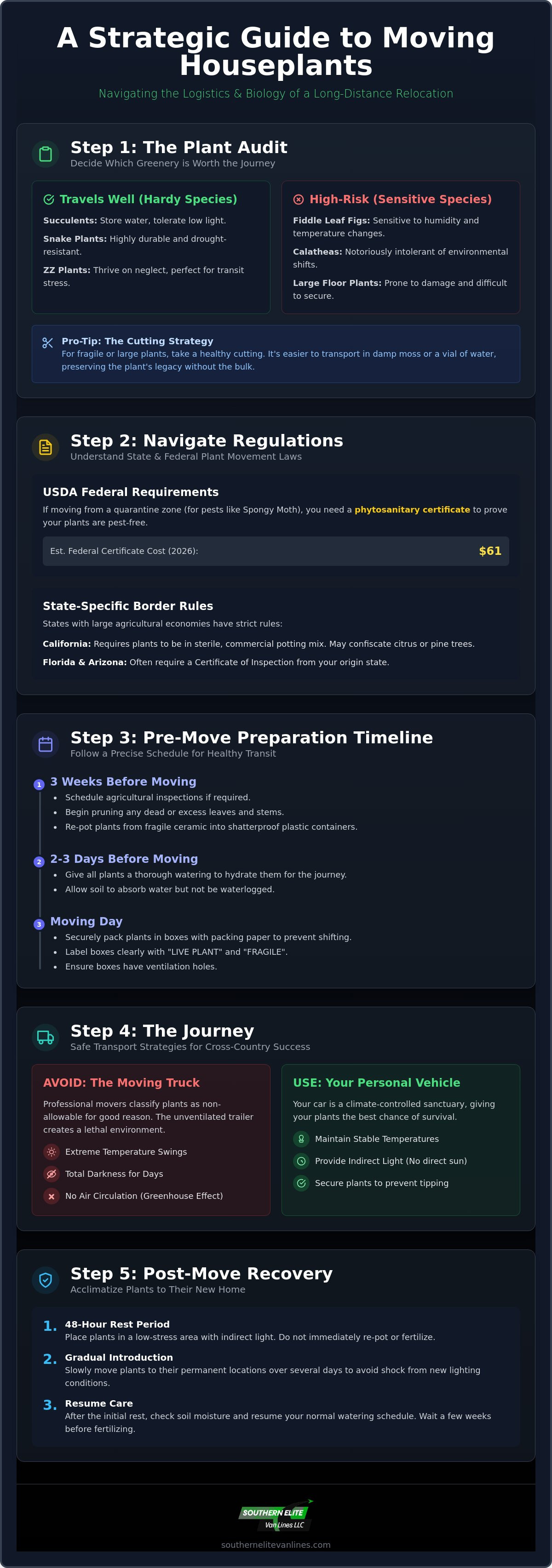
You must also account for federal quarantine zones monitored by the USDA. These zones target pests like the Japanese Beetle and the Spongy Moth. If your current home is in a regulated zone, you'll need a phytosanitary certificate to prove your plants are pest-free. As of 2026, the USDA federal certificate for non-commercial shipments costs $61. State fees vary significantly; Kansas charges $20 for a certificate, while Michigan bills export inspections at $75 per hour plus a $6 processing fee. It's a strategic necessity to schedule these inspections at least 21 days before your move to ensure all paperwork is in order before the truck arrives.
The Plant Audit: Deciding Which Greenery is Worth the Journey
Every plant in your collection tells a story, but not every story needs a cross-country sequel. When you're moving with houseplants long distance, you must transition from a collector's mindset to a strategist's mindset. A professional plant audit allows you to identify which specimens are biologically equipped for the journey and which are better left behind. This process minimizes the emotional toll of potential losses and ensures your limited transport space is reserved for your most valuable botanical assets.
Start by evaluating the replacement cost versus the logistical effort. A common Pothos or Spider plant can be easily replaced at a local nursery in your new city for a modest price. Conversely, a rare variegated Monstera or a specimen you've nurtured for a decade carries significant sentimental and financial value. Large, floor-standing plants are the most difficult to relocate. Because they require substantial vertical space and are prone to snapped stems during sharp turns, many collectors find it more practical to sell these statement pieces and invest in new ones upon arrival. If you're coordinating residential moving services for your furniture, remember that your personal vehicle will be the primary sanctuary for your plants.
Species That Travel Well vs. High-Risk Plants
Success rates vary wildly across different species. Succulents, Snake plants, and ZZ plants are the champions of long-distance travel. Their ability to store water and tolerate low light makes them ideal for 3 to 5 days of environmental stress. High-risk plants include Fiddle Leaf Figs and Calatheas. These species are notoriously sensitive to humidity drops and temperature fluctuations. If a plant is too fragile to move, consider the 'Cutting Strategy.' Take a healthy node cutting from the parent plant. Cuttings are significantly easier to transport in a small vial of water or damp moss, allowing you to carry the plant's legacy without the bulk of a heavy pot.
The Re-Homing Alternative
Gifting a plant is a meaningful way to say goodbye to your local community. Reach out to friends, neighbors, or local botanical gardens to find a new home for your non-traveling greenery. You can also utilize local plant swap groups to ensure your 'babies' go to experienced keepers. Before you move, take high-quality photos of your collection. This creates a digital archive of your hard work and provides a reference for your new setup. Always verify state agricultural laws before deciding to re-home or transport, as some regions have specific restrictions on soil types or pest-prone species that could complicate your transition.
Meticulous Preparation: How to Secure Plants for Transit
Successful relocation begins weeks before the moving truck arrives at your door. When you're moving with houseplants long distance, you cannot treat your greenery like standard cargo. A systematic three-week preparation timeline is essential to stabilize your collection and ensure every specimen is biologically ready for the stress of travel. This period allows you to address potential health issues and physical vulnerabilities that could lead to plant failure during the journey.
Three weeks before your departure, begin pruning your larger plants. Removing dead leaves and trimming back excessive growth reduces the plant's "footprint" and its energy requirements during transit. Two weeks out, transition your collection from heavy, brittle ceramic or terracotta pots into shatterproof plastic nursery liners. This switch reduces the overall weight of your load and eliminates the risk of expensive containers breaking during a sharp turn. During this time, implement a strict cleanliness protocol. Inspect the undersides of every leaf for spider mites, scale, or aphids. Addressing these issues now prevents the heartbreak of having your collection confiscated at a state agricultural checkpoint due to pest infestations.
Potting and Soil Management
Soil quality is a matter of legal compliance as much as plant health. Many states, including California and Arizona, require houseplants to be grown in sterile, commercial potting mix rather than garden soil. Repotting into fresh, sterile soil two weeks before your move ensures the plant has time to settle before the journey. Moisture management is the final critical step. Follow the "damp but not wet" rule. Water your plants for the last time two to three days before you leave. This ensures the roots are hydrated but the soil isn't heavy or prone to developing mold in a closed vehicle. Secure the top of the soil with a layer of damp moss or a custom-cut cardboard collar to prevent spillage.
Packing for Physical Protection
Physical security requires a blend of airflow and structural support. Construct breathable boxes by punching several one-inch air holes into the sides of heavy-duty cardboard containers. For small to medium plants, wrap the foliage loosely in specialized packing paper to prevent stems from snapping. Place the pots snugly inside the boxes, using extra paper or bubble wrap to fill any gaps so the pots cannot slide. While Southern Elite Van Lines provides the high-quality materials and expertise required for your non-biological household goods, these specialized plant boxes should remain in your care. This methodical approach ensures your plants remain upright and protected from physical trauma while you focus on the broader logistics of your relocation.
The Journey: Transport Strategies for Cross-Country Success
The actual transit phase is the most critical window for plant survival. While your furniture travels in a heavy-duty trailer, your personal vehicle serves as a climate-controlled sanctuary for your botanical collection. This is the safest method for moving with houseplants long distance because it allows you to maintain the precise temperature and airflow your plants require. Unlike a moving truck, your car offers immediate intervention if conditions become unfavorable, ensuring your greenery remains under your direct supervision until the final destination.
Monitoring the environment inside your vehicle is a full-time responsibility. The "parked car" heat trap is a primary threat; even on a mild day, the temperature inside a stationary vehicle can rise to lethal levels within minutes. If you must stop for a meal or a rest break, park in the shade and leave the windows cracked, or better yet, take turns staying with the vehicle. For overnight stops, hotel etiquette is vital. Most pet-friendly hotels are also plant-friendly. Plan to bring your most sensitive species into your room to protect them from overnight temperature drops or the lack of ventilation in a locked car.
Driving with Your Collection
Stability is the foundation of a safe journey. Use heavy-duty plastic bins to group smaller pots together. This prevents individual plants from tipping and contains any soil or water that might escape during transit. For taller specimens, use seatbelts or tension rods to secure the pots against the seat back. Sunlight management is equally important. While your plants need light, the intensified UV rays passing through car windows can cause permanent leaf scorch. Use removable sunshades or reposition plants throughout the day to avoid direct, prolonged exposure. Finally, adhere to the "First In, Last Out" rule. Your plants should be the final items loaded into the car and the very first things brought into your new home to minimize their time in a confined space.
Alternative Transport Options
If your collection is too large for your personal vehicle, you may need to evaluate specialized plant couriers. These professionals use climate-controlled vans designed specifically for biological cargo. For rare or high-value specimens, the "Flight Method" is a viable alternative. TSA regulations generally allow plants as carry-on items as long as they are not in standing liquid and meet size requirements. This significantly reduces transit time from days to hours. Regardless of your choice, you must coordinate your arrival with your long distant movers. Ensuring your household goods and your plants arrive in a synchronized window allows you to set up your new environment immediately, reducing the total duration of travel stress.
While you manage the delicate needs of your indoor garden, let the experts handle the heavy lifting of your household transition. Contact Southern Elite Van Lines to secure a professional team that respects the meticulous nature of your relocation.
Post-Move Recovery: Acclimatizing Plants to Their New Home
Arrival at your new residence marks the beginning of the most delicate phase of the journey. While the physical act of moving with houseplants long distance is complete, your collection now enters a period of biological transition. This acclimatization process requires patience and a strategic lack of intervention. Your primary goal during the first 48 hours is to provide a stable environment that mimics their original habitat as closely as possible. Avoid the temptation to repot or fertilize your plants immediately. These actions are stressors that can overwhelm a plant already struggling with travel shock. Instead, place them in a spot with indirect light and let them rest for at least two days before making any significant changes.
Travel stress manifests in several identifiable ways. You might notice yellowing leaves, significant drooping, or even total leaf drop in sensitive species like Ficus or Croton. These are often defensive mechanisms where the plant sheds energy-consuming foliage to protect its core systems. Monitor these signs closely; while some leaf loss is expected, widespread rot or mushy stems indicate a more serious issue that requires immediate drainage correction. Implement a strict quarantine phase for your traveling collection. Keep these plants separate from any local purchases or existing greenery in the home for at least two weeks. This allows you to monitor for any pests that may have surfaced during the move, ensuring your entire indoor garden remains protected.
The First Week Checklist
Focus on gradual re-exposure to light during the first seven days. If you moved from a cloudy climate to a sun-drenched region, your plants will need time to adjust to the increased UV intensity. Start them in a shaded area and move them closer to windows over several days to prevent leaf scorch. Hydration is the next priority. Use deep hydration techniques, such as bottom watering, to ensure the root ball is fully saturated without washing away the sterile soil you carefully prepared before the move. Conduct a final inspection for any hitchhikers, specifically looking for spider mites or fungus gnats that thrive in the humid, confined conditions of a transport vehicle.
Long-Term Adaptation
Your watering schedules will inevitably change in your new geographic location. A home in a high-humidity coastal area requires a different rhythm than a dry, high-altitude climate. Observe the soil moisture levels daily rather than sticking to your old calendar. Resume your regular fertilization schedule only after you see signs of active growth, typically the emergence of the first new leaf. This indicates the plant has successfully established its root system in the new environment. Once your collection is stable, celebrate the success of moving with houseplants long distance by adding a new homewarming plant to your garden. This marks the official end of your relocation journey and the beginning of a thriving new chapter in your home.
Ensure Your Botanical Collection Thrives in Your New Home
Relocating a living collection requires a precise blend of legal awareness and biological strategy. By following a strict preparation timeline and prioritizing your most resilient specimens, you've already mitigated the primary risks of transit. Successful recovery depends on your patience during the initial week of acclimatization. Your plants have endured significant environmental shifts; giving them the space to stabilize is the final step in a successful relocation.
While you focus on the delicate task of moving with houseplants long distance, let a team of experts handle the complex logistics of your household goods. Southern Elite Van Lines specializes in nationwide interstate relocation. We provide meticulous professional packing services for your most fragile items and offer climate-controlled storage solutions for transitional periods. Get a Free Quote for Your Long-Distance Move with Southern Elite Van Lines to secure your peace of mind and ensure a seamless transition for your entire household.
Your new home deserves to be filled with life from the moment you arrive. With a professional plan in place, your favorite greenery will continue to grow alongside you in your new destination. We look forward to helping you begin this fresh chapter with confidence.
Frequently Asked Questions
Will professional moving companies take my houseplants on a long-distance move?
Most professional van lines won't transport live plants on an interstate haul. Movers classify them as non-allowable items because they cannot guarantee the climate-controlled environment required for biological survival. While we handle your furniture and valuables with expert care, your plants should travel in your personal vehicle. This ensures they receive the light and ventilation they need to stay healthy throughout the transition.
Do I need a permit or certificate to move my plants across state lines?
You often need a phytosanitary certificate or a certificate of inspection when moving with houseplants long distance into agricultural states. For example, California and Florida require proof that your plants were grown in sterile potting mix and are free of pests. Check with the Department of Agriculture in your destination state at least 21 days before your move to schedule a required inspection.
How long can a houseplant survive in a box during a move?
Most hardy houseplants can survive in a ventilated box for three to five days. However, sensitive species like Calatheas or Fiddle Leaf Figs may show signs of stress much sooner. To extend their survival, ensure your boxes have air holes. Keep them in a temperature-controlled part of your vehicle rather than a trunk or trailer where heat can build up to lethal levels quickly.
Should I water my plants right before moving them long distance?
You shouldn't water your plants immediately before loading them into your vehicle. Excessive moisture makes pots heavy and encourages mold growth in dark, confined spaces. Water your collection two to three days before your departure. This allows the soil to be damp enough to sustain the roots without being wet enough to leak or cause structural damage to your cardboard packing materials.
Can I ship my houseplants through the mail instead of driving them?
Shipping plants through the mail is possible but requires expert packing and rapid transit times. Smaller specimens can be shipped via specialized plant couriers who use climate-controlled environments. For high-value or rare collections, many owners prefer the flight method. This involves carrying small plants as carry-on luggage to minimize the time spent in transit and avoid the physical risks associated with standard ground shipping.
What should I do if my plant starts losing leaves after the move?
Leaf drop is a common symptom of travel stress and environmental change. If your plant begins losing leaves, focus on providing a stable rest period with consistent indirect light and humidity. Avoid the urge to repot or fertilize for at least two weeks. Usually, the plant is simply shedding energy-consuming foliage to focus on root recovery and acclimatizing to its new home.
Is it better to move plants in the summer or winter?
Mild temperatures in the spring and fall offer the safest conditions for plant relocation. Extreme summer heat can steam plants inside a vehicle, while winter freezes can cause permanent cellular damage within minutes. If you must move during extreme seasons, utilize hotel stops to keep plants in a climate-controlled room overnight. Monitor your car's interior temperature carefully throughout the day.
How do I move very large or heavy potted trees across the country?
Moving large trees requires either a dedicated professional plant courier or a strategic audit of the plant's value. Because of their size and weight, these specimens are difficult to secure in a personal vehicle. If a professional courier isn't an option, many collectors choose to gift the large parent plant to a friend. Taking a healthy node cutting allows you to start fresh in your new location.


Comments