
Preparing Appliances for a Move: The 2026 Elite Guide to Long-Distance Transit
- nadineharoon
- 6 hours ago
- 12 min read
Most homeowners assume a few layers of padding will protect their kitchen, but the real threat to your investment isn't a surface scratch; it is the silent mechanical failure occurring deep within the machine during transit. When you are preparing appliances for a move across state lines, the constant vibrations of the road can easily dislodge a refrigerator compressor or ruin the delicate suspension of a front-loading washing machine. We understand the anxiety that comes with wondering if your high-end equipment will actually work when it reaches its destination. It is a stressful reality, as appliances remain one of the most frequently damaged items during long-distance relocations.
This elite guide provides the professional strategies you need to stabilize internal components and prevent the nightmare of water damage from improperly drained lines. You will gain a clear, step-by-step checklist for every major appliance in your home, from securing drum bolts to managing complex plumbing disconnections with exactness. By following these methodical standards, you can ensure your transition is seamless and your appliances are ready for immediate use. We are here to provide the expert guidance and meticulous care required to turn a complex logistical task into a successful, damage-free relocation.
Table of Contents
The Foundation of Appliance Preparation: Supplies and Timing
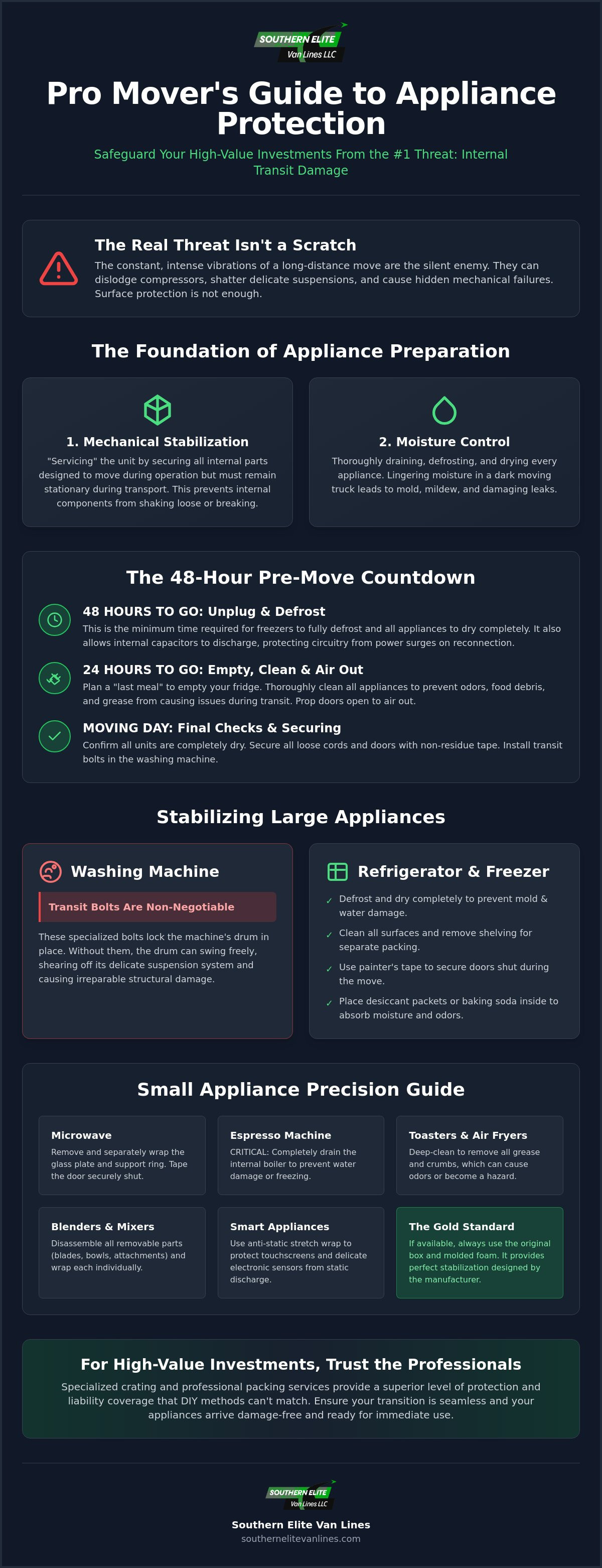
Preparing appliances for a move requires a shift in perspective. Instead of viewing your refrigerator or washer as a monolithic block of metal, you must treat it as a collection of sensitive mechanical systems. Successful preparation focuses on two pillars: mechanical stabilization and moisture control. This process often involves "servicing" the units, which is the technical term for securing internal parts that are designed to move during use but must remain stationary during transport. Addressing these details helps mitigate the psychological effects of moving by providing you with the certainty that your high-value investments will arrive intact. If you skip this step, the internal vibrations of the truck can cause more damage than an external drop.
The Essential Packing Kit for Appliances
Elite-grade supplies are non-negotiable for long hauls. While standard boxes work for books, appliances require heavy-duty moving blankets and high-tensile packing tape. Use non-residue painter's tape to secure doors and cords without damaging expensive finishes. For smart appliances featuring touchscreens or delicate sensors, anti-static stretch wrap is essential to prevent static-related electrical failures. We also recommend placing desiccant silica packets inside sealed units like microwaves or empty refrigerators to prevent mold growth during the days they spend in transit. Finally, ensure you have the correct transit bolts for your washing machine; these are specifically designed to lock the drum in place and prevent it from shearing off its suspension.
The 48-Hour Countdown Checklist
Timing is just as critical as the materials you use. Establish a 48-hour "pre-flight" timeline for all major household units. This duration is the absolute minimum required to thoroughly defrost freezers and allow internal components to dry completely. Any lingering moisture can lead to mold or mildew in the dark environment of a moving truck. Additionally, unplugging electronics 48 hours in advance allows internal capacitors to discharge fully, protecting the circuitry from power surges during reconnection. Plan a "last meal" strategy to empty your refrigerator efficiently, ensuring no perishable items remain to cause odors or leaks. This methodical approach ensures your home is ready for the precision of professional movers.
For small electronics like blenders or high-end coffee makers, original packaging remains the gold standard. The custom-molded foam provides the exact stabilization required for long-distance transit. If the original boxes are gone, use double-walled corrugated boxes and fill all voids with anti-static peanuts or crumpled packing paper. When you are preparing appliances for a move, remember that any internal movement is the enemy of a functional kitchen at your new destination. Taking these steps now prevents the frustration of discovering a broken compressor or a cracked drum later.
Step-by-Step Guide for Small Household Appliances
While large units like refrigerators demand heavy lifting, small appliances require a high level of technical precision to survive long-distance transit. Preparing appliances for a move starts with ensuring every unit is impeccably clean and dry. In the sealed environment of a moving van, even a small amount of residual moisture or food debris can lead to significant odor issues or mold growth. Once cleaned, you must disassemble all removable components. This includes glass microwave carousels, blender blades, and crumb trays. Wrap these parts individually in packing paper to prevent them from rattling against the main housing and causing internal fractures.
Kitchen Countertop Essentials
Modern kitchens are often filled with high-end tech that requires specialized care. For air fryers and toasters, deep-cleaning to remove every trace of grease and crumbs is vital. High-end espresso machines are particularly vulnerable; you must drain the internal boiler completely to prevent freezing or leaks. For the microwave, remove the glass plate and support ring, then secure the door with non-residue tape. If you prefer to focus on your new beginning rather than these intricate details, our full packing services offer the expert handling these delicate items deserve.
Home Office and Air Quality Tech
Air quality devices and office equipment have their own set of requirements. When packing air purifiers, remove the HEPA filters and seal them in airtight bags to prevent contamination during the trip. Humidifiers must have a bone-dry tank; even a few drops of water can damage the electronic sensors if they leak during transit. For paper shredders and small printers, maintain an upright position at all times. This prevents internal lubricants from migrating into sensitive electronic components. Secure the power cords using zip ties or painter's tape to ensure the plug ends don't scratch the exterior finishes of your equipment.
The actual packing process is where you finalize the protection. Start by cushioning the bottom of a heavy-duty box with at least three inches of crumpled packing paper. Place the heaviest small appliance in first, then layer lighter items on top. The goal is to eliminate "dead air" entirely. Use towels or additional paper to fill every gap until there is zero movement when the box is gently shaken. Preparing appliances for a move in this methodical way ensures that your morning routine remains uninterrupted once you arrive at your new home.
Stabilizing Large Appliances for Long-Distance Transit
Moving heavy machinery requires more than physical strength; it demands mechanical foresight. When you are preparing appliances for a move, your focus must shift from external padding to internal stabilization. Unlike standard furniture, large appliances contain suspended motors, delicate sensors, and fluid lines that are highly susceptible to the rhythmic vibrations of a long-distance journey. Failing to lock these components in place can result in "silent" damage that only becomes apparent once you attempt to plug the unit in at your new residence. Taking the time to secure these systems now ensures they remain functional for years to come.
The Refrigerator: More Than Just Cold Air
The refrigerator is often the most valuable asset in your kitchen. Beyond the 48-hour defrosting period, you must drain the water dispenser and ice maker lines completely to prevent leaks. Residual water can migrate into the unit's internal electronics during transit, leading to short circuits or mold. Secure all internal glass shelves with packing paper and non-residue tape to prevent shifting. Follow the "Upright Rule" without exception. Refrigerators must never be laid on their side, as this allows cooling fluids to flow into the compressor's intake valves. If a fridge is tilted at any point during the load, let it stand upright for at least 24 hours before plugging it in to allow the fluids to settle safely.
Laundry Units: Mechanical Stabilization
Washing machines are particularly vulnerable because their heavy drums are designed to float on a suspension system. To protect this mechanism, you must install transit bolts. Transit bolts are temporary steel rods that lock a washer's drum in place to prevent suspension damage. For front-load models, these bolts are inserted through the rear panel to keep the drum centered. If you are moving a top-load washer and the original hardware is missing, wedge specialized foam blocks or even clean blankets between the drum and the outer casing to minimize movement. For dryers, ensure any gas lines are safely disconnected and capped by a professional. Tape the lint trap shut and secure the power cord to the back of the unit. Always place disconnected hoses and attachment hardware in a labeled bag and tape it directly to the machine to ensure nothing is lost during the transition.
Dishwashers require a final manual drain of the pump to remove stagnant water that could cause odors or damage during a long haul. Secure the racks with zip ties to prevent them from sliding against the interior tub lining and causing scratches. By applying these exact standards, you protect the mechanical integrity of your home’s most essential systems and enjoy a seamless transition to your new kitchen.
Long-Distance Vulnerabilities: Vibrations and Climate
Long-distance transit introduces physical stressors that a local move simply does not replicate. When you are preparing appliances for a move across state lines, you aren't just protecting against occasional bumps; you are defending against hundreds of miles of sustained road vibration. These micro-vibrations can fatigue soldered joints on sensitive circuit boards and gradually degrade mechanical seals. Many homeowners fall into the trap of believing that weight equals stability, assuming their range or refrigerator is too heavy to move in the truck. This is a dangerous misconception. In a moving van, even the heaviest units are subject to centrifugal forces and constant oscillation, which can shift internal components if they aren't properly braced and secured.
Countering Road Vibration
Elite padding techniques go beyond simply wrapping a blanket around the exterior of a unit. We utilize high-density padding to dampen micro-vibrations before they ever reach the appliance frame. Base-loading is equally critical to a successful journey. This involves placing heavy appliances directly on the floor of the van to maintain a low center of gravity and prevent tipping. When you secure doors, use "tension-only" methods with professional-grade straps. This approach provides enough pressure to keep doors shut without over-tightening, which can warp hinges or compromise the magnetic seals that keep your unit airtight. If you are concerned about the technical requirements of a cross-country haul, our long distance moving experts specialize in the physics of secure transit.
Climate and Condensation
Temperature fluctuations in a non-climate-controlled van present a significant hidden risk to modern electronics. Moving through varying climate zones can cause condensation to form inside the appliance's housing. This internal moisture often leads to circuit board corrosion or short circuits if the unit is powered on too quickly. High-value smart appliances often benefit from climate-controlled storage or transport to mitigate these atmospheric extremes. Once you arrive at your destination, practice the "acclimatization" rule. Let your appliances reach room temperature and ensure all internal condensation has evaporated completely before you attempt a power-up.
The final step in preparing appliances for a move is the waiting game at your new residence. As established in previous sections, cooling fluids in refrigerators need time to settle after being in motion. Even if the unit remained perfectly upright, the constant motion of the road can cause aeration in the refrigerant. We recommend waiting a full 24 hours before plugging in your refrigerator at the new home. This methodical patience ensures the compressor starts under optimal conditions, preventing immediate mechanical failure and protecting your investment for the long term.
Why Professional Packing is the Safest Bet for Major Relocations
Professional execution is the final piece of the puzzle for a damage-free relocation. While the previous sections detailed the technical requirements of preparing appliances for a move, the physical implementation of these steps demands specialized tools and years of experience. Entrusting your high-value equipment to Southern Elite Van Lines provides a significant liability advantage that DIY efforts simply cannot offer. We treat every unit as a critical component of your daily life. For industrial-grade ranges or built-in refrigeration systems, we utilize specialized crating to provide a rigid protective shell against the rigors of long-distance transit. This professional approach saves you days of exhausting labor and eliminates the uncertainty of silent mechanical failure.
The Southern Elite Standard of Care
Our standard of care extends to every inch of your property. Expert long distant movers arrive equipped with heavy-duty floor runners and door jamb protectors to safeguard your home's surfaces during the extraction of heavy units. We understand that items like Sub-Zero refrigerators or precision wine coolers require more than just muscle; they require a strategist's touch. Our team applies custom stabilization solutions for these complex systems, ensuring that internal components remain perfectly aligned. Before the truck leaves, we conduct a meticulous final walkthrough. Every appliance is documented in a detailed inventory, giving you a clear and authoritative record of your assets before they begin their nationwide journey.
Your Next Steps for a Seamless Move
Securing your peace of mind starts with a clear plan of action. When requesting your moving quote, provide specific details about your high-end appliances to ensure the estimate includes the necessary specialized handling. Opting for Full Packing Services transforms a complex logistical operation into a streamlined, effortless transition. Our team manages the entire process, from the initial disconnection to the final placement in your new home. Once you finalize your moving date and secure your transit window, you can rest easy knowing that your investment is in the hands of dependable experts. We take pride in being your supportive partner, ensuring that preparing appliances for a move is handled with the highest moral character and technical exactness.
Secure Your Investment for the Journey Ahead
Preparing appliances for a move involves more than physical labor; it requires a strategic understanding of mechanical physics and environmental protection. By prioritizing internal stabilization through transit bolts and allowing for critical cooling fluid settling times, you ensure your essential home systems arrive in peak condition. We've explored how proper cleaning and moisture control prevent long-term damage, allowing you to resume your daily routine without interruption at your new destination. Success in long-distance transit is always the result of methodical planning and exact execution.
Our team provides the expert hand needed to navigate these complexities with ease. We offer specialized high-value item crating and full-service packing and unpacking to alleviate the inherent stress of relocation. With nationwide climate-controlled storage solutions, your appliances remain protected regardless of the distance or the weather. You deserve the peace of mind that comes with precision handling and a supportive partner dedicated to your total satisfaction.
Get a Professional Moving Quote from Southern Elite Van Lines today to secure your seamless transition. We look forward to supporting you through every step of this shared journey toward your new beginning.
Frequently Asked Questions
How far in advance should I start preparing my appliances for a move?
You should begin preparing appliances for a move at least 48 hours before your scheduled load date. This window allows refrigerators and freezers to defrost completely and dry out, preventing mold growth during transit. It also provides enough time for electrical capacitors to discharge fully once unplugged. Starting early ensures you aren't rushing through technical steps like draining water lines or securing internal components on moving day.
Do I really need transit bolts for my washing machine if it's a short move?
Yes, transit bolts are essential regardless of the moving distance. Even a short trip involves vibrations and sudden stops that can cause the heavy washing machine drum to bounce and damage its sensitive suspension system. These bolts lock the drum in place, providing the mechanical stabilization necessary to prevent a total structural failure. Always prioritize this step to ensure your machine remains functional at your new residence.
Can I leave food in the freezer if the move is only a few hours away?
You must empty all food from your freezer before it is loaded onto the truck. Even if your new home is only a few hours away, the lack of power and the movement of the vehicle can cause items to shift or begin thawing. This leads to potential leaks and permanent odors inside the unit. A clean, empty appliance is much easier to secure and protects the rest of your belongings from water damage.
What happens if a refrigerator is laid on its side during transport?
Laying a refrigerator on its side can cause cooling fluids and compressor oil to migrate into the cooling lines. If these fluids aren't in their proper place when the unit is powered on, it can lead to permanent compressor failure or a system blockage. Always transport refrigerators in an upright position. If a tilt is unavoidable, you must let the unit stand upright for 24 hours before plugging it in to allow everything to settle.
Should I hire a plumber to disconnect my washing machine and fridge?
Hiring a professional plumber is the safest choice for disconnecting gas dryers and complex refrigerator water lines. Professional disconnection ensures that valves are properly capped and that no leaks occur after you leave. While many homeowners handle simple water hoses themselves, the technical precision required for gas connections and high-end integrated plumbing often warrants expert assistance. This step provides an extra layer of safety and peace of mind during a complex relocation.
How do I protect the digital screens on my smart appliances?
Protect digital screens on smart appliances by using anti-static stretch wrap followed by a layer of non-abrasive padding. Standard plastic wrap can generate static electricity that may damage sensitive touchscreens or internal sensors. Once wrapped in anti-static material, secure a piece of rigid cardboard over the screen to prevent impact damage. This combination of materials provides a superior barrier against both electrical discharge and physical pressure during long-distance transit.
Is it safe to move a dishwasher with the racks still inside?
It is safe to move a dishwasher with the racks inside as long as you secure them to prevent movement. Use zip ties or non-residue tape to lock the racks to the interior tub. This prevents them from sliding forward and crashing into the door or scratching the interior lining. Remove any loose items like cutlery baskets or small accessories and pack them separately to ensure they don't rattle during the journey.
How long should I wait to plug in my appliances after arriving at my new home?
You should wait a full 24 hours before plugging in your refrigerator after arriving at your new home. This period allows refrigerant and oils to settle back into the compressor after the constant motion of the road. For other electronic appliances, wait until they have reached room temperature to prevent internal condensation from causing a short circuit. This methodical approach ensures your equipment starts under optimal conditions and functions perfectly from day one.


Comments