
How to Protect Furniture During a Move: The 2026 Professional Guide
A single moving blanket isn't a safety strategy; it's a gamble that often ends in heartbreak. You've likely spent years curating your home, so the fear of a deep gouge in a mahogany table or structural damage to a family heirloom is a heavy burden to carry. It's natural to feel overwhelmed when you look at a house full of items that need to stay pristine. You want to know exactly how to protect furniture during a move without second-guessing your methods at every highway bump.
We understand that peace of mind is just as important as the physical task itself. This 2026 guide provides you with the professional multi-layer wrapping and stabilization techniques used by elite van lines to ensure your belongings arrive in showroom condition. You'll master a clear, three-stage system of structural stabilization, surface shielding, and strategic loading. From identifying which heirlooms need professional intervention to securing delicate finishes against long-distance vibrations, we'll provide the expert roadmap for an effortless, damage-free relocation.
Key Takeaways
Perform a detailed visual audit and measure clearance points to prevent impact damage before the transition begins.
Identify the specific professional-grade materials required for how to protect furniture during a move, including high-tensile wraps that secure padding without leaving residue.
Utilize a methodical disassembly process to lower the center of gravity and keep hardware organized for a seamless setup at your destination.
Implement a multi-layer shielding system that provides both a gentle surface barrier and heavy-duty shock absorption for high-value items.
Execute the Tier Loading method to stabilize your shipment and ensure even weight distribution throughout long-distance transit.
Table of Contents
The Foundation of Safety: Inventory and Pre-Move Assessment
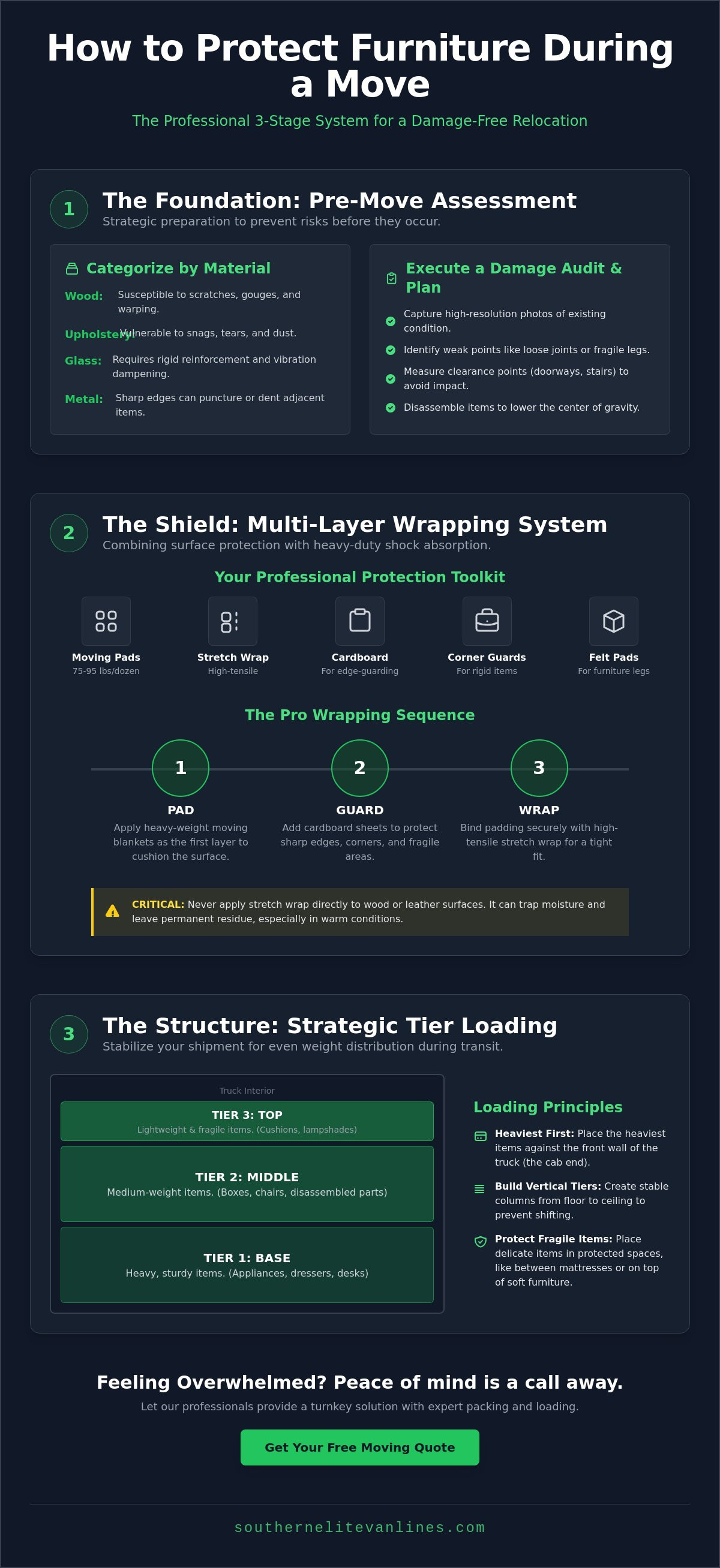
Strategic preparation transforms a chaotic moving day into a controlled, professional operation. Before you reach for the packing tape, you must understand the specific vulnerabilities of your inventory. Learning how to protect furniture during a move starts with a rigorous assessment of every piece you own. This phase ensures that your protection strategy matches the material and structural needs of your belongings, preventing the most common transit risks before they occur.
Categorize your items by material to streamline the packing process and ensure you apply the correct protective layers. Each surface type reacts differently to pressure and friction. Consider these primary categories:
Wood: Highly susceptible to surface scratches, gouges, and temperature-induced warping.
Upholstery: Vulnerable to snags, deep-seated dust, and friction-based tears.
Glass and Mirrored Surfaces: Require rigid reinforcement and vibration dampening to survive long-haul transit.
Metal: Often features sharp edges or heavy frames that can dent or puncture adjacent furniture if not properly shielded.
Documenting high-value items is a critical step for professional-grade relocations. While standard released value protection covers items at $0.60 per pound, high-value heirlooms often require full value protection to reflect their true worth. Capture clear evidence of the item's condition to streamline any potential valuation claims. This level of detail provides the calm confidence needed to manage a complex move without unnecessary anxiety.
The Pre-Move Damage Audit
Capture high-resolution photos from every angle, focusing on existing scratches, dents, or sun-fading. For antique pieces, identify structural weak points like loose joints or fragile legs that may require extra bracing. If you're moving long-distance, note which items feature organic materials or delicate finishes that require climate-controlled environments to prevent warping or cracking during the journey. This audit acts as your baseline for safety and accountability.
Space and Clearance Planning
Precision measurement prevents the most common cause of moving damage: impact with walls and doorframes. Calculate the turning radius for large sofas and armoires, accounting for feet, handles, and protruding trim. Identify danger zones such as narrow stairwells or low-hanging light fixtures that could snag upholstery. Finally, decide which items to move first to create a clear, unobstructed exit path for the heaviest pieces. This logical progression ensures an effortless flow from the house to the truck.
The Professional Furniture Protection Toolkit: Essential Materials
Quality materials are the silent guardians of your belongings during a transition. While it's tempting to use old bedsheets or towels, these household linens lack the fiber density required to absorb significant impact. Professional moving pads are engineered with quilted high-density synthetic or cotton blends that provide a consistent cushion against the rigors of the road. When you're planning how to protect furniture during a move, investing in the right toolkit is the first step toward ensuring your items arrive in pristine condition.
A professional setup includes more than just blankets. High-tensile stretch wrap serves as a binding agent to keep padding secure, but it's never used as a standalone shield. For heavy or sharp-edged pieces, corrugated cardboard sheets are essential for "edge-guarding." These sheets act as a sacrificial layer that absorbs the force of a bump or scrape before it reaches the furniture's finish. Additionally, specialized glass-packs and rigid corner protectors provide the structural reinforcement that fragile surfaces like mirrors and marble tabletops require to survive long-distance transit.
If managing the logistics of sourcing and applying these professional-grade materials feels daunting, our full packing services provide a turnkey solution that ensures every piece is shielded with expert precision.
Padding vs. Wrapping: When to Use Which
The sequence of protection is vital. Stretch wrap should never touch wood surfaces directly. In a warm truck, the plastic can trap moisture or leave a permanent adhesive residue on delicate finishes. Always apply a moving blanket first. Choose a heavy-weight pad (typically 75 to 95 pounds per dozen) for high-value items, while lighter blankets work for smaller, less fragile pieces. Use felt pads on the base of furniture legs to prevent floor friction and surface scratches during the loading process.
Specialized Tools for Structural Security
Moving heavy furniture safely requires more than just muscle; it requires mechanical advantage. High-quality furniture dollies with non-marring wheels are non-negotiable for protecting your home's flooring. Unlike standard rope, professional-grade ratcheting tie-down straps allow you to secure items to the truck's interior "E-track" system with exact tension, preventing the shifting that causes structural damage. For labeling, stick to painters tape. It provides enough grip to hold inventory tags without damaging the wood grain or leaving a sticky mess behind when it's time to unpack.
Disassembly Strategies: Maintaining Structural Integrity
Disassembling furniture is a strategic maneuver that significantly reduces the risk of structural failure during transit. When you understand how to protect furniture during a move, you realize that a piece's largest vulnerability is often its own weight and height. Removing protruding components like legs, casters, and finials lowers the center of gravity, making the item much easier to balance and secure in a moving vehicle. This proactive step prevents the sheer force of road vibrations from snapping delicate joints or cracking frame supports. It's much safer to move a flat tabletop and four separate legs than it is to risk the structural integrity of a fully assembled dining set during a long-distance relocation.
If you find the technical requirements of modern modular furniture or motorized pieces intimidating, our Full Packing Services team can handle the entire disassembly process for you. We use the same methodical systems described below to ensure every bolt and bracket is accounted for, providing you with a sense of calm confidence as your home is prepared for transport.
The Professional Disassembly Sequence
A methodical approach ensures that reassembly at your new destination is an effortless experience. Start by removing all detachable parts and placing them in heavy-duty, sealable bags. Instead of keeping these bags in a separate box where they might get lost, tape them directly to the underside of the original furniture piece using non-marring painters tape. Clearly label every component with its corresponding piece and orientation. For example, marking a leg as "Front Left - Master Bedroom Armoire" saves hours of frustration later. For complex modular units or motorized recliners, take a quick photo of the wiring and joint configuration before you begin. This visual record acts as a reliable guide, ensuring that your high-end furniture functions perfectly the moment it's reassembled.
Securing Non-Removable Components
Some components cannot or should not be removed. In these cases, stabilization is the priority. Never use adhesive packing tape directly on wood or finished surfaces, as the chemicals in the glue can strip away varnish or leave permanent stains. Instead, use high-tensile rubber bands or industrial-strength zip ties to keep cabinet doors and drawers from sliding open. If a piece contains glass shelving, remove the glass entirely and pack it separately in specialized mirror boxes using the multi-layer padding techniques. For antique clocks or delicate mechanical items, stabilize internal pendulums with soft foam inserts to prevent them from swinging. This prevents internal damage during the journey, maintaining the value of your most prized possessions.
The Multi-Layer Wrapping System for Long-Distance Transit
Mastering how to protect furniture during a move requires a shift in perspective. You aren't just covering an object; you're creating a specialized, multi-layer environment that resists the constant vibration and shifting inherent in long-distance transit. Professional van lines utilize a specific three-stage sequence to ensure items remain pristine from origin to destination. This systematic approach treats each piece of furniture as a unique asset with its own chemical and structural requirements.
The system begins with Layer 1: Preservation. This involves using acid-free paper or soft fabric to shield the surface from chemical reactions or micro-scratches. Layer 2: Shock Absorption follows, utilizing thick, quilted moving pads to create a dense cushion that dampens road vibration. Finally, Layer 3: Structural Shielding uses corrugated cardboard for edge protection and high-tensile stretch wrap to bind the entire unit together. This creates a rigid "shell" that prevents the inner layers from shifting during the journey.
If the technical demands of multi-layer wrapping feel overwhelming, our Full Packing Services provide the elite protection your high-value items deserve, ensuring every piece is secured by expert hands.
Wrapping Wood and Polished Surfaces
Wood is an organic material that must "breathe" even when it's in a moving truck. If you seal wood too tightly in non-breathable materials, you risk trapping moisture that can warp the grain or damage the finish. Plastic wrap should never touch wood directly because it traps moisture and heat, which can lead to permanent clouding or milking of the lacquer finish. To prevent this, always apply a heavy-duty moving pad as the primary barrier. Double-pad the corners and base edges, as these points bear the brunt of the impact during the loading and unloading phases. Once the padding is secure, use stretch wrap only over the blankets to hold the assembly in place.
Upholstery and Fabric Protection
Fabric and leather require a different strategy to combat dust and moisture. While thick plastic covers are excellent for blocking external grime, they can cause fabric to "sweat" in humid conditions. Apply a base layer of plain, unprinted packing paper before sliding the item into a heavy-duty sofa or mattress bag. This paper layer absorbs ambient moisture and prevents the plastic from sticking to leather surfaces. Before you seal the outer wrap, apply rigid corner guards to maintain the shape of soft edges and prevent the fabric from being crushed under the pressure of ratcheting tie-down straps.
Strategic Loading: Securing Cargo for Nationwide Relocations
The final phase of how to protect furniture during a move occurs inside the trailer, where the laws of physics dictate the safety of your cargo. Even the most meticulously wrapped armoire can suffer structural damage if it's allowed to shift during a sudden stop or sharp turn. Professional crews utilize the "Tier Loading" method to eliminate this risk. Instead of stacking items randomly, we build tight, vertical walls of furniture and boxes from the floor to the ceiling. This technique maximizes space while ensuring that each piece acts as a brace for the next, creating a unified mass that resists movement.
Weight distribution is equally critical for a stable journey. We distribute heavy items evenly across the axles of the moving vehicle to maintain a low center of gravity and prevent the trailer from swaying. To maintain the integrity of each tier, we secure the load every few feet using professional logistics straps anchored to the "E-track" system. These ratcheting straps apply exact tension to hold the furniture walls in place without crushing the protective padding we applied in previous stages. This methodical approach ensures your belongings remain stationary, regardless of the terrain or distance.
The Physics of a Stable Load
Building a solid foundation is the first rule of a secure tier. Place the heaviest, most durable items like oak dressers or solid wood bases at the bottom of the stack. Use "fillers" such as rolled rugs, small cushions, or soft-packed boxes to eliminate every gap between larger pieces. These fillers act as shock absorbers and prevent items from rubbing against one another. Never stack heavy boxes or dense items on top of delicate furniture legs or upholstered surfaces. By keeping the top of each tier light, you prevent top-heavy loads from toppling during transit.
Why Professional Van Lines Make the Difference
Equipment matters as much as technique when crossing state lines. Professional moving trucks are equipped with air-ride suspension systems, which use compressed air to absorb up to 75% of road shock compared to standard leaf spring suspensions. This technology is vital for protecting delicate internal mechanisms and polished finishes from the constant vibration of the highway. Southern Elite Van Lines utilizes advanced logistics tracking to monitor your shipment's progress in real-time, providing a transparent and uninterrupted experience. Choosing specialized long distant movers for high-value interstate moves ensures that your furniture is handled with the sophisticated care required for a successful, damage-free relocation.
Secure Your Investment for the Journey Ahead
You've now mastered the professional framework for how to protect furniture during a move. By combining a rigorous pre-move assessment with a multi-layer wrapping system and strategic tier loading, you transform a high-stress task into a controlled, successful operation. Every layer of acid-free paper and every ratcheting strap provides the structural security your belongings need to survive the rigors of nationwide transit. This methodical approach ensures your home arrives at its new destination in the same pristine condition it left.
If the logistical demands of a long-distance relocation feel complex, we're here to serve as your expert partner. We offer nationwide long-distance moving expertise and specialized handling for fragile items that require meticulous care. From full-service professional packing to secure transport, we provide the steady hand your family deserves during this transition. Get a Professional Moving Quote from Southern Elite Van Lines today and experience an effortless relocation. Your new beginning starts with the peace of mind that comes from true expertise.
Frequently Asked Questions
How do I prevent my furniture from getting scratched during a move?
Use high-density quilted moving pads as the primary barrier against friction and impact. Secure these blankets with high-tensile stretch wrap to ensure they stay in place during the entire transport process. For high-value items, add a base layer of acid-free packing paper to prevent micro-scratches on polished finishes. This multi-layer approach provides the shock absorption needed to survive road vibrations and accidental impacts with doorframes.
Is it better to wrap furniture in plastic or blankets?
It is best to use a combination of both, but blankets must always be the first layer against the surface. Placing plastic wrap directly on wood or leather can trap moisture and heat, leading to permanent surface damage or finish clouding. Apply professional moving pads first for cushioning, then use stretch wrap as an outer layer to hold the padding tight and provide a moisture-resistant shield.
Can I leave clothes in my dresser drawers when I move?
You should empty dresser drawers to protect the item's structural integrity and your belongings. Leaving clothes inside adds significant weight, which puts undue stress on the drawer glides and the dresser's frame during handling. Emptying the drawers also makes the piece lighter for the crew, reducing the risk of a dropped item or a strained joint in the furniture's construction during the loading phase.
How do I protect my furniture from moisture and heat in a moving truck?
Ensure your items can breathe by using breathable fabric pads rather than sealing them entirely in plastic for the duration of the trip. For long-distance relocations, selecting a carrier with air-ride suspension helps mitigate environmental stress by reducing the friction that generates heat. If you're moving items sensitive to humidity, such as pianos or fine antiques, consider professional intervention to ensure they remain in a stable environment.
What is the best way to move a heavy solid wood dining table?
Disassemble the table by removing the legs and any leaves to lower the center of gravity and prevent structural snapping. Wrap the tabletop in heavy-duty moving blankets and secure it vertically in the truck using the Tier Loading method. This systematic approach is the most effective way for how to protect furniture during a move when dealing with oversized or high-value solid wood pieces.
How do I protect my couch from getting dirty or torn during a move?
Use a heavy-duty furniture bag or a base layer of packing paper followed by a tight wrap of stretch film to block dust and grime. This combination prevents the upholstery from snagging on other items in the truck. For leather sofas, avoid direct contact with plastic by using moving blankets as a middle layer to prevent the material from sticking to the wrap or "sweating" in humid conditions.
Should I disassemble all my furniture before the movers arrive?
You aren't required to disassemble everything, but removing legs, mirrors, and bed frames increases the overall safety of the shipment. While our full packing services can handle these technical tasks for you, doing it yourself ensures you can organize the hardware exactly as you prefer. Focus on removing any protruding parts that might snap under pressure or prevent a piece from fitting through narrow hallways.
What happens if my furniture is damaged during a professional move?
Professional movers offer valuation coverage to protect your interests if damage occurs during transit. Under federal law, released value protection provides $0.60 per pound per item at no extra cost. For more comprehensive security, you can opt for Full Value Protection, which typically costs between 1% and 5% of the total declared value, ensuring you receive the repair or replacement value for your belongings.



Comments