
How to Handle Moving Delays: A Professional Guide to Nationwide Relocation (2026)
- nadineharoon
- Jun 20
- 12 min read
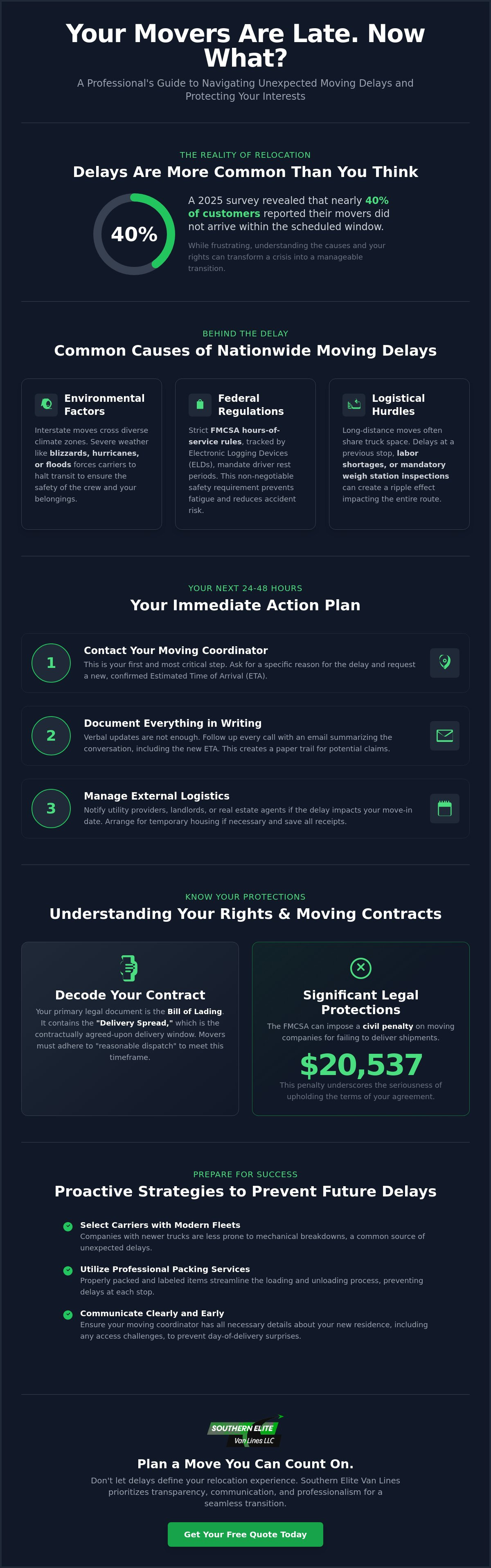
Did you know that even with meticulous planning, nearly 40% of customers in a 2025 survey reported that their movers didn't arrive on time? It's incredibly frustrating to stand in an empty home while your belongings remain in transit, especially when work or school schedules are already on the line. Understanding how to handle moving delays effectively is the difference between a logistical crisis and a managed transition. While labor shortages and tighter 2026 FMCSA regulations on driver compliance have made timelines more complex, you don't have to feel powerless during the wait.
We understand that your peace of mind depends on transparency and exactness. This guide provides a professional roadmap to help you master the logistical and emotional challenges of a delayed relocation. You'll gain a clear action plan for the next 24 to 48 hours, an understanding of your contractual rights under the Bill of Lading, and practical strategies for surviving without your household goods. We'll also explore the specific legal protections available to you, including the $20,537 civil penalty moving companies face for failing to deliver shipments. Let's transform this disruption into a well-orchestrated step toward your new beginning.
Key Takeaways
Identify the specific climate and regulatory factors that impact interstate transit timelines to better manage your expectations.
Learn exactly how to handle moving delays by establishing immediate, written communication with your coordinator to verify new ETAs.
Decode the "Bill of Lading" and "Delivery Spread" to understand your legal protections and contractual obligations during a delay.
Discover strategic ways to manage temporary housing and household essentials while navigating an extended delivery window.
Implement proactive safeguards, such as selecting carriers with modern fleets and utilizing professional packing services, to minimize future disruption.
Table of Contents
Common Causes of Nationwide Moving Delays
In the context of interstate commerce, a moving delay is a deviation from the "reasonable dispatch" timeframe or the specific delivery spread defined in your Bill of Lading. It's often the result of a complex interplay between safety protocols and environmental factors. Understanding these causes helps you learn how to handle moving delays with a sense of calm and strategic preparation. When you view these disruptions as logistical variables rather than failures, you can maintain control over your transition.
Moving across the United States involves crossing diverse climate zones. A clear day at your origin doesn't guarantee smooth transit through high mountain passes or coastal storm systems. Throughout the relocation process, many moving parts must align perfectly. Professional carriers prioritize the safety of the crew and your belongings, which means halting transit during severe weather events like blizzards or hurricanes. These environmental pauses are necessary to prevent accidents and ensure your inventory arrives in the same condition it left.
The Impact of Federal Safety Regulations
In 2026, the Federal Motor Carrier Safety Administration (FMCSA) maintains rigorous enforcement of hours-of-service rules. Electronic Logging Devices (ELDs) monitor driver activity with precision, ensuring that no driver operates while fatigued. These digital logs prevent drivers from exceeding safe driving limits, making rest periods a non-negotiable safety requirement. While these regulations might shift your arrival date, they serve as a protective measure for your goods. A safety-driven delay ensures that a rested, alert professional is behind the wheel, significantly reducing the risk of transit mishaps.
Logistical Variables in Long-Distance Transit
Long-distance moves often rely on multi-stop interstate routes where your shipment shares space with other households. If a previous stop experiences an unexpected loading delay or if a specific region faces a labor shortage, it creates a ripple effect throughout the entire route. Additionally, mandatory weigh station stops and vehicle safety inspections are standard operations that can add time to the journey. When you understand these logistical hurdles, you're better prepared for how to handle moving delays by focusing on variables within your control, such as clear communication with your moving coordinator. High-demand seasonal peaks and port congestion can also create bottlenecks that require a flexible, informed approach.
Immediate Steps to Take When Your Moving Schedule Shifts
When the clock strikes past your expected delivery window, your first move defines the outcome. Immediate contact with your dedicated moving coordinator is essential. They act as your primary liaison between the dispatch office and the road crew. During this conversation, ask for a concrete reason for the delay and verify the new estimated time of arrival (ETA) in writing via email. Verbal updates are helpful for immediate planning, but written records provide the security you need for any future claims. This is a critical first step in how to handle moving delays with professional precision.
Beyond the moving truck, you must manage the ripple effects of a schedule shift. Notify utility providers and real estate agents immediately if the delay impacts your closing or move-in date. Review your high-priority inventory list. Knowing exactly which boxes contain essentials helps you decide what needs temporary replacement. If you find yourself needing professional residential moving support that prioritizes clear communication, choosing a partner with a dedicated coordinator model makes this process much smoother. Managing these external variables prevents a single delay from turning into a total logistical collapse.
Professional Communication Protocols
Keep a meticulous log of every interaction. Record the names of representatives, dates, and specific timestamps of each call. If a coordinator makes a promise regarding a delivery credit or a specific arrival time, follow up with a brief email summarizing that conversation. This creates a paper trail that protects your interests. While frustration is natural, maintaining a collaborative relationship with the crew and office staff often leads to faster solutions. A professional partnership ensures that everyone remains focused on the shared goal: getting your belongings home safely.
Financial and Logistical Documentation
Financial diligence is your best defense against unexpected costs. Save every receipt related to the delay. This includes hotel stays, meals, and essential toiletries you had to purchase because your shipment was late. These documents are vital if you need to file an inconvenience claim or seek reimbursement through your carrier's specific policy. A "Delay Claim" is a formal request for compensation based on the carrier's failure to meet the delivery spread outlined in your contract. By treating this situation with the precision of a business transaction, you'll master how to handle moving delays with confidence and clarity.
Managing Logistics During an Extended Delivery Window
In long-distance relocation, understanding the distinction between your load date and the delivery spread is vital. The load date is the day the crew arrives at your origin to secure your inventory. The delivery spread is the window of time during which your shipment is contractually scheduled to arrive at your destination. Mastering how to handle moving delays begins with recognizing that while the load date is often fixed, the delivery window is a logistical range. This range allows for the safe passage of your goods across state lines and through varying terrain.
If your shipment is delayed beyond the final day of the delivery spread, you must shift into a proactive management mode. Coordinate with your employer or school immediately to adjust your start dates or remote work arrangements. Most professional organizations are understanding when provided with documentation from your moving coordinator. For housing, look for short-term accommodations like corporate housing or extended-stay hotels that offer kitchenettes. These amenities reduce the daily cost of living while you wait for your household goods. Reviewing your consumer rights in a move ensures you stay informed about what your carrier is obligated to provide during these transitional periods.
Partnering with elite long distant movers provides a layer of security that smaller, less established carriers cannot match. These professionals offer high-end support and consistent updates, helping you maintain peace of mind despite the shifted timeline.
The Essentials Survival Kit
Preparation is the ultimate antidote to the stress of a delay. Carry a "7 days of life" kit in your personal vehicle. This should include enough clothing for one week, all essential medications, chargers, and critical identity documents. High-value items, such as jewelry, small heirlooms, or sensitive electronics, should never be packed in the main moving truck. Keeping these items with you ensures that even if your furniture is delayed, your daily life and most precious assets remain uninterrupted. This strategy is a cornerstone of how to handle moving delays with grace and foresight.
Utilizing Secure Storage Solutions
Sometimes, a delivery delay occurs because your new home isn't ready for move-in. In these cases, "Storage-in-Transit" (SIT) serves as a strategic buffer. SIT allows your belongings to be held in a secure warehouse until you're ready for final delivery. Choosing climate-controlled facilities is essential for protecting sensitive wood furniture, artwork, and electronics from temperature fluctuations. You can explore the premium storage options provided by Southern Elite Van Lines to ensure your inventory is meticulously cared for during any transitional period. This methodical approach ensures that even when the schedule shifts, the safety of your belongings remains absolute.
Understanding Your Rights and Moving Contracts
The legal foundation of your entire relocation rests upon a single document: the Bill of Lading. This is the primary contract of carriage between you and your moving company. It functions as both a receipt for your goods and a binding agreement that outlines the specific terms of your transit. When you are determining how to handle moving delays, this document is your most powerful tool. It contains the delivery spread, which is the standard industry practice of providing a range of dates for your arrival rather than a single fixed day. This spread allows carriers to account for the logistical variables of interstate transit while remaining contractually obligated to a deadline.
Federal law holds movers liable for delays that exceed the "reasonable dispatch" standard unless the delay is caused by factors beyond their control, such as severe weather or government inspections. It's vital to distinguish between valuation and insurance during this period. Valuation is the level of liability a mover assumes if your goods are lost or damaged, and it may also cover certain inconveniences during a delay depending on your specific contract. Insurance, however, is a separate policy you may have purchased through a third party. If you find yourself in a situation where the delivery spread has passed, you have the right to file a formal delay claim once the move is complete. This process involves submitting your documented expenses and a formal request for compensation as outlined in your contract.
Decoding the Bill of Lading
Within the Bill of Lading, look specifically for the sections detailing delivery obligations. Professional carriers must provide a delivery window in writing, which is often labeled as the "Agreed Delivery Date" or "Delivery Spread." If your contract references "Reasonable Dispatch," it means the carrier is obligated to transport your goods with the same level of care and speed that a diligent professional would under similar circumstances. Understanding these nuances ensures you have a clear, enforceable expectation for your arrival. If you're ready for a move backed by transparent contracts, you can request a professional moving quote to begin your journey with confidence.
Interstate Moving Protections
The Federal Motor Carrier Safety Administration (FMCSA) provides a mandatory handbook titled "Your Rights and Responsibilities When You Move." This guide requires carriers to notify customers of any delays as soon as they become apparent. It also outlines the dispute resolution programs that all interstate movers must offer. While residential moves focus on household goods, commercial relocation contracts often involve different liability structures and tighter delivery windows to minimize business downtime. Knowing these distinctions helps you navigate how to handle moving delays regardless of whether you are moving a family home or a corporate headquarters. By staying informed, you transform from a passive observer into an active manager of your relocation's success.
Proactive Strategies to Prevent Relocation Delays
While mastering how to handle moving delays is a vital skill for any long-distance move, proactive planning is often more effective than simply reacting to disruptions. The most reliable way to minimize the risk of a late delivery is to select a carrier that invests in a modern, well-maintained fleet. Mechanical breakdowns are a common cause of transit stalls; however, a company that prioritizes rigorous vehicle safety inspections significantly reduces these logistical friction points. When you choose a mover with a proven track record of nationwide efficiency, you're investing in the dependability of their equipment as much as their labor.
Preparation timing also plays a significant role in your success. Scheduling your relocation during "off-peak" mid-month windows, rather than the high-demand periods at the beginning or end of the month, ensures you have access to the most experienced crews and the best equipment. You should also ensure that your inventory list is finalized and locked in well before the truck arrives. Last-minute additions to your shipment can lead to loading delays or require a larger vehicle than originally dispatched, creating a ripple effect that shifts your entire delivery window. In essence, mastering how to handle moving delays starts long before the truck arrives at your curb.
The Elite Standard of Preparation
Southern Elite Van Lines maintains a higher standard of quality by integrating advanced logistics software into every nationwide relocation. This technology allows for precise route optimization, accounting for real-time traffic patterns and 2026 regulatory requirements. Utilizing Full Packing Services further accelerates the process; professional packers organize your belongings for maximum density and safety, which speeds up the loading and unloading phases. Additionally, the brand utilizes transparent, weight-based pricing. This exactness eliminates the billing disputes that often cause "hostage load" situations or delivery standoffs, ensuring an effortless and uninterrupted experience from start to finish.
Finalizing Your Moving Strategy
As your move date approaches, confirm all contact information with both your driver and your dispatcher. It's imperative that you remain available via phone throughout the entire transit period to receive real-time updates or answer logistical questions that may arise on the road. This open line of communication ensures that you and the moving crew operate as a cohesive team. If you're ready to partner with a dependable expert who values your peace of mind, you can Request a professional moving quote to start your journey with a supportive and skilled strategist by your side.
Securing Your Future Transition
You now possess the strategic framework to navigate any shift in your relocation timeline with professional confidence. By mastering the contractual nuances of the Bill of Lading and maintaining a meticulous log of all communications, you transform a logistical hurdle into a managed variable. Knowing exactly how to handle moving delays allows you to focus on the excitement of your new beginning rather than the temporary uncertainty of transit. Expert preparation and clear communication are your most effective tools during this shared journey.
Your peace of mind is our ultimate priority. We invite you to experience a seamless, professionally managed relocation with Southern Elite Van Lines. Our specialized long-distance logistics team and comprehensive packing and storage solutions ensure your inventory is handled with meticulous care. As an FMCSA licensed and insured carrier, we bring a steady, expert hand to every mile of your move. Your new home is waiting; with the right partner, the path there remains clear, supportive, and sophisticated. Let's start your next chapter with the precision you deserve.
Frequently Asked Questions
What is a "delivery spread" in a long-distance moving contract?
A delivery spread is the contractual window of time during which your mover is scheduled to arrive at your destination. Unlike a single fixed date, this range accounts for the logistical complexities of interstate travel. It's a standard industry practice that provides flexibility for variables like traffic or weather. You'll find this window clearly defined in your Bill of Lading, ensuring you know exactly when to expect your belongings.
Am I entitled to compensation if my movers are late?
Federal law doesn't require moving companies to provide standard compensation for delays, but many professional carriers offer per diem rates or inconvenience claims. You're entitled to seek reimbursement for out-of-pocket expenses like hotels or meals if the carrier fails to meet the reasonable dispatch standard. Review your specific contract to understand the carrier's policy on how to handle moving delays through financial credits or formal claims.
How much extra time should I plan for an interstate move?
We recommend building a buffer of at least 48 to 72 hours into your schedule beyond the end of your delivery spread. This extra time accounts for the significant portion of moves that experience some form of timing shift. Planning for this flexibility prevents disruptions to your work or school commitments. It ensures you have a safety net if unforeseen logistical variables extend the transit period across multiple climate zones.
What should I do if I cannot be at the destination when the delayed truck arrives?
If you can't be present at your new home, you should designate a trusted agent to sign for the delivery on your behalf. This person must be authorized in writing to accept the inventory and note any damage. Alternatively, you can utilize Storage-in-Transit (SIT). This service allows the carrier to hold your belongings in a secure, climate-controlled warehouse until you're ready to receive them at your convenience.
Can a moving company change the delivery date after the truck is loaded?
Yes, a moving company can legally adjust the delivery date after the truck is loaded if they encounter circumstances beyond their control. This includes severe weather, mechanical issues, or mandatory FMCSA rest periods for the driver. Professional carriers must notify you immediately of these changes. Maintaining an open line of communication with your coordinator helps you stay informed and teaches you how to handle moving delays with minimal stress.
Does moving insurance cover expenses related to delays?
Standard moving valuation typically covers loss or damage to your items but rarely includes living expenses caused by delays. If you require coverage for hotels or meals during a late delivery, you may need a specific insurance rider or a carrier-specific delay claim policy. Always verify the level of protection in your Bill of Lading before transit begins. This ensures you're practically informed and financially protected throughout the journey.
What are the most common reasons for a moving truck to be delayed?
Delays most frequently stem from severe weather conditions, mechanical maintenance, or strict adherence to federal hours-of-service regulations. Labor shortages in specific regions can also slow down loading and unloading times at previous stops along a multi-house route. While these disruptions are frustrating, they often reflect a commitment to safety. Prioritizing the well-being of the crew and the security of your inventory prevents more significant transit accidents.
How do I track my shipment during a long-distance move?
You can track your shipment by maintaining regular contact with your dedicated moving coordinator. Many premium carriers now utilize advanced logistics software or GPS tracking to provide real-time updates on the truck's location. Your coordinator serves as the steady, expert hand guiding this process. They provide you with the most accurate ETA based on current road conditions and driver logs, ensuring transparency from the origin to the final destination.


Comments