
How to Downsize Before a Long Distance Move: A Strategic Guide (2026)
- nadineharoon
- Jun 6
- 13 min read
Updated: Jun 14
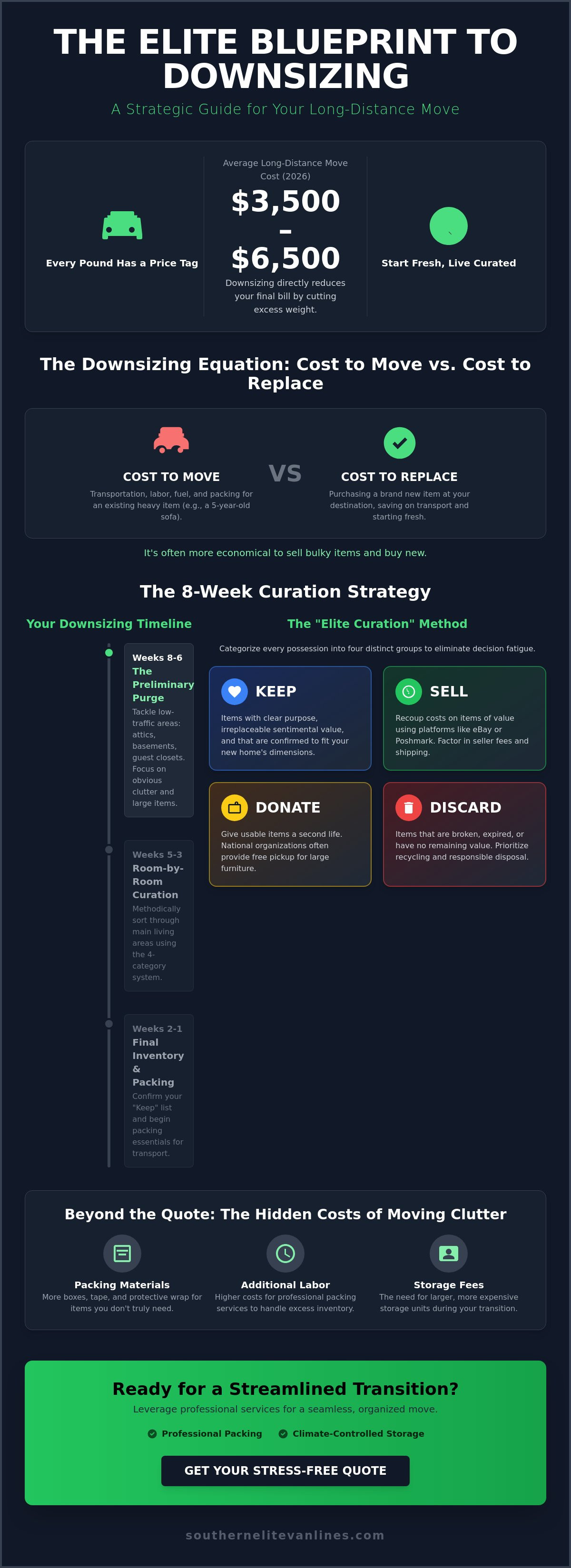
Every box you tape shut for an interstate relocation is more than just a container of belongings; it's a direct investment in your moving budget. In 2026, with the average long distance move for a standard household ranging between $3,500 and $6,500, every pound of excess weight adds to your final invoice. It's understandable if you feel overwhelmed by the volume of items accumulated over the years or the emotional weight of letting them go. You aren't just moving furniture; you're moving memories, and that makes the process feel deeply personal.
We're here to help you master the art of the edit. This guide provides a strategic roadmap on how to downsize before a long distance move, ensuring you only pay to transport what truly adds value to your life. You'll learn how to navigate 2026 seller fees on platforms like eBay and Poshmark to recoup costs, manage the emotional hurdles of decluttering, and arrive at your new home with a curated inventory. We'll walk you through a logical, step by step process that transforms a complex logistical task into a clear path toward a stress free transition and a more organized future.
Key Takeaways
Understand how weight-based fee calculations impact your interstate moving quote so you can prioritize items that offer the highest value.
Master how to downsize before a long distance move by implementing an eight-week timeline and the "Elite Curation" method to eliminate decision fatigue.
Conduct a high-value item audit to determine the financial ROI of transporting heavy furniture versus purchasing new pieces for your destination.
Identify the most efficient digital platforms for selling household goods and locate national organizations that provide free donation pickups for large items.
Leverage professional packing and climate-controlled storage services to ensure a seamless, organized transition into your new residence.
Table of Contents
The Financial Impact of Downsizing on Your Long-Distance Move
A Step-by-Step Strategy for Curating Your Household Inventory
Deciding What Stays and What Goes: The High-Value Item Audit
Practical Disposal: How to Sell, Donate, and Recycle Efficiently
Professional Packing and Storage Solutions for a Streamlined Transition
The Financial Impact of Downsizing on Your Long-Distance Move
Downsizing is a financial strategy. It is the calculated reduction of household weight and volume designed to protect your relocation budget. In the context of an interstate relocation, every item you own carries a price tag for its journey. When you understand how to downsize before a long distance move, you are essentially performing a high-stakes audit on your possessions. You aren't just cleaning out a closet; you're deciding which items are worth the investment of transport and which are simply weighing down your future.
The "cost to move versus cost to replace" evaluation is the most effective tool in your arsenal. It is often more economical to sell a five-year-old sofa and purchase a new one at your destination than it is to pay for its transit across several states. This logic applies to everything from kitchen appliances to heavy gym equipment. Embracing a lifestyle of Simple living during this transition provides a sense of peace that transcends the logistical benefits. Starting fresh in a new state with only your essential, high-value items creates a curated environment from day one.
Understanding Weight-Based vs. Flat-Rate Moving Fees
Interstate relocations operate on a scale of precision. Long-distance movers typically utilize certified scales to determine the weight of your shipment, subtracting the "tare weight" of the empty truck from the "gross weight" once your items are loaded. This weight directly dictates fuel consumption and the labor required for loading and unloading. While volume and truck space optimization are important for logistics, the weight remains the primary driver of your final bill. Conducting a thorough inventory audit directly lowers your long distant movers quote by removing the burden of unnecessary mass.
The Hidden Costs of Moving Clutter
The expenses associated with excess goods extend beyond the transportation fee. Consider the compounding cost of packing materials: every unnecessary item requires its own share of boxes, tape, and protective wrap. If you choose professional packing services, you are also paying for the additional labor hours required to secure those items. Beyond the immediate move, keeping clutter often leads to the need for larger, more expensive storage units during your transition. Learning how to downsize before a long distance move eliminates these ancillary costs, ensuring your resources are spent on quality service rather than the transport of clutter.
A Step-by-Step Strategy for Curating Your Household Inventory
The secret to a successful relocation lies in your preparation schedule. Establishing an eight week timeline is essential to avoid the decision fatigue that often leads to packing unnecessary clutter. When you rush the process, you tend to keep items "just in case," which only increases your moving costs. By following a structured 5 steps to a daunting-free downsize, you transform an overwhelming task into a series of manageable operations. This strategic approach ensures that every item loaded onto the truck has earned its place through utility or genuine sentimental value.
We recommend the "Elite Curation" method to streamline your decision making. This framework categorizes every possession into four distinct groups: Keep, Sell, Donate, and Discard. To qualify for the "Keep" category, an item must serve a clear purpose in your new life or hold irreplaceable emotional significance. Before you finalize these choices, you must measure the floor plan of your new residence. There is no logistical logic in paying to transport a grand dining table or a massive sectional sofa if the dimensions of your new home cannot accommodate them comfortably. If you find the logistics of sorting through a lifetime of belongings too complex, our residential moving experts can help you organize the final inventory for transport.
Phase 1: The Preliminary Purge (Weeks 8-6)
Begin your journey in the areas of the home that hold the most "weight" but the least daily utility. Attics, basements, and guest closets are often the primary culprits for hidden inventory volume. During these initial weeks, focus on identifying duplicate items. Most households don't require three blenders or four sets of guest linens. This is also the time to be ruthless with items that are broken, expired, or have sat unused for over a year. If you find yourself with a significant amount of waste, especially in the Los Angeles area, LA Dumpster Bins can provide the necessary containers to haul away the debris. Discarding these items now prevents them from becoming a last minute packing burden. Understanding how to downsize before a long distance move starts with this high level clearing of the obvious excess.
Phase 2: The Suitability Audit (Weeks 6-4)
As you move closer to your date, shift your focus to the practical suitability of your belongings. Evaluate your furniture based on the climate of your destination. Heavy wool rugs or industrial heaters may not be necessary if you're moving to the Sun Belt. Additionally, verify that your large appliances are compatible with the utility hookups at your new home; a gas dryer won't help you in an all electric residence. Create a digital inventory list during this phase to track high value items. This meticulous record keeping is a hallmark of a professional relocation and ensures you know exactly how to downsize before a long distance move while protecting your most prized assets.
Deciding What Stays and What Goes: The High-Value Item Audit
A high-value item audit is the most critical phase of determining how to downsize before a long distance move. You must look beyond sentimental attachment and analyze the cold, hard Return on Investment (ROI) of every heavy asset in your home. Transporting a heavy, low-value item across state lines often costs more than the item is worth on the secondary market. By applying the same rigorous standards found in commercial relocation strategies, you can treat your home office and living spaces like a business operation. This objective mindset helps you identify which pieces truly deserve space on the truck and which should be liquidated to fund your new beginnings.
Furniture: Move It or Replace It?
Assess the structural integrity of your furniture before committing to its transport. Pieces made of particle board or medium-density fiberboard (MDF) often lack the durability to survive the vibrations and shifting of a long-haul journey. In contrast, solid wood heirlooms and high-end designer pieces are usually worth the investment. Use this simple checklist for your audit:
Durability: Will the item survive being disassembled and reassembled?
Replacement Cost: Is the cost to ship the item higher than 50% of its current replacement value?
Fit: Does the piece complement the aesthetic and dimensions of your new floor plan?
Selling large sofas or dining sets locally before you leave not only reduces your moving estimate but also provides immediate capital for your new home's interior design. This approach ensures you aren't paying to move outdated or worn furniture that you'll likely want to replace within a year anyway.
Specialty Items and High-Value Assets
Specialty items like pianos, large gun safes, and fine art require a sophisticated level of logistical planning. These pieces often necessitate specialized crating and climate-controlled environments, which add a premium to your service quote. You must determine if the item's appraisal value justifies these additional protective measures. For antiques and family heirlooms, we recommend obtaining a professional appraisal before the moving truck arrives. This documentation provides a sense of security and ensures your assets are properly protected throughout the journey. If an item requires custom crating but doesn't hold significant financial or emotional value, it is a prime candidate for the "Sell" or "Donate" categories. Mastering how to downsize before a long distance move means making these difficult decisions early so your movers can focus on the items that truly matter.
Practical Disposal: How to Sell, Donate, and Recycle Efficiently
Once you've finalized your high-value audit, the physical removal of items becomes your primary objective. This phase requires a logistical mindset to ensure you don't end up with a pile of "to-be-sold" items on the morning your truck arrives. Learning how to downsize before a long distance move involves more than just clearing space; it's about liquidating assets responsibly to offset your relocation costs. By starting this process early, you prevent the stress of last minute disposal and ensure every item finds its proper place outside your home.
Maximizing Profit Through Resale
In 2026, digital marketplaces offer diverse avenues for recouping your investment. For high-end clothing and accessories, Poshmark remains a top choice, though you should factor in their 20% commission for sales of $15 or more. If you're selling general household goods, eBay's seller fees are typically 13.6% plus a small per-order fee. For heavy furniture that is difficult to ship, Facebook Marketplace is the most efficient option because local pickup sales carry no fees. To ensure a quick sale, take clear photos in natural light and write honest, detailed descriptions. Most importantly, set a "drop-dead" date exactly 14 days before your move. If an item hasn't sold by that date, move it immediately to the donation pile to keep your timeline on track.
Streamlining the Donation Process
Reputable national organizations like Habitat for Humanity ReStore or The Salvation Army frequently offer free donation pickups for large appliances and furniture. Because these schedules fill up quickly, you should coordinate your pickup at least three weeks before your moving date. In 2026, tax regulations for charitable contributions have specific requirements. If you itemize your deductions, you can only deduct contributions that exceed 0.5% of your Adjusted Gross Income (AGI). Always request a detailed, itemized receipt from the charity and take photos of the items in their donated condition. This documentation provides the necessary evidence for your tax professional and ensures your generosity is properly recorded.
For items that aren't suitable for sale or donation, such as old electronics or hazardous household chemicals, utilize responsible recycling methods. Many municipalities host "e-waste" events, and platforms like Earth911 can help you find local drop-off centers for batteries and paint. If the logistical burden of sorting and disposing of these items feels overwhelming, our full packing services can alleviate the pressure by helping you organize and secure only the essentials for your new home. This professional assistance ensures you stay focused on the transition while we handle the heavy lifting of the final move-out week.
Professional Packing and Storage Solutions for a Streamlined Transition
You have successfully navigated the rigorous process of auditing your inventory and disposing of the non-essentials. Now that you understand how to downsize before a long distance move, the focus shifts to the precise execution of your relocation. The hard work of curation is complete. Entrusting the final stage to professionals ensures that your streamlined inventory arrives at your new destination in pristine condition. This phase is about protecting your investment and reclaiming your time during one of life's most significant transitions.
The Benefits of Full-Service Packing
Full packing services offer a level of protection that standard DIY methods cannot match. Professional teams utilize high-quality materials, such as double-walled boxes and custom crating, specifically designed for long-haul transit. They understand the physics of a moving truck. By leaving the boxing to experts, you eliminate the physical exhaustion of the final move-out week. Beyond the physical labor, these services provide critical liability protections. When a professional team handles the packing, the carrier assumes a higher level of responsibility for the integrity of those items. This sense of security is invaluable when transporting the curated pieces you've chosen to keep.
Utilizing Secure Storage for a Staged Move
Logistics don't always align perfectly with real estate closing dates. If your new residence isn't ready for immediate occupancy, short-term storage acts as a vital bridge. Modern facilities offer climate-controlled environments that protect sensitive items like wooden furniture, electronics, and fine art from the damaging effects of humidity and temperature fluctuations. You might also find that you aren't ready to part with certain family heirlooms despite your downsizing efforts. Long-term storage provides a secure solution for these items, allowing you to settle into your new home without the pressure of immediate placement. This staged approach prevents your new, organized space from becoming cluttered on day one.
Settling into a new state is a complex operation that extends beyond the driveway. Utilizing unpacking services allows you to bypass the weeks of living out of boxes, letting you focus on your new career or community instead. Southern Elite Van Lines serves as your expert partner throughout this entire journey. We provide the steady hand and strategic planning required for a sophisticated relocation. By mastering how to downsize before a long distance move and pairing that effort with premium moving services, you ensure your transition is not just a change of address, but a successful new beginning.
Step Into Your New Home with Confidence
Mastering how to downsize before a long distance move is the most effective way to control your relocation investment and reduce the logistical burden of a cross-country transition. By auditing your high-value assets and executing a disciplined disposal strategy, you ensure that only the most essential items occupy space on the moving truck. This methodical preparation transforms an overwhelming life event into a streamlined operation. You aren't just moving boxes; you're curating the foundation of your next chapter.
Southern Elite Van Lines specializes in long-distance relocations with nationwide coverage and secure storage solutions. We utilize professional packing services and high-quality materials to protect your curated inventory throughout the journey. Request a Free Long-Distance Moving Quote from Southern Elite Van Lines today to partner with a team that values your peace of mind as much as the physical aspects of the task. Your new beginning starts with a clear space and a steady partner. We look forward to guiding you home.
Frequently Asked Questions
How far in advance should I start downsizing for a long-distance move?
You should begin the downsizing process at least eight weeks before your scheduled move date. This timeframe allows you to tackle one room at a time without the pressure of a looming deadline. Starting early helps you avoid decision fatigue and ensures you have enough time to sell high-value items on digital marketplaces. A structured eight-week timeline is the most effective way to manage both the logistical and emotional aspects of a major transition.
Is it cheaper to sell my furniture and buy new ones or pay to move them?
Selling heavy, low-value furniture is often more economical than paying for its transport across state lines. Since long-distance moving costs are heavily influenced by the total weight of your shipment, shipping an old sofa may cost more than purchasing a new one at your destination. We recommend calculating the "cost to move vs. cost to replace" for every large asset. If an item doesn't hold significant sentimental or financial value, liquidating it locally is the smarter financial strategy.
What items are generally not allowed on a long-distance moving truck?
Movers generally prohibit hazardous materials, flammables, and perishables for safety and regulatory reasons. This list includes items like paint, propane tanks, cleaning chemicals, and aerosol cans. You should also transport high-value personal items like jewelry, passports, and medical records yourself rather than packing them in the truck. Professional movers provide a "non-allowable" list during the estimate process to ensure your shipment complies with federal safety standards for interstate transit.
How do I handle sentimental items that I don’t use but can’t throw away?
Digitizing physical items like photos and letters allows you to preserve memories without the physical bulk in your moving truck. For larger heirlooms you aren't ready to part with, secure long-term storage provides a reliable solution. This allows you to settle into your new home with a curated environment while keeping your prized assets safe. Learning how to downsize before a long distance move involves making these clear distinctions between daily utility and long-term emotional value.
Can I get a tax deduction for the items I donate before moving?
You can deduct charitable contributions if you itemize your deductions and they exceed 0.5% of your Adjusted Gross Income (AGI). For the 2026 tax year, even non-itemizers can deduct up to $1,000 for single filers or $2,000 for married couples filing jointly for cash donations. Always obtain a detailed, itemized receipt from the charity for non-cash goods. This documentation is essential for verifying the fair market value of your donated household items during tax season.
What is the best way to dispose of old electronics and chemicals?
You should take old electronics to certified e-waste recycling centers and bring chemicals to local hazardous waste facilities. Many municipalities host specific collection days for paint, batteries, and old computers to prevent environmental contamination. These items cannot be placed in standard trash bins or moving trucks. Utilizing platforms like Earth911 helps you locate the nearest responsible disposal site in your community to clear these items well before your scheduled moving day arrives.
Should I inventory my belongings before the movers arrive?
Creating a comprehensive digital inventory list is essential for tracking your assets and ensuring a seamless transition. This record serves as your primary reference for insurance purposes and helps you verify that every item arrived safely at your destination. A detailed inventory also assists you in deciding how to downsize before a long distance move by highlighting unnecessary duplicates. It provides a sense of security and professional organization throughout the entire relocation process.
How do I measure my new home to ensure my current furniture will fit?
You must measure the width, height, and depth of every room in your new floor plan along with all entryways and hallways. This step ensures your large sectional or dining table can actually clear the door and fit within the designated space. Don't forget to account for window placements and electrical outlets in your new layout. Comparing these measurements against your current furniture inventory prevents the costly mistake of transporting items that simply won't work in your new residence.


Comments