
What Is Relocation Stress Syndrome? Symptoms, Causes, and Management
- nadineharoon
- 11 minutes ago
- 12 min read
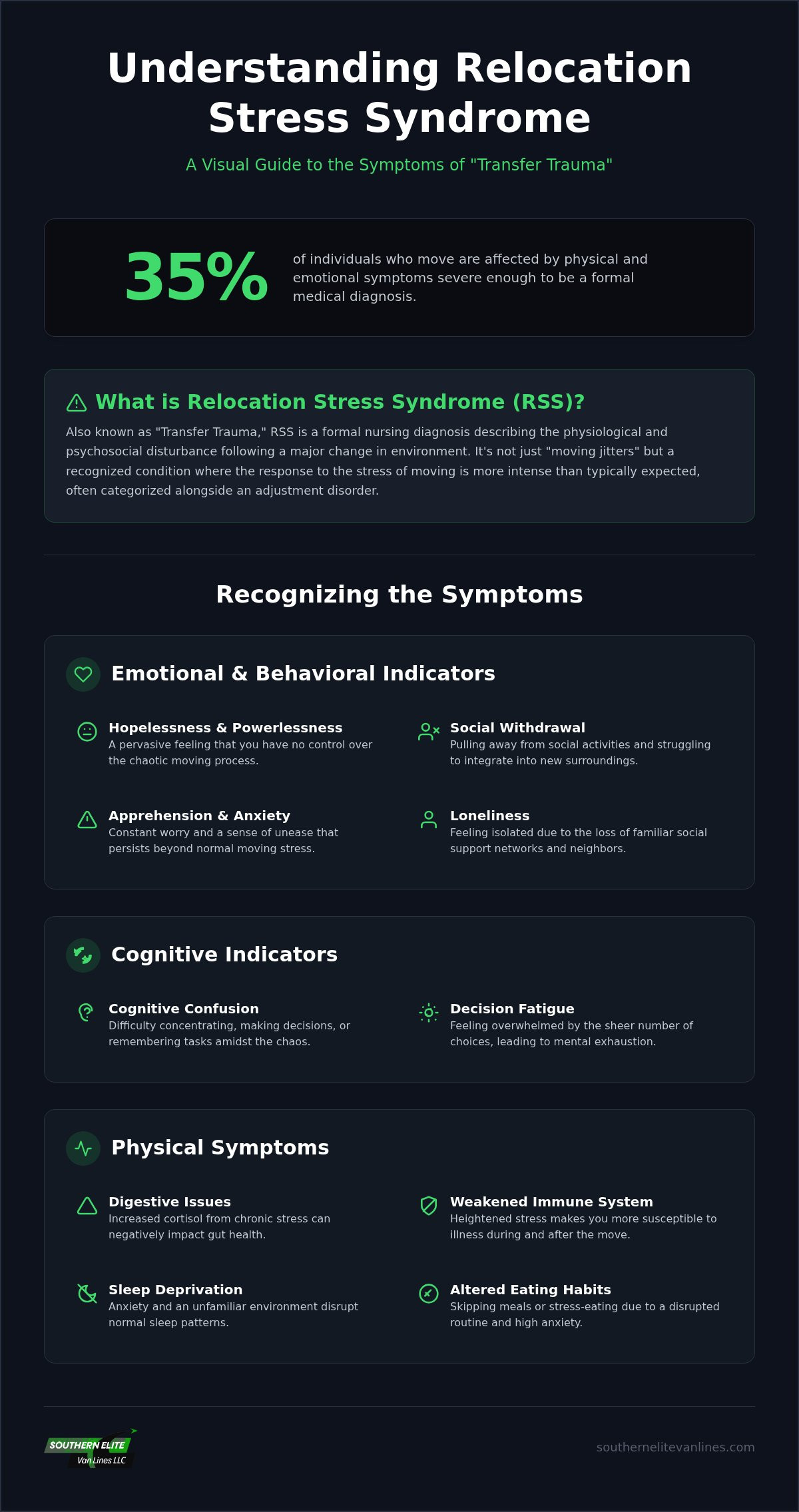
Did you know that 35% of individuals who move are affected by physical and emotional symptoms severe enough to be a formal medical diagnosis? If you have felt a sudden wave of unexplained anxiety or a sense of hopelessness while packing, you aren't just tired. You are likely asking, what is relocation stress syndrome, a recognized condition often called transfer trauma. It's a physiological response to a perceived loss of control during a major life transition. We understand that the weight of a move is measured in more than just pounds and crates; it's measured in your peace of mind.
It's natural to fear that the chaos of relocating will lead to a permanent decline in your health or well-being. This article validates those feelings and provides the professional clarity you need to move forward. You'll understand the psychological impact of moving and learn professional strategies to mitigate transfer trauma for a seamless transition. We'll examine the specific symptoms of this syndrome, from cognitive confusion to physical fatigue. Finally, we will provide a roadmap of actionable steps to reduce your psychological burden, showing you how a steady, expert hand from Southern Elite Van Lines can restore order to your journey.
Table of Contents
Defining Relocation Stress Syndrome and Transfer Trauma
Moving involves more than just cardboard boxes and logistics. It's a profound disruption of your physical and social surroundings. To understand the depth of this impact, you must first ask: what is relocation stress syndrome? Professionals use this term to describe the cluster of symptoms that emerge when an individual moves from one environment to another. While many people assume moving is just a temporary inconvenience, clinical research identifies it as a significant life event that can trigger a formal medical response. It's a recognized condition that validates why you might feel physically ill or emotionally drained during a transition.
The Clinical Background of RSS
Relocation Stress Syndrome (RSS) isn't just a colloquial term used by movers; it's a formal nursing diagnosis recognized by NANDA International. First added to the official classification in 1992, RSS remains a critical diagnosis in the current 2024-2026 edition of Nursing Diagnoses: Definitions and Classification. This formal recognition moved the conversation from simple moving jitters into the professional psychological community. Relocation Stress Syndrome is a physiological and psychosocial disturbance following a change in environment. While it was initially studied in clinical settings like nursing homes, modern experts recognize it as a universal response. It can affect anyone, from corporate executives to young families, who experiences a sudden shift in their living situation.
Why "Transfer Trauma" is a Fitting Description
You might also hear this condition referred to as transfer trauma. This term is used interchangeably with RSS because it captures the visceral, traumatic nature of uprooting your established life. When you leave a familiar home, you lose more than a roof. You lose your social support systems, your neighborhood landmarks, and your daily rhythms. This sudden absence of the familiar often triggers a fight or flight response in the brain. Unlike standard moving stress, which usually dissipates once the boxes are unpacked, transfer trauma involves deeper physiological changes. It's often categorized alongside an adjustment disorder, where the emotional or behavioral response to a stressor is more intense than what is typically expected. By recognizing this as trauma, you can begin to treat the transition with the meticulous care it deserves.
Understanding this clinical background is the first step toward regaining control. When you realize that your anxiety is a documented medical response, the path to a seamless transition becomes clearer. You aren't failing to handle the move; your body is simply reacting to a major environmental shift. This perspective allows you to seek professional strategies that mitigate the impact of the move on your health and well-being.
Identifying the Psychological and Physical Symptoms of RSS
Recognizing the signs of distress is the first step toward managing them effectively. To fully understand what is relocation stress syndrome, we must look beyond simple exhaustion and categorize symptoms into emotional, cognitive, and physical manifestations. While many people dismiss these signs as temporary "moving jitters," they are actually systemic responses to a perceived loss of environmental control. According to established guidelines on Relocation Stress Syndrome, these symptoms can persist long after the last box is unpacked if they aren't addressed with professional precision.
Emotional and Behavioral Indicators
A sense of hopelessness or powerlessness often characterizes the emotional experience of a difficult move. You might find yourself withdrawing from social activities or feeling strangely "unsettled" in your new home, even if the physical setup is complete. This withdrawal is a major red flag; it signals that the individual is struggling to integrate into their new surroundings. Apprehension and loneliness frequently follow, especially when social support networks are left behind. Understanding what is relocation stress syndrome requires acknowledging that these feelings aren't just "in your head," but are part of a recognized behavioral pattern triggered by the trauma of transfer.
Physiological Impacts on the Body
Physically, the body pays a high price for chronic stress. When you are in the midst of a move, increased cortisol levels can lead to digestive issues and a weakened immune system, making you more susceptible to illness. Sleep deprivation and altered eating habits further exacerbate this physical decline, creating a cycle of fatigue that is difficult to break without intervention. RSS can manifest as physical pain or exhaustion that persists for weeks. Cognitive symptoms often join this physical toll, manifesting as "moving fog," a state of confusion or disorientation that makes simple decision-making feel nearly impossible. This cognitive drain is often the result of decision fatigue, where the sheer volume of choices regarding the move overwhelms the brain's processing capacity.
Managing these symptoms requires a strategic approach that prioritizes your health as much as your belongings. Utilizing Full Packing Services can significantly reduce the decision fatigue that triggers these symptoms, allowing you to focus on your emotional well-being while experts handle the logistical heavy lifting. By removing the physical labor and the mental burden of organization, you create the space necessary for a healthier psychological adjustment.
Risk Factors: Who is Most Vulnerable to Relocation Stress?
While clinical literature frequently narrows the scope of what is relocation stress syndrome to the elderly, vulnerability extends across various demographics. Anyone experiencing a major life transition can fall victim to transfer trauma, but certain factors significantly increase the risk. Understanding these risk profiles allows families and professionals to implement protective measures before the first box is packed. High-stakes events like "forced moves"-those triggered by evictions, sudden job transfers, or financial shifts-carry the highest psychological risk because they lack the buffer of personal choice. Last-minute relocations exacerbate this strain by stripping away the time needed for mental and logistical adjustment.
The Impact on Seniors and Vulnerable Adults
Older adults remain the most researched group regarding transfer trauma. Cognitive impairments or memory issues make environmental changes particularly disorienting, as familiar landmarks and routines are essential for their sense of security. When an environment changes abruptly, it isn't just a change of scenery; it's a loss of reality. Research suggests that the element of choice is the strongest antidote to stress in these situations. Involving the individual in the decision-making process helps maintain their dignity and reduces the feeling of powerlessness. For those navigating these complex life changes, our Long Distant Movers pillar offers comprehensive guidance on managing nationwide transitions with the necessary care and exactness.
Broader Risk Groups: Families and Professionals
Vulnerability isn't limited to the elderly. In a family unit, the "primary mover" often carries the heaviest psychological load. This person manages the logistics, finances, and emotional health of the household, often neglecting their own well-being in the process. This self-neglect is a primary driver of what is relocation stress syndrome in adults. Children and adolescents face a different but equally potent risk: the loss of social networks. For a teenager, a move often feels like a total loss of identity and support. High-stakes commercial moves also trigger RSS in business owners. The pressure to maintain uninterrupted operations while uprooting a livelihood creates a unique, intense psychological strain that requires a steady, expert hand to manage effectively.
By identifying these vulnerabilities early, you can tailor your moving strategy to protect the most at-risk members of your circle. Whether it's a residential move or a commercial relocation, recognizing that the emotional stakes are high allows you to prioritize peace of mind over simple logistics.
Practical Strategies to Mitigate Moving Anxiety and Transfer Trauma
Mitigating the psychological impact of a move requires more than just physical organization. It demands a strategic approach that prioritizes mental well-being. By implementing specific coping mechanisms, you can transform a chaotic transition into a manageable journey. The goal is to minimize the disruption to your internal sense of security. While you now understand what is relocation stress syndrome, the next step is applying practical solutions to protect yourself and your family from its effects.
Restoring Control Through Planning
Uncertainty is the primary fuel for transfer trauma. To combat this, you must restore a sense of agency through meticulous preparation. A comprehensive moving checklist serves as more than a logistical tool; it significantly reduces the cognitive load by externalizing thousands of tiny decisions. Involving every family member in the decision-making process builds essential buy-in and reduces feelings of powerlessness. When family members feel heard, the risk of developing what is relocation stress syndrome drops significantly because they no longer feel like passive observers of their own lives. There is also a profound psychological benefit to delegating heavy labor to professionals. When you remove the physical strain of lifting and the logistical nightmare of driving, you free up mental energy to focus on emotional adjustment. Our Residential Moving services provide the expert hand needed to offload this burden effectively.
Maintaining Continuity in the New Environment
The brain thrives on predictability. Maintaining strict routines for sleep and meal schedules throughout the move provides a necessary anchor during the storm of transition. Use the "first box" strategy to create immediate comfort in your new home. This box should contain essentials that allow you to set up familiar spaces, such as the bedroom or kitchen, on the very first night. Seeing a familiar bedspread or using your favorite coffee mug can instantly lower cortisol levels. Consider these essential comfort items that should stay with you rather than on the main truck:
Personal bedding and favorite pillows
Basic kitchen supplies for a familiar first meal
Essential toiletries and medications
Important chargers and electronics
Small sentimental objects or family photos
Finally, don't overlook the importance of closure rituals. Taking the time to say a formal goodbye to your old home, perhaps through a final walk-through or a small gathering with neighbors, helps the brain process the emotional transition. These rituals signal to your psyche that one chapter has ended, making it easier to embrace the new beginning. By pairing these internal coping strategies with professional logistical support, you ensure a transition that is both physically efficient and emotionally secure.
The Role of Professional Moving Services in Reducing Relocation Stress
Logistical precision is the most effective antidote to the emotional chaos of a move. When you understand what is relocation stress syndrome, you recognize that a lack of control is the primary trigger for anxiety and exhaustion. Southern Elite Van Lines acts as the expert hand that restores this control. We provide more than just transportation; we offer a strategic partnership that manages the complex operational details of your transition. By assuming responsibility for the heavy lifting and logistical coordination, we allow you to focus entirely on self-care and your family's emotional adjustment.
Alleviating the Physical Burden
Physical exhaustion is a major catalyst for transfer trauma. The sheer labor of a move often leads to a state of depletion that makes you more vulnerable to psychological distress. A full-service move prevents this breakdown. We utilize modern vehicles and high-quality materials to ensure every transition is seamless and secure. This meticulous care protects your belongings and your health simultaneously. You can see these principles in action in our Southern Elite Van Lines case study, which highlights our commitment to premium nationwide relocation. Entrusting the physical labor to professionals ensures you arrive at your new home with the energy needed to begin your new chapter.
Professional Packing as a Stress-Reduction Tool
Decision fatigue is a primary symptom of what is relocation stress syndrome. The process of sorting, wrapping, and labeling hundreds of items is a massive cognitive drain that often leads to "moving fog." Our professional packing services eliminate this burden by applying a methodical system to your entire household. We use a detailed inventory system that prevents the "lost item" anxiety that frequently fuels relocation stress. By offering per-box packing for high-value or fragile items, we provide a level of exactness that DIY moves simply cannot match. This organized approach ensures that everything has a place and is easily found upon arrival. If you're ready to offload the psychological weight of your upcoming move, request a professional moving estimate from Southern Elite Van Lines today.
Sometimes, a transition requires a buffer to be truly successful. Climate-controlled storage provides a secure middle ground during a complex or long-distance move. It removes the immediate pressure to unpack every box on day one, allowing you to settle into your new environment at a pace that feels comfortable. This flexibility is a powerful tool for reducing the sense of powerlessness that often accompanies relocation. By choosing a partner that understands the emotional weight of your belongings, you secure both your physical assets and your peace of mind.
Secure Your Peace of Mind for Your Next Chapter
Relocation is one of life's most significant disruptions, but it doesn't have to lead to a permanent decline in your well-being. By understanding what is relocation stress syndrome, you can identify early warning signs and implement professional strategies that protect your emotional health. Maintaining continuity through daily routines and involving every family member in the planning process builds the resilience needed for a healthy transition. Validating your feelings as a recognized clinical condition is the first step toward regaining the control you need to move forward with confidence.
The most effective way to mitigate transfer trauma is to offload the logistical burden to a partner who understands the emotional weight of your journey. Our highly-trained team specializes in complex long-distance relocations, utilizing expert packing services to protect both your fragile items and your mental energy. We offer nationwide coverage for all 50 states, ensuring a seamless and uninterrupted experience from start to finish. You deserve a transition that feels like a fresh start rather than an overwhelming burden.
Experience a Stress-Free Nationwide Move with Southern Elite Van Lines. We are here to guide you every step of the way with the precision, care, and steady hand your journey requires.
Frequently Asked Questions
Is Relocation Stress Syndrome a real medical diagnosis?
Yes, Relocation Stress Syndrome is a formal nursing diagnosis recognized by NANDA International since 1992. It remains part of the current 2024-2026 classification, validating the physical and emotional disturbances that occur after an environmental change. This clinical recognition confirms that the anxiety and confusion you feel are part of a recognized medical condition. Approximately 35% of people who move experience these symptoms, making professional awareness essential for a healthy transition.
How long does Relocation Stress Syndrome typically last after a move?
Symptoms typically emerge within the first 90 days after a relocation. While the duration varies based on individual support systems, research indicates that the most intense adjustment period occurs during this initial three-month window. Establishing new routines and social connections helps these symptoms subside. If feelings of hopelessness or physical exhaustion persist beyond this timeframe, it's advisable to consult a healthcare professional to ensure a successful long-term adjustment.
Can children experience transfer trauma during a long-distance move?
Children and adolescents frequently experience transfer trauma, primarily due to the sudden loss of their social support networks. For a child, a move represents a significant disruption of their sense of safety and identity. You can support them by maintaining consistent daily routines and involving them in age-appropriate decisions about their new space. This inclusion helps restore their sense of control and alleviates the fear of the unknown during a long-distance move.
What are the first signs that someone is suffering from RSS?
The first signs often manifest as uncharacteristic irritability, sleep disturbances, and a persistent sense of apprehension. You might notice a person withdrawing from social interactions or expressing a profound loss of control over their life. Physical markers like headaches, fatigue, and digestive issues are also common. Identifying these early emotional and physiological indicators is the first step in managing what is relocation stress syndrome before it impacts your long-term health.
Does hiring professional movers help with relocation stress?
Professional movers play a critical role in reducing the physical and mental exhaustion that fuels relocation stress. By delegating the logistical burden to an expert hand, you eliminate the decision fatigue caused by packing and organization. This partnership allows you to focus on your emotional well-being while we manage the complex physical tasks. Reducing the labor-intensive aspects of a move prevents the total depletion that often leads to transfer trauma.
What is the best way to support a senior citizen during a relocation?
Supporting a senior requires prioritizing their autonomy and maintaining as much environmental continuity as possible. Involve them in every stage of the decision-making process to reduce feelings of powerlessness. Setting up their new space with familiar furniture and cherished mementos helps mitigate the disorientation of a new environment. This careful approach addresses the psychological impact of the move, ensuring they feel both practically informed and emotionally supported throughout the entire journey.
Can Relocation Stress Syndrome be prevented entirely?
While moving is inherently stressful, you can prevent the clinical severity of RSS through meticulous planning and professional support. Early preparation reduces the cognitive load and prevents the "moving fog" associated with last-minute transitions. Utilizing full packing services ensures that the logistical process remains organized and predictable. By maintaining healthy habits and a steady schedule, you protect your body's immune system from the physiological breakdown that characterizes relocation stress.
What happens if Relocation Stress Syndrome is left unaddressed?
Left unaddressed, this syndrome can lead to chronic health issues, including clinical depression and a weakened immune system. For vulnerable populations, the physical toll can manifest as a permanent decline in health or increased disorientation. Understanding what is relocation stress syndrome early allows you to intervene before these symptoms escalate. Proactive management ensures that the move remains a positive new beginning rather than a source of long-term physiological and psychological distress.


Comments