
The Emotional Stages of a Long Distance Move: A 2026 Psychological Guide
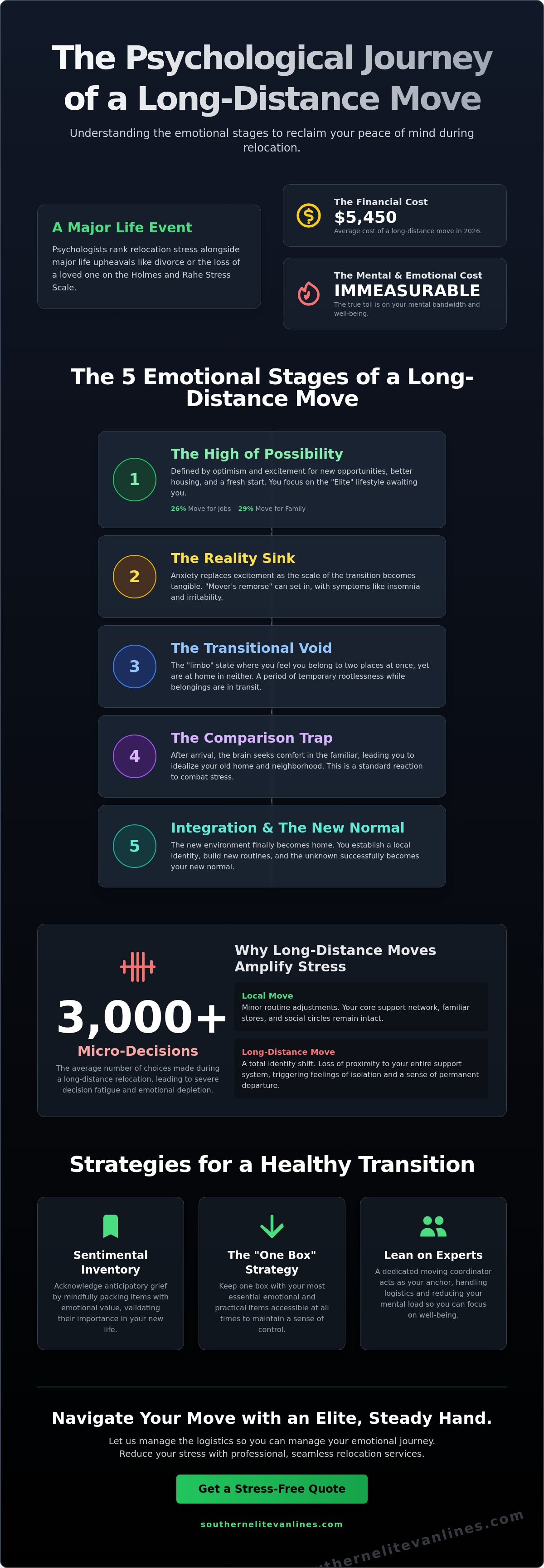
Did you know that psychologists now rank "relocation stress syndrome" as one of life's most demanding experiences, often rivaling the emotional impact of a divorce or the loss of a loved one? While you might be focused on the $5,450 average cost of a long-distance move in 2026, the true toll is often found in your mental bandwidth. It's completely normal to feel a heavy sense of anticipatory grief as you leave your community or feel paralyzed by the decision fatigue that comes with a cross-country transition. Understanding the emotional stages of a long distance move is the first step toward reclaiming your peace of mind.
We believe that an elite moving experience involves more than just secure transit for your piano or full packing services. It requires a steady, expert hand to guide you through the psychological landscape of relocation. You deserve to feel validated in your anxiety and empowered by your choices. This guide provides professional insights into the five psychological phases of moving and offers practical strategies to reduce your mental load. We'll explore how to handle grief, manage the unknown of a new state, and maintain total control over your journey from the initial inquiry to the final delivery.
Key Takeaways
Identify the symptoms of relocation stress syndrome to understand why your brain treats a nationwide move as a major life event.
Master the five emotional stages of a long distance move to anticipate psychological shifts from initial excitement to the reality of packing.
Discover how professional logistical precision and secure transit directly reduce your mental load and calm the nervous system.
Implement the "One Box" strategy and sentimental inventorying to keep your emotional essentials accessible throughout the transition.
Learn how a dedicated moving coordinator acts as an anchor to ensure a seamless, stress-free relocation journey.
Table of Contents
Understanding the Psychology of Relocation in 2026
Relocation is far more than a logistical puzzle; it's a profound psychological event that shifts the foundation of your daily life. Experts identify this experience as Relocation Stress Syndrome (RSS), a condition where the physiological and psychological symptoms of moving become overwhelming. When you prepare for a nationwide transition, your brain doesn't just see a change of address. It perceives a threat to your established safety net. This is why the psychological effects of relocating often rank alongside major life upheavals on the Holmes and Rahe Stress Scale. Relocation psychology is the study of identity transition during geographic change.
As you navigate the emotional stages of a long distance move, you might encounter a phenomenon known as anticipatory grief. This involves mourning your current home, community, and routine before you've even handed over the keys. It's a natural reaction to the impending loss of the familiar. By acknowledging these feelings early, you can maintain a sense of control over the process. We recognize that your peace of mind is just as valuable as your physical cargo, and our elite service is designed to support both.
Why Long-Distance Moves Feel Different
Moving across town involves minor routine adjustments, but moving across the country creates a total identity shift. In a local move, your support network remains intact. When you cross state lines, you lose the immediate proximity of your trusted grocery stores, medical providers, and social circles. This loss of the familiar can be jarring. The geographic distance creates a sense of permanent departure that often triggers a deep sense of isolation. With the national migration rate sitting below 9% in 2026, those who do choose to relocate often face higher stakes and more complex emotional transitions than in previous decades.
The Role of Decision Fatigue
The sheer volume of choices required during a move leads to rapid decision fatigue. In 2026, this stress is amplified by modern administrative requirements. You aren't just packing boxes; you're transferring smart home ecosystems, updating digital security protocols, and ensuring compliance with updated USDOT regulations. Research suggests the average person makes over 3,000 micro-decisions during a long-distance relocation. This mental load leads to emotional depletion, making even small tasks feel insurmountable. A cluttered mind often mirrors a cluttered home. Our dedicated support focuses on clearing your mental bandwidth by managing the heavy lifting, allowing you to focus on your emotional well-being.
The 5 Emotional Stages of a Long Distance Move
Relocation isn't a linear process. It's a series of psychological milestones that require active management rather than passive endurance. Understanding the emotional stages of a long distance move allows you to anticipate your reactions, helping you maintain a sense of control over the journey. This psychological framework transforms a chaotic experience into a structured, manageable transition.
Stage 1: The High of Possibility. This phase begins the moment you decide to relocate. Whether you're among the 26% of people moving for a new job or the 29% moving to be closer to family in 2025, this stage is defined by optimism. You're focused on the "Elite" lifestyle awaiting you, from better housing to new social opportunities.
Stage 2: The Reality Sink. Anxiety replaces excitement as the first boxes are taped shut. The scale of the transition becomes tangible, and the logistical weight starts to feel heavy. This is often when the physical toll of the move begins to manifest.
Stage 3: The Transitional Void. This is the "limbo" state. Your belongings are in secure transit; you technically belong to two places at once, yet feel at home in neither. It's a period of temporary rootlessness.
Stage 4: The Comparison Trap. After arrival, you may find yourself idealizing your old neighborhood. This is a standard reaction to the psychological effects of moving, where the brain seeks comfort in the familiar to combat the stress of the new.
Stage 5: Integration and The New Normal. Eventually, the new environment becomes home. You develop a local identity, and the "unknown" successfully becomes your daily routine.
Navigating the 'Reality Sink' (Stage 2)
Stage 2 is the most common time for "mover's remorse" to set in. You might experience physical symptoms like shallow breathing, insomnia, or sudden irritability. These are signals that your mental load has reached its peak. To stay grounded, focus on one room at a time and delegate whenever possible. Utilizing full packing services can significantly reduce this specific anxiety by removing the physical burden of the transition, allowing you to protect your mental bandwidth.
Overcoming the Comparison Trap (Stage 4)
Your brain often uses "selective memory" to filter out the negatives of your old home. You remember the perfect park days but forget the grueling commute. To combat this, focus on "micro-wins" in your new city. Find one local coffee shop or a scenic walking trail within your first seven days. Give yourself a full six-month grace period before judging the success of your move. Adjustment is a marathon, not a sprint, and your new identity needs space to grow without the shadow of the past.
The Mental Load: How Logistics Influence Your Emotions
Logistics and emotions are often treated as separate silos, but they are deeply intertwined. When your physical environment is in disarray, your emotional state follows suit. Logistical chaos directly triggers volatility, making the emotional stages of a long distance move feel significantly more intense. The brain craves predictability. When you know your inventory is registered with a valid USDOT number and protected under Full Value Protection, your nervous system settles. Security in logistics translates to security in the mind. We understand that your peace of mind is just as important as your physical cargo.
DIY moves frequently exacerbate the "Reality Sink" and "Transitional Void" stages. Attempting to manage an interstate relocation without expert help often leads to a spike in cortisol levels. Our "Elite" perspective emphasizes outsourcing labor to preserve your mental bandwidth for what truly matters: your family and your future. By removing the physical burden, you grant yourself the space to process the change with clarity and composure.
The Cost of 'Doing it All Yourself'
Choosing the DIY route often involves hidden emotional costs that far outweigh the initial savings. Physical exhaustion leads to strained relationships and decreased productivity at work. In 2025, 26% of movers cited job transfers as their motivation; entering a new role while physically depleted is a recipe for burnout. Partnering with professional long distant movers provides the certainty your brain needs. Knowing your mover adheres to the 110% rule (49 CFR Part 375) regarding non-binding estimates removes the financial anxiety that often plagues the transit phase. Precision in planning leads to stability in your personal life.
Professional Packing as Stress Mitigation
Decision fatigue is the primary enemy of a healthy transition. Letting experts handle full packing services serves as a direct cure for the mental drain of inventory management. Instead of spending weeks debating how to crate a piano or secure fragile heirlooms, you can delegate these tasks to a team trained in precision. This "white-glove" approach shifts your focus from the "loss" of your current space to the "seamless arrival" at your new one. By removing the physical labor, you eliminate the "heavy lifting" arguments that frequently occur between partners during a move. We manage the logistics so you can manage your emotions.
Emotional De-cluttering: Strategies for a Healthy Transition
Effective relocation requires a mental shift alongside the physical one. As you progress through the emotional stages of a long distance move, specifically transitioning from the 'Reality Sink' to the 'Transitional Void,' proactive emotional de-cluttering becomes essential. This process isn't about generic positivity; it's about tactical preparation for your new life chapter. By clearing mental space before the van arrives, you ensure that your energy is reserved for the integration phase ahead.
The 'One Box' Strategy is a critical component of this preparation. Pack a single, clearly labeled container with items that provide immediate comfort: a specific candle, your favorite linens, or framed family photos. While our team handles the secure transit of your heavy furniture, this box remains with you. It acts as an emotional anchor, ensuring that even in a house full of boxes, your first night feels like home. This small act of precision prevents the rootless feeling often associated with the first 48 hours in a new state.
Rituals of departure are equally vital for a healthy transition. Take time to walk through each room of your current home and acknowledge the memories made there. This helps mitigate the anticipatory grief discussed earlier by providing a sense of closure. Digital de-cluttering is also necessary in 2026. Update your location on professional networks and local service apps at least 14 days before your departure date. This aligns your online identity with your physical destination, reducing the administrative friction of your move.
The Sentimental Inventory
Identify items that trigger positive emotional responses through scents, photos, and textiles. A physical move is the perfect time to evaluate which objects carry weight and which carry baggage. Identify the heirlooms that define your identity and ensure they receive white-glove treatment. Releasing items that no longer serve your new life chapter is a powerful way to reclaim mental bandwidth. The act of letting go of objects is a form of emotional preparation. Our tailored residential moving services allow you to focus on these emotional milestones while we manage the logistics.
Establishing New Routines Early
Don't wait until you arrive to build your new life. Research your 'third places'-the coffee shops, libraries, or parks that will facilitate social connection-using 2026 community-focused apps. By January 2026, many local community groups have integrated virtual reality tours of their facilities, allowing you to 'visit' before you move. Schedule your first joyful activity, such as a visit to a top-rated local museum or a specific hiking trail, for Day 2 of your arrival. This creates an immediate micro-win and helps you bypass the Comparison Trap by providing a fresh, positive experience in your new environment.
The Southern Elite Way: A Seamless Emotional Journey
Navigating the complex emotional stages of a long distance move requires more than a standard logistics provider. It demands a partner who recognizes that your mental well-being is as critical as the integrity of your belongings. At Southern Elite Van Lines, we prioritize your peace of mind through a service model built on precision and empathy. We redefine the relocation experience from a daunting logistical hurdle into an elite transition. Our approach ensures you remain the architect of your new life while we handle the heavy lifting. Precision is our standard.
The foundation of our support is the dedicated moving coordinator. This professional serves as your emotional anchor, providing a single point of contact throughout the entire process. In a world of automated responses, having a human expert who understands your specific timeline and concerns provides a sense of security that technology alone cannot replicate. They guide you through the "Transitional Void," ensuring that every milestone is met with clarity and calm confidence. This dedicated support allows you to process the change without the distraction of logistical micro-management.
Communication as a Stress-Reducer
Uncertainty is the primary driver of anxiety during a cross-country move. We combat the "uncertainty spiral" with real-time updates and transparent tracking. Our communication is always clear and declarative, ensuring you never have to guess the status of your shipment. By meeting the high-end service expectations of 2026, we provide the logistical facts that calm the nervous system. You receive precise information regarding arrival windows and transit progress, which allows you to plan your first days in a new state with total certainty. This level of transparency is a psychological tool that transforms a stressful event into a manageable, organized journey. We value your time and your tranquility.
Your Journey Starts Here
We encourage you to view this relocation not as an end, but as a significant opportunity for personal and professional growth. While the emotional stages of a long distance move can feel overwhelming, professional excellence provides the safety net you need to thrive. Our white-glove service ensures that your transition is seamless and stress-free. We handle the complexities of secure transit and dedicated support so you can focus on the joy of discovery. Your journey starts here, and it begins with a commitment to your total satisfaction. Contact us today for a comprehensive estimate to protect your mental bandwidth and secure a premium relocation experience. Your future awaits, and we are ready to lead the way.
Take Command of Your Relocation Journey
Your transition to a new state is more than a change of zip code; it's a significant psychological evolution. By identifying the emotional stages of a long distance move, you transform a potentially overwhelming event into a series of predictable milestones. You now understand that managing the 3,000 micro-decisions of relocation requires a strategy that prioritizes your mental health as much as your physical cargo. Professional support is the bridge between logistical chaos and a successful new beginning.
We provide the steady, expert hand you need for a stress-free transition. Our dedicated moving coordinators serve as your primary anchor, while our full-service professional packing and nationwide secure transit ensure every detail is handled with precision. You don't have to navigate this complex journey alone. Our elite services are designed to safeguard your mental bandwidth from the initial inquiry to the final delivery.
Protect your peace of mind with an Elite Moving Estimate. Your new chapter starts with confidence, and we are honored to guide you home.
Frequently Asked Questions
Is it normal to feel depressed after a long-distance move?
It's completely normal to experience feelings of sadness or low energy after a relocation. Psychologists identify this as a standard reaction to the significant loss of your established support network and daily routine. In 2025, surveys showed that nearly 30% of interstate movers reported a period of low mood during the first three months. Acknowledging these feelings as part of the emotional stages of a long distance move helps you move toward healthy integration.
How long does it take to emotionally adjust to a new state?
Most experts suggest a six-month grace period for initial adjustment, but a full sense of belonging often takes one year. This timeline allows you to experience every season in your new location and build a reliable local network. By the 12-month mark, the "Comparison Trap" usually fades as your new environment becomes your primary reference point. Patience is a critical component of a successful elite transition.
What is 'Relocation Stress Syndrome' and how do I know if I have it?
Relocation Stress Syndrome (RSS) is a recognized psychological condition characterized by anxiety, irritability, and physiological symptoms like insomnia or digestive issues. You likely have it if you feel a persistent sense of apprehension or "mover's remorse" that interferes with your daily productivity. Identifying these symptoms early allows you to take proactive steps, such as delegating logistical tasks to professional partners to reduce your mental load.
Can hiring full-service movers actually reduce my moving anxiety?
Hiring full-service movers directly reduces anxiety by eliminating decision fatigue and physical exhaustion. When you outsource full packing services and secure transit to experts, you remove the primary triggers of the "Reality Sink" stage. This allows you to maintain your emotional bandwidth for family and career needs. Our dedicated moving coordinators act as a steady hand, providing the transparency and precision required for a stress-free experience.
How do I help my children navigate the emotional stages of moving?
Help children by involving them in the process and maintaining consistent routines. Research indicates that giving children "micro-choices," such as choosing the paint color for their new room, increases their sense of control. Acknowledge their feelings of loss regarding friends and schools. By providing a secure, predictable environment during the transition, you help them move through the emotional stages of a long distance move with greater resilience.
What should I pack in an 'emotional essentials' box for moving day?
Your emotional essentials box should contain items that provide immediate sensory comfort and a sense of "home." Include specific textiles like a favorite throw blanket, familiar scents such as a preferred candle, and framed family photographs. Having these items accessible on your first night in a new state provides an immediate psychological anchor. This strategy prevents the rootless feeling that often accompanies the "Transitional Void" phase of relocation.
Why do I feel guilty for leaving my old city even though I'm excited for the new one?
Guilt often stems from a sense of disloyalty to your previous community or the friends you are leaving behind. This is a form of anticipatory grief where you mourn the loss of the familiar even as you look forward to the "High of Possibility." It's a natural psychological conflict. Recognizing that you can value your past while embracing your future is a key step toward emotional integration in your new city.
How can I stay connected to friends after a nationwide relocation?
Stay connected by scheduling recurring digital interactions and planning your first return visit or guest arrival within the first six months. Use 2026 communication tools to maintain "shared experiences" like virtual movie nights or synchronized workouts. While your physical location has changed, your support network remains a vital part of your identity. Proactive scheduling ensures these relationships don't fade during the busy integration phase of your move.


Comments