
Psychological Effects of Moving on Adults: Managing Relocation Stress in 2026
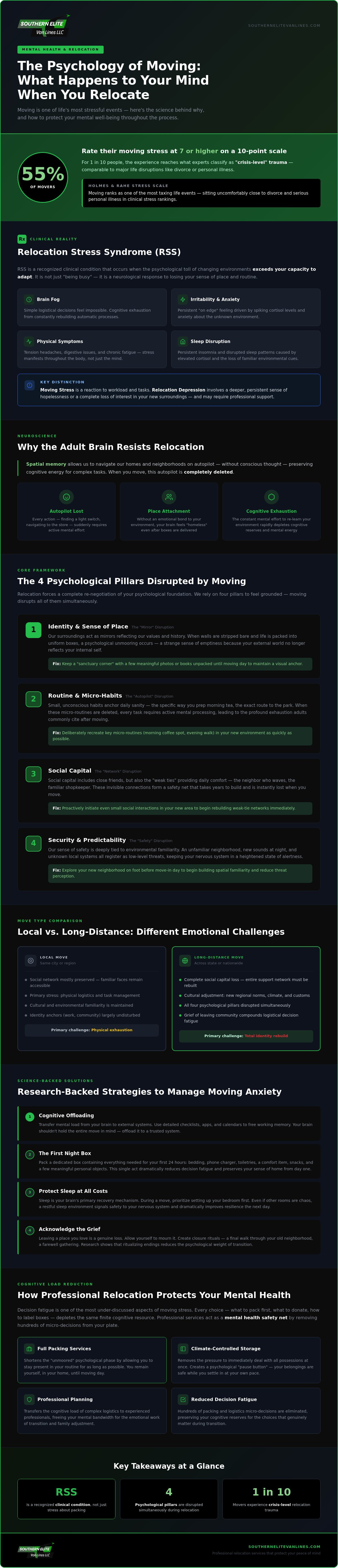
Did you know that 55% of people who moved recently rated their stress at a seven or higher on a ten-point scale? For one in ten, the experience is even more intense, reaching what experts call "crisis-level" trauma. If you feel a heavy sense of dread or exhaustion, you aren't alone. Understanding the psychological effects of moving on adults is the first step toward reclaiming your peace of mind. It's perfectly normal to feel overwhelmed when your entire world is packed into boxes. This emotional weight isn't a sign of weakness; it's a neurological response to losing your sense of place and routine.
We understand that a major transition involves much more than physical labor. You're likely balancing the grief of leaving a community with the decision fatigue of endless logistical planning. This guide will help you manage that burden. You'll discover the scientific reasons behind relocation anxiety and learn professional strategies to protect your mental well-being during the process. We will explore actionable coping mechanisms and ways to reduce your cognitive load. Our goal is to provide the clarity you need to ensure your move feels like a fresh start rather than an emotional crisis.
Table of Contents
Understanding Relocation Stress Syndrome in Adults
Relocation Stress Syndrome (RSS) isn't just a term for being busy. It is a recognized clinical condition that occurs when the psychological toll of changing environments exceeds your capacity to adapt. On the Holmes and Rahe Stress Scale, moving ranks as one of the most taxing life events. It sits uncomfortably close to major life disruptions like divorce or personal illness. This high ranking stems from the sheer volume of change occurring simultaneously. Your body responds to this upheaval by spiking cortisol levels. This often leads to persistent sleep disruption and a feeling of being constantly "on edge." Understanding the psychological effects of moving on adults helps you anticipate these reactions before they become overwhelming. Validating these "Moving Blues" is essential. You aren't failing to handle the move. You are experiencing a standard human response to a significant life shift.
The Symptoms of RSS
RSS manifests in both the mind and body. You might notice a persistent "brain fog" that makes simple logistical decisions feel impossible. This is often accompanied by irritability and a sense of anxiety about the unknown. Physically, the stress often presents as tension headaches, digestive issues, or chronic fatigue. Research into the psychological effects of moving shows that the transition period is often the most volatile for mental health. It is vital to distinguish between standard moving stress and clinical relocation depression. While stress is a reaction to the workload, relocation depression involves a deeper, persistent sense of hopelessness or a complete loss of interest in your new surroundings.
Why the Adult Brain Resists Relocation
The human brain is biologically wired for environmental mastery. We use spatial memory to navigate our homes and neighborhoods without conscious thought. This preserves our cognitive energy for more complex tasks. When you move, that "autopilot" is deleted. Every action requires active mental effort. Finding a light switch or navigating to the grocery store becomes a chore. This leads to rapid cognitive exhaustion. Place attachment is the emotional bond between person and setting. Without this bond, your brain feels "homeless" even after the boxes are delivered. This causes a deep-seated resistance to the new environment until you form new spatial patterns.
The Four Core Psychological Disruptions of Relocation
Relocation is far more than a logistical challenge. It represents a structural reset of your psychological foundation. We rely on four specific pillars to feel grounded: Identity, Routine, Social Capital, and Security. When you move, you're forced to re-negotiate your daily persona from the ground up. This is why the Relocation Stress Syndrome experienced by many adults feels like a total system reboot. You aren't just changing your address; you're temporarily losing the environmental cues that tell you who you are and how to behave.
One of the most jarring aspects of this transition is the loss of micro-routines. These are the small, unconscious habits that anchor our daily sanity, like the specific way you prep your morning tea or the exact route you take to the park. When these shortcuts are deleted, every single task requires active mental processing. This leads to the profound exhaustion often cited when discussing the psychological effects of moving on adults. Your brain is working overtime to rebuild a world that used to be automatic.
Identity and the 'Sense of Place'
Our surroundings act as mirrors that reflect our values and history. When you strip the walls bare and pack your life into uniform brown boxes, a psychological unmooring occurs. You might feel a strange sense of emptiness or a lack of purpose because your external world no longer reflects your internal self. To maintain your self-identity during the packing phase, try keeping a "sanctuary corner" in your current home. Leave a few meaningful photographs or books unpacked until the morning of the move to provide a visual anchor. Utilizing full packing services can also help by shortening this "unmoored" phase, allowing you to stay present in your routine for as long as possible.
The Social Capital Deficit
Social capital refers to the value of your local support networks. It includes your close friends, but it also encompasses the "weak ties" that provide daily comfort. This includes the neighbor who waves every morning or the local shopkeeper who knows your order. Moving creates a sudden trust gap. You're entering a community where no one knows your history or character. The sudden depletion of this network is a major contributor to the psychological effects of moving on adults. It takes significant time and emotional energy to rebuild the social safety net that provides a sense of belonging and security.
Long-Distance vs. Local Moves: Different Emotional Taxonomies
Moving across town involves a disruption of routine, but moving across state lines involves a disruption of the self. This "Clean Break" phenomenon is a unique aspect of nationwide relocation. While a local move allows you to keep your doctor, your favorite grocery store, and your existing social circle, a long-distance move requires a total replacement of your daily support systems. This distance increases the perceived risk of the move, leading to anticipatory grief, which is the sadness felt before the loss actually occurs. Managing this "Long Goodbye" is a critical part of addressing the psychological effects of moving on adults.
Expert long distant movers act as more than just transporters; they serve as the bridge between your past and your future. By delegating the heavy lifting and logistical planning, you free up the emotional bandwidth needed to process the transition. This partnership allows you to focus on saying goodbye to your community rather than worrying about the mechanics of the haul. Recognizing how distance intensifies the psychological effects of moving on adults allows you to separate logistical stress from genuine regret.
The Finality of the Interstate Move
The psychological "sunk cost" of moving thousands of miles is significant. When you sell a family home and relocate to a distant state, the "no-return" anxiety can be paralyzing. You aren't just moving boxes; you're moving your entire life's trajectory. This sense of finality can trigger a survivalist instinct, making every small logistical hiccup feel like a major threat to your future security. Understanding that this anxiety is a byproduct of the distance, not a reflection of your decision, is vital for maintaining mental clarity during the journey.
Logistical Stability as Emotional Security
Logistical precision directly translates to emotional peace. When you know your belongings are housed in climate-controlled, secure storage, your brain stops scanning for potential threats. Professional inventory management also helps combat the loss aversion instinct, which is the psychological tendency to fear losing what we have more than we value gaining something new. By providing professional tracking and meticulous care, we help you maintain a sense of control. This transparency ensures the transition feels like an organized operation rather than a chaotic event, effectively reducing the cognitive load on your already taxed mind.
Research-Backed Strategies for Managing Moving Anxiety
Addressing the psychological effects of moving on adults requires a shift from reactive panic to proactive strategy. One of the most effective methods is cognitive offloading. This involves moving every task, deadline, and inventory item from your mental space onto a physical list or delegating it to professional experts. By externalizing these details, you clear the mental "RAM" needed to process the emotional aspects of the move. When your brain isn't busy remembering where you put the packing tape, it can focus on adjusting to the upcoming life change.
To ensure immediate stability in your new environment, prioritize the "First Night Box." This container should hold essentials that provide instant familiarity, like your favorite pillow, a specific brand of tea, or a cherished photograph. Similarly, identify a "Restoration Room" in the new home and make it the first room to be fully unpacked. Having one space entirely free of boxes within the first 24 hours provides a visual and emotional retreat from the surrounding chaos. It serves as a sanctuary where your brain can rest without scanning for unfinished tasks.
Combatting Decision Fatigue
Decision fatigue is a primary driver of relocation stress. The prefrontal cortex can only handle a finite number of choices before its performance declines. During a move, you make thousands of tiny decisions, from which boxes to tape first to where the silverware should go. This leads to profound mental exhaustion. To protect your mental stamina and bypass the exhaustion of a thousand tiny choices, consider scheduling Full Packing Services for your next relocation. Using "Choice Minimalism" allows you to preserve your energy for the big transitions that actually matter, such as settling into a new career or neighborhood.
Maintaining Routine Amidst Chaos
Maintaining a sense of normalcy is vital when your environment is in flux. Protect your sleep hygiene and exercise habits during the final week, as these are the first things to go and the most important for regulating stress. Use anchoring rituals, like a specific Sunday morning coffee routine, to signal to your brain that life remains stable. It's also helpful to create a "non-moving zone" in your current house. Keep this room entirely clear of boxes until the final day. This gives you a physical space to escape the visual reminders of the move, providing much-needed psychological relief.
Finally, use the "Rule of Three" for social integration once you arrive. Identify three local spots, such as a cafe, a park, and a grocery store, and visit them regularly in your first month. This helps build the "weak ties" necessary for a sense of belonging. By intentionally creating these touchpoints, you accelerate the process of turning a strange environment into a familiar home.
Reducing Cognitive Load through Professional Relocation
Delegating the logistical burden of a move is more than a convenience; it's a strategic decision to preserve your mental health. Professional relocation services act as an "External Hard Drive" for your move. They manage the complex data of scheduling, routing, and inventory, allowing your brain to focus on the emotional transition. This shift in responsibility is a powerful tool to mitigate the psychological effects of moving on adults. When you aren't forced to track every box and transit time, you have the bandwidth to support your family and adapt to your new career. You're essentially outsourcing the stress so you can remain present for the journey.
Predictability is the enemy of anxiety. One of the greatest stressors in a relocation is financial uncertainty. Choosing a model based on weight or a flat rate provides immediate psychological relief compared to the ticking clock of hourly rates. This transparency allows you to plan your budget with confidence. It removes the fear of hidden costs or unexpected delays affecting your final bill. At Southern Elite Van Lines, we prioritize this clarity to ensure you feel supported throughout the entire journey. We believe that a premium service should provide peace of mind from the initial quote to the final delivery.
The Trust Factor in Professional Moving
Expert handling restores your sense of control during a time of upheaval. When you see a team utilize professional crating for your high-value or fragile items, the fear of loss diminishes significantly. This is vital because our belongings are often tied to our sense of history and personal identity. Protecting these items protects your emotional well-being. Additionally, reducing the physical toll of a move prevents the mental toll from worsening. Physical exhaustion lowers your emotional resilience. Staying rested ensures you can handle the psychological effects of moving on adults with a steady, confident hand.
Transitioning with Confidence
The settling-in phase is where your new identity begins to take root. Utilizing unpacking services allows you to bypass the weeks of living among boxes, which can trigger feelings of instability and "unbelonging." Instead, you enter a home that is functional and welcoming from day one. This immediate order helps you reclaim your routine and sense of place much faster. Secure, climate-controlled storage also acts as an emotional safety net. It allows you to pace your transition, keeping non-essential items safe until you're ready to integrate them into your new life. You can focus on your mental health and your family's well-being while we handle the complex logistics of the task.
Moving represents a significant new beginning, not just a logistical end. By choosing a partner who values your peace of mind as much as your property, you turn a potential crisis into a manageable, even exciting, transition. We provide the steady, expert hand needed to guide you through this emotional process with ease and transparency.
Embrace Your New Beginning with Confidence
Relocation is a significant life event that demands more than just physical endurance. By recognizing the psychological effects of moving on adults, you can transition from feeling overwhelmed to feeling empowered. You've learned that validating your emotional state and employing strategies like cognitive offloading are essential steps for protecting your mental well-being during this major shift. Acknowledge the stress, but don't let it define your experience.
You don't have to carry this burden alone. Delegating logistical complexities to a trusted partner ensures your energy remains focused on your future. With decades of expert relocation experience, we provide the steady hand you need. Our professional packing services eliminate decision fatigue, while our nationwide secure storage solutions offer a reliable safety net throughout your journey. Protect your peace of mind with a free long-distance moving estimate from Southern Elite Van Lines.
Your next chapter deserves a seamless start. We're here to ensure your transition is handled with the meticulous care and professional exactness you deserve. Focus on your new home while we manage the details.
Frequently Asked Questions
Is it normal to feel depressed after a move even if it was for a better job?
Yes, it's completely normal to experience post-move depression. Even if the move represents a career advancement, you're still processing the loss of your previous community and established routines. This emotional response is often a reaction to the sudden depletion of your social capital. Acknowledging this grief is a necessary step toward healing. Focus on small victories each day as you rebuild your sense of place in your new environment.
What is Relocation Stress Syndrome and how long does it last?
Relocation Stress Syndrome (RSS) is a clinical condition characterized by anxiety, confusion, and irritability following a move. While the initial symptoms are most intense during the first few weeks, the recovery period can last several months. The duration often depends on how quickly you re-establish your micro-routines and sense of environmental mastery. Utilizing professional unpacking services can significantly shorten this adjustment period by creating a functional, organized home immediately upon arrival.
How can I reduce decision fatigue when planning a long-distance move?
Reducing decision fatigue requires a strategy of cognitive offloading and choice minimalism. Instead of managing thousands of tiny details yourself, delegate the logistical heavy lifting to a professional team. Southern Elite Van Lines offers full packing services that eliminate the need for you to make constant choices about materials and organization. This preserves your mental energy for high-level transitions, such as navigating a new job or helping your family adjust to their new surroundings.
Why do I feel like I've lost my identity after moving to a new state?
You feel this way because our surroundings act as a mirror for our self-identity. When you move to a new state, you lose the "weak tie" interactions and visual cues that reinforce who you are to the world. This psychological unmooring is a common part of the transition. You're essentially re-negotiating your daily persona. To combat this, prioritize unpacking items that hold deep personal meaning to quickly ground your identity in the new space.
Does hiring full packing services actually reduce moving stress?
Yes, full packing services significantly reduce stress by eliminating the cognitive load of the relocation. Packing involves a constant stream of decisions that exhaust the prefrontal cortex. By outsourcing this task, you remove the primary source of decision fatigue. Our team uses high-quality materials and expert techniques to secure your belongings. This allows you to stay focused on your mental health and family well-being while we handle the physical complexities of the haul.
What are the most common psychological effects of moving on adults?
The most common psychological effects of moving on adults include persistent anxiety, decision fatigue, and a sense of grief for their lost community. Research indicates that 55% of people feel overwhelmed during a move, while 47% report significant fatigue. These symptoms often stem from the disruption of daily routines and the depletion of social support networks. Understanding these effects as standard biological responses to change helps you manage them with more patience and clarity.
How do I help my spouse deal with the emotional toll of relocating?
Supporting a spouse involves validation and the creation of shared anchoring rituals. Listen to their concerns without immediately trying to solve every logistical problem. Encourage them to find "three local spots" they enjoy to build new social ties. Pacing the move is also helpful. If they feel rushed, utilizing short-term storage can provide a necessary safety net. This allows you both to settle in at a speed that feels emotionally manageable rather than chaotic.
Can secure storage help reduce the anxiety of a fast-paced move?
Secure storage acts as a psychological safety net during a fast-paced relocation. Knowing your belongings are in a climate-controlled facility reduces the pressure to unpack everything at once. This allows you to pace your emotional transition and focus on immediate needs like sleep and routine. Southern Elite Van Lines provides both short-term and long-term storage solutions to give you the flexibility needed to settle in without feeling overwhelmed by a sea of boxes.


Comments