
How to Support Your Partner Through a Stressful Move: A 2026 Guide
What if the greatest test of your relationship isn't a major life disagreement, but the sheer volume of cardboard boxes stacked in your hallway? Relocation is a complex operation that often pushes even the strongest couples to their emotional limits. When the pressure of logistics meets the weight of leaving a familiar community, it's easy for communication to fail. Learning how to support a partner through a stressful move is about more than just lifting heavy furniture; it's about acting as a steady, expert hand when they feel overwhelmed by the transition.
You likely already know that a move can lead to uneven labor and physical exhaustion. It's a shared journey that requires both tactical planning and deep empathy. This guide promises to help you navigate these hurdles, showing you how to manage the mental load of packing while ensuring your partner feels seen and supported. We'll outline a methodical approach to dividing responsibilities, from utilizing full packing services to alleviate labor disputes to creating a calm environment in your new space. By the end of this article, you'll have a clear strategy to complete your move without major arguments and start your new chapter with a strengthened bond.
Table of Contents
Understanding the Psychology of Relocation Stress
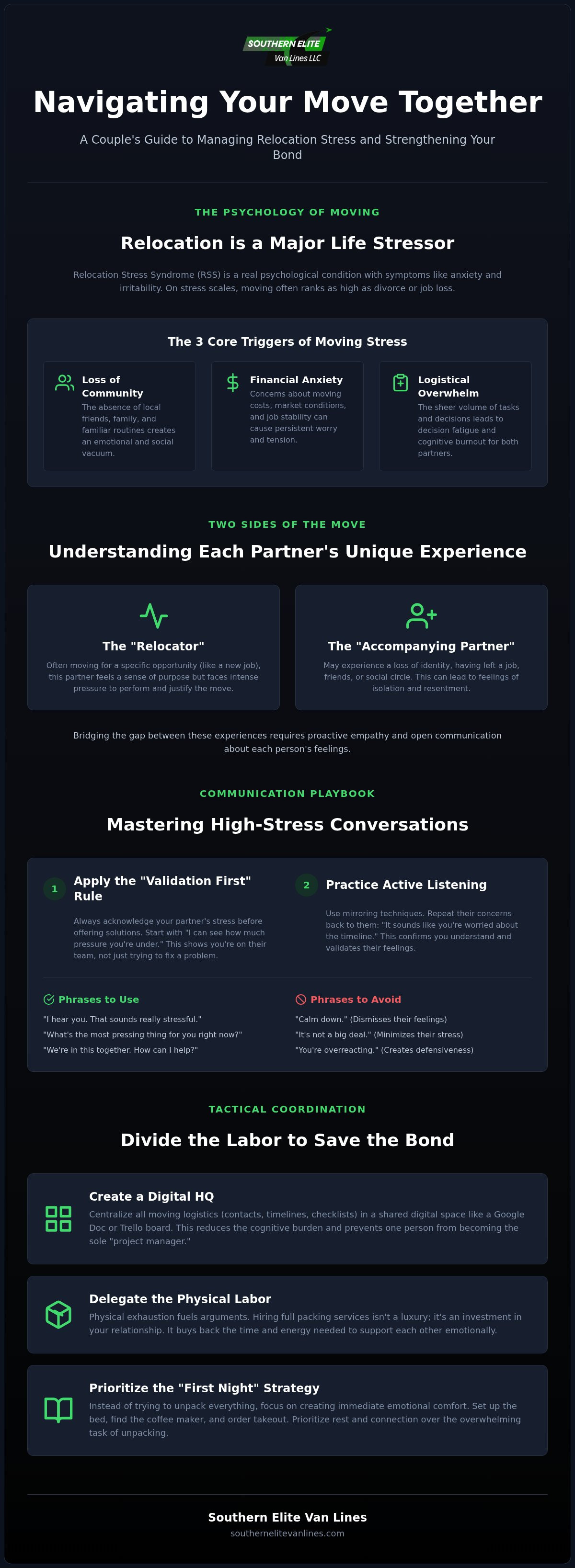
Moving is rarely just a change of address; it's a significant psychological transition that can strain even the most resilient relationships. Relocation Stress Syndrome (RSS) describes a cluster of physiological and emotional disturbances that occur when the familiar structures of life are dismantled. For couples, this often manifests as heightened irritability, unexplained anxiety, or a sense of deep apprehension about the future. The psychological stress of moving is so profound that it frequently ranks alongside divorce or job loss on standardized stress scales. For some individuals, the experience of leaving a long-term home can even mimic the stages of grief or trauma as they mourn their lost environment.
Understanding the primary triggers of this stress is essential for anyone learning how to support a partner through a stressful move. These triggers typically fall into three categories:
Loss of Community: The sudden absence of local friends, family, and daily routines creates an emotional vacuum.
Financial Anxiety: Concerns regarding the cost of the transition or the market conditions in 2026 can create persistent worry.
Logistical Overwhelm: The sheer volume of decisions, from selecting Residential Moving services to managing utility transfers, can lead to decision fatigue.
The Relocator vs. The Accompanying Partner
In most couples, one person takes the lead as the "Relocator," often moving for a specific career advancement or promotion. This individual usually feels a sense of purpose but faces intense pressure to perform in a new role. Conversely, the "Accompanying Partner" often experiences a unique form of identity loss. They may have left a job or a social circle for their spouse's benefit, leading to feelings of isolation. Bridging the gap between these differing emotional timelines requires proactive empathy. The Relocator must acknowledge that while they're moving toward an opportunity, their partner might feel they're moving away from their own identity.
Recognizing Early Warning Signs of Burnout
Burnout during a move often starts quietly before escalating into a crisis. Physical symptoms like persistent fatigue, sleep disruption, and unexplained irritability are common indicators that the stress has become unmanageable. You might also notice behavioral shifts. One partner may withdraw from planning entirely, while the other becomes obsessive about packing every box to perfection. Recognizing these signs early allows you to intervene with support rather than criticism. Validating these feelings as legitimate responses to a difficult process is the first step toward a successful, unified move.
Mastering Communication During High-Stress Transitions
High-stakes environments require a specific communication protocol to prevent burnout. When learning how to support a partner through a stressful move, your first priority should be the "Validation First" rule. This strategy requires you to acknowledge the reality of your partner's stress before you attempt to offer a logistical solution. It's often tempting to jump straight into "fix-it" mode, but jumping to solutions can make a partner feel unheard. Instead, start by simply saying, "I can see how much pressure you're under, and it makes sense that you're feeling this way."
Certain phrases act as accelerants in a tense situation and should be removed from your vocabulary. Telling a partner to "calm down" or claiming that a specific hurdle "isn't a big deal" effectively dismisses their experience. These statements create defensive barriers that stall progress. This is especially true during the decluttering phase, where disagreements about what to keep or discard often arise. Treat these moments as discussions about values rather than just objects. If you can't agree on an item immediately, place it in a "decide later" box to keep the momentum of the move moving forward.
The Power of Active Listening
Active listening is a tactical tool for de-escalating tension. Use mirroring techniques to confirm you've understood your partner's concerns by repeating their main points back to them. You might say, "It sounds like you're worried about the timeline for the Long Distance Moving truck arrival." This simple act ensures they feel seen and respected. Silence is often more supportive than unsolicited advice. By holding space without interrupting, you allow your partner to process their emotions fully before moving on to the next task.
Scheduling Weekly Relationship Check-ins
Effective communicating about a move requires separating logistical "business meetings" from emotional check-ins. Dedicate thirty minutes once a week to discuss the move's status, but use daily check-ins to focus purely on how you're both feeling. Use "I" statements to express your own stress without casting blame. For example, say "I feel overwhelmed by the packing schedule" instead of "You aren't packing fast enough." To protect your relationship, establish a hard boundary: no moving discussions after 8:00 PM. This rule ensures you have time to decompress and reconnect as a couple.
Creating a daily "No-Move Zone" is essential for maintaining a sense of normalcy. Use this time to discuss hobbies, news, or future plans that have nothing to do with cardboard boxes. If the weight of these logistical decisions begins to overshadow your partnership, consider how professional moving assistance can alleviate the burden. Delegating the complex details of the transition allows you to focus on being a supportive partner rather than just a project manager.
Tactical Coordination: Dividing the Labor to Save the Bond
The mental load of a relocation is often more taxing than the physical exertion of hauling boxes. Planning requires tracking a thousand moving parts, from school registrations to utility transfers. When one partner carries this invisible weight alone, resentment builds quickly. To prevent this, create a shared digital headquarters. A simple spreadsheet or project management app centralizes every contract and deadline. This ensures both individuals have equal access to information, eliminating the constant need for one person to act as the primary information hub. This transparency is a foundational part of learning how to support a partner through a stressful move.
Instead of an arbitrary 50/50 split, divide tasks based on individual strengths. One person might excel at the "Admin" side, managing address changes and contracts. The other might prefer the "Action" of packing inventory and running supply errands. This strengths-based approach is one of the four ways to support loved ones when they are navigating high-pressure transitions. Remember to celebrate "Micro-Wins" throughout the process. Finishing a single room or finalizing a contract deserves acknowledgment. These small celebrations maintain momentum and remind you that you are a team working toward a common goal.
Mapping Out the Division of Responsibilities
Frustration often arises when one partner feels like the "Lead Planner" while the other feels like a mere "Helper." This dynamic creates an unintentional hierarchy that breeds tension. By clearly defining who handles specific categories, you empower each other to take full ownership. The partner handling the "Admin" should have the final word on logistical schedules. The partner handling "Action" takes the lead on packing strategy. This clarity prevents micromanagement and allows you to support each other without overstepping boundaries.
Using Professional Resources as a Team Asset
Outsourcing the most grueling parts of a move is an investment in your relationship. Professional help removes the root cause of many labor-related arguments. Working with experienced long distant movers provides a scalable solution that handles the heavy lifting, allowing you to focus on emotional support. A flat-rate quote also eliminates the "Financial Blame Game" by providing cost certainty from the start. When you remove the physical exhaustion of a DIY move, you buy back the patience needed to navigate the emotional hurdles of relocation together.
Sustaining Your Relationship in the New Home
The arrival at your new residence often brings a temporary surge of adrenaline, but the real work of emotional integration begins once the moving truck leaves. Understanding how to support a partner through a stressful move requires a long-term perspective that extends well into the first thirty days. This period is frequently marked by the "Post-Move Slump," where the cumulative exhaustion of the previous weeks finally catches up with both individuals. Instead of rushing to unpack every box immediately, prioritize a "First Night" strategy. This approach focuses on creating a functional sanctuary, allowing you to recover physically and emotionally before tackling the larger organization of the house.
Unpacking should be a slow, collaborative process rather than a race to the finish line. Rushing often leads to decision fatigue and unnecessary friction between partners. By treating the setup of your new home as a shared creative project, you can turn a logistical chore into a bonding experience. Building a new local support network together is equally vital. Take time to explore the neighborhood as a couple, identifying local landmarks and services that will help you both feel rooted in your new community.
Creating Immediate Comfort
Success in the first 24 hours depends on the "Essentials Box" strategy. This container should hold everything needed for a stress-free transition: toiletries, chargers, basic tools, and fresh linens. Make the bedroom the first room you fully unpack. By ensuring the bed is made and the space is clutter-free, you provide a psychological retreat from the chaos of the rest of the home. Establish new rituals early to build a sense of belonging. Whether it's finding a favorite local coffee shop or taking a nightly walk, these small habits transform an unfamiliar house into a shared home.
Navigating the Accompanying Partner’s Transition
The partner who moved for their spouse's career often faces a steeper emotional climb after the move. While one person has a built-in social network at their new job, the other may struggle with isolation or the search for new employment. Patience is your most valuable asset during this phase. One partner will inevitably settle in faster than the other. Encourage individual hobbies and local exploration to prevent codependency in the new city. Supporting your partner's independent growth ensures they feel empowered rather than just "along for the ride."
If the sight of lingering boxes is causing tension or delaying your ability to settle in, consider professional Unpacking Services to handle the final stage of your relocation. Delegating this task allows you to focus entirely on your partner's emotional well-being and the successful start of your new chapter together.
How Southern Elite Van Lines Removes the Friction
Choosing professional assistance is more than a logistical decision; it's a strategic investment in your relationship's health. When you delegate the complex details of a relocation to an expert team, you reclaim the emotional bandwidth necessary to be present for your spouse. This shift in focus is fundamental to understanding how to support a partner through a stressful move. By removing the physical burden of the transition, you create a space where empathy can thrive instead of being crowded out by exhaustion and task lists. Our philosophy at Southern Elite is built on this principle: we manage every logistical variable so you can prioritize your family's peace of mind.
Professional Packing: Buying Back Your Time
The most significant source of friction during a move is often the weeks spent living among half-packed boxes. This environment of physical clutter quickly translates into emotional clutter. Utilizing full packing services transforms this experience. Professional teams work with a level of precision that is difficult to replicate, completing in hours what typically takes couples several weekends. This efficiency buys back your time, allowing you to spend those final days in your old city visiting favorite spots or saying goodbye to friends rather than taping boxes. Expert packers also assume the responsibility for high-value inventory and fragile items, removing the fear of damage that often leads to blame and tension between partners.
A Seamless Transition with Southern Elite
A premium relocation experience relies on clear, methodical organization. Every client at Southern Elite is assigned a dedicated moving coordinator who serves as a steady, expert buffer for the couple. This single point of contact handles the complex scheduling and vendor management, ensuring you aren't stuck in a cycle of logistical "business meetings" at the dinner table. Our modern fleet and secure transportation methods provide a sense of security that DIY methods simply cannot match. For more information on our standards of care, you can explore the Southern Elite Van Lines case study on premium nationwide service.
Unexpected delays are a common reality in the housing market, but they don't have to become a source of conflict. Our climate-controlled storage solutions provide a necessary safety net for uncertain timelines. If your new home isn't ready or you need a "soft landing" in a new city, these secure facilities offer the flexibility to pause the process without the stress of a ticking clock. This transitional flexibility ensures that your move remains an effortless, uninterrupted experience from the first inquiry to the final box being unpacked.
Strengthening Your Bond Through a Seamless Relocation
Relocation is a significant milestone that tests the resilience of any partnership. By prioritizing active listening and establishing clear boundaries for moving discussions, you transform a potentially volatile situation into a shared achievement. Mastering how to support a partner through a stressful move involves more than just physical effort; it requires a strategic approach to managing the mental load and emotional transitions of both individuals. When you focus on validation and shared goals, the logistics of the move become a secondary concern to the health of your relationship.
Southern Elite Van Lines provides the expert hand needed to navigate these complexities with calm confidence. With nationwide coverage for interstate moves and professional packing and unpacking services, we eliminate the physical exhaustion that often leads to relationship friction. Our climate-controlled secure storage offers the transitional flexibility you need to settle in at your own pace. Request a Professional Moving Quote to Simplify Your Journey and focus on the excitement of your new beginning. Your next chapter is a shared journey, and we're here to ensure it starts with total peace of mind and effortless momentum.
Frequently Asked Questions
What is the most stressful part of moving for a couple?
The most stressful part for many couples is the simultaneous collapse of daily routines and the surge in decision fatigue. You're not just moving boxes; you're dismantling your sense of security while making hundreds of micro-decisions. This combination often leads to communication breakdowns. Acknowledging that the stress is a result of the situation, rather than your partner's character, is the first step toward maintaining a calm and supportive environment throughout the transition.
How do I talk to my partner about moving stress without starting a fight?
Start by choosing a neutral time when neither of you is hungry or exhausted. Use the "Validation First" rule to acknowledge your partner's feelings before offering any logistical solutions. Phrases like "I can see you're under a lot of pressure" create a safe space for dialogue. By avoiding dismissive language and focusing on "I" statements, you can express your own needs without making your partner feel attacked or blamed for the move's challenges.
Is it normal for my partner to be depressed after a move?
It is very common for individuals to experience a "Post-Move Slump" or Relocation Stress Syndrome. This often feels like a period of mourning for friends, family, and a familiar community. The adrenaline of moving day eventually wears off, leaving room for emotional exhaustion. You can support your partner by validating these feelings and allowing them the time to grieve their old life while slowly building new rituals in your shared home.
How can I support my partner if they are moving for my job?
When one person relocates for another's career, they often face a significant loss of identity. You can learn how to support a partner through a stressful move by actively helping them find a new social circle or professional network. Be patient if their adjustment takes longer than yours. Encourage them to pursue individual hobbies and ensure they feel like an equal stakeholder in the new home rather than just an accompanying guest.
Should we hire professional packers to save our relationship?
Delegating the physical labor of a move is one of the most effective ways to preserve your relationship. Full Packing Services eliminate the weeks of living in clutter and the physical exhaustion that often triggers arguments. By hiring professionals, you buy back the time and energy needed to focus on each other's emotional well-being. It transforms the move from a grueling chore into a managed transition handled by a steady, expert hand.
How do we divide moving chores fairly?
Fair division doesn't always mean an exact 50/50 split of every task. Instead, divide responsibilities based on individual strengths. One partner might handle the "Admin" tasks like contracts and utilities, while the other takes the lead on "Action" items like inventory management and supply runs. This strengths-based approach prevents micromanagement and ensures that both partners feel they are contributing meaningfully to the relocation without becoming overwhelmed by tasks they dislike.
What should I do if my partner is obsessing over the moving budget?
Financial uncertainty is a primary driver of relocation stress. If your partner is obsessing over costs, provide clarity by requesting a flat-rate quote for your move. This removes the "Financial Blame Game" by establishing a clear, predictable budget from the start. Use a shared digital headquarters to track all expenses transparently. Having a single source of truth for your finances helps alleviate the anxiety that comes from the fear of hidden or unexpected costs.
How long does it take for a relationship to stabilize after a long-distance move?
While every couple is different, many relationships take approximately three to six months to stabilize after a major relocation. The first few weeks are often dominated by the logistics of unpacking and settling in. Once the "Post-Move Slump" passes and you begin to establish new local routines, the tension typically subsides. Stabilization is a shared journey that requires ongoing patience, empathy, and a commitment to maintaining your "No-Move Zone" conversations even after you've settled.


Comments