
Moving With Pets Cross Country Guide: The 2026 Essential Manual
Your pet’s relocation is a parallel logistics operation that must be synchronized perfectly with your household van line schedule to ensure a successful transition. This moving with pets cross country guide provides the authoritative framework you need to manage every detail of this complex move. We recognize that while you focus on full packing services and inventory lists, your deepest concern is the anxiety your animal feels during the chaos of loading day. It is normal to feel conflicted about whether to choose a specialized flight or a multi-day road trip across state lines.
You deserve the peace of mind that comes from a well-executed strategy. This manual promises to help you master the logistics of relocating your pets with expert tactics for safety, comfort, and professional coordination. We will provide a clear timeline for pet preparation, explain essential 2026 regulations like the electronic Certificate of Veterinary Inspection, and show you how to minimize animal stress. You will learn how to achieve a seamless handoff between your pet's needs and your long distance moving team for an effortless experience.
Key Takeaways
Establish a 60-day Pet Relocation Window to manage veterinary requirements and acclimation before your scheduled departure.
Compare the logistics of driving versus flying to determine the safest mode of transport for your pet's specific breed and age.
Use this moving with pets cross country guide to integrate your animal's needs with your long-distance moving team's schedule.
Learn how to maintain a Routine Anchor during transit to minimize travel anxiety and environmental shock in your new home.
Prioritize your pet's comfort during the first 48 hours by establishing a dedicated safe zone before you begin the unpacking process.
Table of Contents
Preparing Your Pet for a Long-Distance Transition
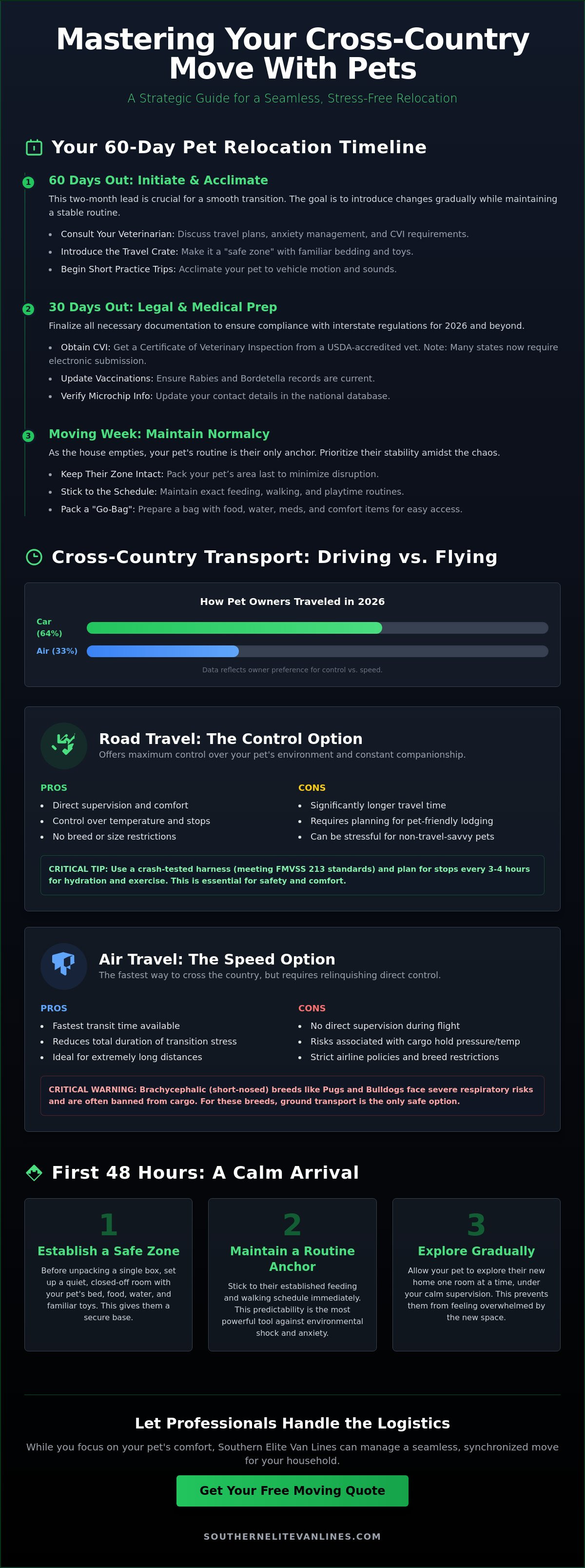
A successful relocation requires more than just hiring a van line; it demands a dedicated "Pet First" moving strategy. This approach prioritizes your animal's psychological and physical needs as the foundation of your entire logistics plan. We recommend establishing a "Pet Relocation Window" exactly 60 days before your departure. This two-month lead time is essential for mitigating the profound stress animals feel when their familiar environment begins to change. By starting early, you transform a potentially traumatic event into a manageable transition.
The primary goal during this window is to maintain a sense of normalcy. While you might be coordinating full packing services or sorting through years of belongings, your pet needs a stable routine. Feed them, walk them, and play with them at the exact same times every day. Animals are highly sensitive to the "thinning" of a home as boxes are filled. Keeping their specific area intact until the final moment helps them feel secure while the rest of the house is in flux. Using this moving with pets cross country guide as your roadmap allows you to focus on these emotional needs while we handle the heavy lifting.
Veterinary Clearance and Health Certificates
Interstate regulations are specific and strictly enforced in 2026. You must obtain a Certificate of Veterinary Inspection (CVI) from a USDA-accredited veterinarian. While the USDA APHIS does not regulate owner-led pet moves, individual states set their own entry requirements. For instance, as of January 1, 2026, California requires CVIs for certain transfers to be submitted electronically to the CDFA; paper forms are no longer the standard. Ensure your pet’s rabies and Bordetella vaccinations are documented and current. This is also the ideal time to discuss anxiety management with your vet. If your animal is prone to high stress, they may prescribe specialized medications to ease the journey. Finally, verify that your pet’s microchip is registered in a national database with your updated contact information.
Acclimatization and Crate Training
Acclimatization is a methodical process that cannot be rushed. Introduce the travel crate at the start of your 60-day window, turning it into a "safe zone" by placing familiar bedding and favorite toys inside. The transportation of animals over long distances involves significant vibrations, engine noise, and movement. To prepare them, conduct short practice trips around your neighborhood. These sessions help your pet adjust to the sensation of a moving vehicle without the pressure of a full day of travel. You can also utilize pheromone sprays or diffusers that mimic calming natural scents to reduce environmental anxiety. These small, consistent steps build the confidence your pet will need for the multi-state journey ahead.
Evaluating Cross-Country Transport Options
Choosing the right mode of transport is the most significant logistical decision in your moving with pets cross country guide. This choice often forces a trade-off between comfort and control. While driving allows you to remain by your pet's side, it extends the duration of the transition. Conversely, air travel is remarkably fast but requires you to relinquish direct supervision to airline personnel. Statistics from early 2026 show that 64% of pet owners prefer car travel, while 33% opt for the speed of flight. Your decision must account for your pet's age, health status, and specific breed requirements.
Brachycephalic breeds, such as Pugs or Bulldogs, face unique challenges. Most major airlines have implemented strict restrictions or outright bans on these breeds in cargo holds due to respiratory risks in high-altitude environments. For these animals, ground transport is often the only safe path. As the pet travel market reaches a projected $2.42 billion in 2026, we see a rise in specialized infrastructure, including GPS-enabled smart crates and high-tech relief stations at major interstate hubs. If you are coordinating a complex long distance moving operation, matching your pet’s itinerary with your household goods delivery is essential for a smooth arrival.
The Pros and Cons of Road Travel
Road travel offers the highest level of environmental control. You can manage the cabin temperature as you cross different time zones and climates, which is vital for senior pets. Safety is paramount; we recommend using crash-tested harnesses that meet Federal Motor Vehicle Safety Standard 213. Plan for frequent stops every three to four hours to provide hydration and exercise. This pace keeps your pet grounded and prevents the "cabin fever" that leads to vocalization or destructive behavior during long stretches across the United States.
Air Travel Logistics and Airline Policies
If you choose to fly, you must navigate the latest 2026 airline policies. Most carriers require IATA-compliant crates that allow the animal to stand, turn around, and lie down comfortably. Be aware of temperature-controlled hold risks; many airlines will not board pets if the runway temperature exceeds 85°F or falls below 45°F. Always verify the specific interstate pet travel regulations for your destination state, as some may require electronic health certificates to be filed before your flight lands. Booking a direct flight is the best way to minimize the time your pet spends in a high-stress airport environment.
Coordinating with Your Professional Moving Team
Your moving day involves a complex choreography between your family and your long distant movers. While the crew focuses on the physical transition of your furniture, you must manage the safety of your animals. This moving with pets cross country guide emphasizes that a successful relocation requires clear communication with your service providers. You aren't just moving boxes; you're moving a household that includes vulnerable members who don't understand the process. A polished moving experience depends on how well you integrate these parallel operations.
Assign a "Pet Guardian" for the duration of the loading process. This individual's sole responsibility is to monitor the animal's location and stress levels. If you're busy managing the inventory or signing paperwork, have a partner or friend take this role. It ensures the animal is never left unattended near open doors or heavy equipment. This dedicated focus prevents the panic that often leads to pets getting lost during the chaos of loading day. It's a strategic move that provides a sense of security for both the animal and the human family members.
Never transport a pet in the cargo area of a moving van. These vehicles are not climate-controlled and lack the safety restraints necessary for animal travel. Professional van lines cannot accept pets as cargo due to liability and welfare standards. Your pet should travel with you in your personal vehicle or via a pre-arranged specialized transport service. Keeping them in your direct care ensures you can respond to their needs immediately as you cross state lines.
Managing Pet Safety on Loading Day
Establish a "Safe Room" early in the morning. This room should be the last one packed or contain items that aren't being moved. Place a large, clear sign on the door stating "DO NOT ENTER: PET INSIDE." This simple step prevents accidental "door-dash" incidents when movers are carrying heavy items through the main exits. The ASPCA's guide on Moving With Your Pet suggest that keeping them away from the noise of packing tape and heavy lifting is the best way to prevent panic. This controlled environment acts as a buffer against the high-traffic activity in the rest of the house.
Communicating Requirements to Your Van Line
Speak with your southern elite van lines representative well before the crew arrives. Confirm the designated safe zone and ensure the lead mover understands these boundaries during the initial walkthrough. Coordinating arrival times is also vital. Aim to have your pets secured or even removed from the premises before the heavy equipment and ramps are deployed. This proactive communication ensures a polished, professional experience where both your belongings and your animals are treated with meticulous care and exactness.
The Cross-Country Journey: Comfort and Safety
Executing a multi-day trip across the United States requires a disciplined approach to your pet's daily schedule. We utilize the "Routine Anchor" concept to keep animals grounded while their environment remains in constant motion. This means feeding, exercise, and rest periods must occur at the same intervals as they did in your original home. Consistency acts as a psychological stabilizer, reducing the likelihood of travel-induced anxiety. This moving with pets cross country guide focuses on maintaining that stability from the moment you leave your driveway until you reach your new doorstep.
Vigilance is your most important tool during transit. You must identify signs of motion sickness or extreme stress before they escalate into health crises. Look for excessive drooling, persistent panting, or unusual lethargy. If your pet refuses water for more than six hours, it is time to pause the journey and consult a professional. High-altitude crossings or sudden climate shifts can affect an animal's hydration levels rapidly. If you need assistance managing the physical aspects of your household transition so you can focus entirely on your pet's well-being, contact southern elite van lines for premium residential moving support.
Packing a Comprehensive Pet Travel Kit
Your travel kit should be easily accessible, not buried under luggage. Prepare for contingencies by including a seven-day supply of their current food to avoid digestive upset from sudden brand changes. Your kit must include:
Portable, spill-proof water bowls and three gallons of familiar water.
A "comfort bundle" containing an unwashed t-shirt with your scent to soothe them in crates.
Disposable waste supplies and specialized cleaning agents for accidental messes.
A basic first-aid kit with antiseptic wipes, gauze, and any vet-prescribed medications.
Physical copies of the 2026 Certificate of Veterinary Inspection and vaccination records.
Identifying Pet-Friendly Accommodations and Stops
Vetting your overnight stops is a critical safety protocol. In 2026, many national hotel chains have updated their pet policies to include weight limits or specific breed restrictions; always call ahead to confirm these details rather than relying on third-party websites. Use dedicated travel apps to locate fenced dog parks and 24-hour emergency veterinary clinics along your specific route. Once you enter a hotel room, perform a "Check-In Routine" before releasing your pet. Inspect the floor for small debris, check under the bed for forgotten items from previous guests, and ensure all window latches are secure. This methodical inspection ensures the room is a true sanctuary for your animal after a long day on the road.
Settling into Your New Home Nationwide
Arrival at your new residence marks the conclusion of the physical journey, but it's the beginning of the psychological transition for your animal. This final chapter of our moving with pets cross country guide focuses on the critical first 48 hours. During this window, you should prioritize pet comfort over the urge to unpack every box. Your animal needs to feel that the new environment is secure before they can truly relax. We recommend a phased approach to exploration, starting with a single room and gradually expanding their access as they show signs of confidence.
Managing environmental shock is a factor many owners overlook during a long-distance relocation. If your move involves a significant change in altitude or climate, your pet's body must adapt to the new conditions. High-altitude locations can lead to quicker dehydration, while extreme heat or cold requires adjusted exercise schedules to prevent overexertion. Monitor your pet for changes in appetite or energy levels during the first week. By reinforcing positive associations through play and high-value treats in each new room, you help them anchor themselves to the property. This proactive care ensures the move feels like a new beginning rather than a stressful disruption.
Creating a Safe Zone in the New Property
Before the residential moving crew begins unloading the van, designate a quiet room as a temporary sanctuary. This prevents your pet from being overwhelmed by the noise of heavy lifting and the sight of unfamiliar people moving through the house. Unpack their bed, water bowl, and favorite toys immediately to establish a familiar scent profile. If you've opted for professional unpacking services, instruct the team to leave the pet's safe zone undisturbed until the animal is ready to explore. Finally, perform a meticulous check of the yard's perimeter. Look for gaps in fencing, local flora that may be toxic, or signs of local wildlife that could pose a threat to a new animal in the territory.
Updating Vital Records and Local Registration
Once the initial move-in chaos subsides, focus on administrative compliance. We recommend registering with a local veterinarian within the first 14 days of arrival. This ensures you have a point of contact for any health certificates needed for future travel or unexpected emergencies. You must also update local license tags and city-specific pet registrations, as requirements vary significantly between municipalities. Spend time exploring your new neighborhood to identify the nearest 24-hour emergency clinic and pet-friendly parks. This methodical approach to settling in completes the shared journey of relocation, providing you and your pet with a secure foundation in your new community.
Mastering Your Nationwide Transition
Success in a nationwide relocation depends on a synchronized strategy that balances your pet's emotional safety with logistical precision. By establishing a 60-day preparation window and adhering to a strict Routine Anchor during transit, you transform a complex interstate operation into a manageable journey. This moving with pets cross country guide establishes the framework for a seamless experience. It ensures every veterinary requirement and loading day protocol is executed with the exactness your family deserves.
You don't have to navigate these logistics alone. Our team provides an A+ Rated Nationwide Service specifically designed to alleviate the pressure of complex residential moves. Whether you require professional packing for high-value items or climate-controlled storage solutions for your transition, we handle the physical demands so you can remain the steady, supportive presence your pet needs. Get a Professional Quote for Your Cross-Country Move today to secure a partner who values your peace of mind as much as the safety of your belongings. Your new beginning starts with a well-planned move, and we are committed to ensuring you and your pets arrive with ease and confidence.
Frequently Asked Questions
Do I need a health certificate to move my pet across state lines in 2026?
Yes, most states require a Certificate of Veterinary Inspection (CVI) for pets crossing state lines in 2026. While the USDA does not mandate these for personal moves, destination states like California now require electronic submissions for certain entries. You should obtain this certificate from a USDA accredited veterinarian within 10 days of arrival to ensure compliance with local animal health regulations and avoid delays at agricultural checkpoints.
Can professional movers transport my pets in the moving truck?
Professional movers cannot transport pets in a moving truck under any circumstances. Cargo areas are not climate controlled and lack the safety restraints necessary for animal welfare. Federal regulations and liability standards prevent residential moving companies from accepting live animals as cargo. You must transport your pet in your personal vehicle or through a specialized pet relocation service that provides a monitored, temperature controlled environment.
How do I manage a cat during a cross-country drive?
Secure your cat in a sturdy, well ventilated carrier for the duration of the vehicle's movement. Cats often feel safer in confined spaces during transit; use pheromone sprays and familiar bedding to reduce their anxiety. Plan your stops carefully to allow for litter box use and hydration within the parked car. This moving with pets cross country guide recommends keeping the carrier in a shaded, level area of the vehicle to prevent motion sickness.
What should I do if my pet gets sick during the long-distance move?
Locate 24 hour emergency veterinary clinics along your route before you depart. If your pet shows signs of extreme lethargy, persistent vomiting, or refusal to drink, use a pet specific travel app to find the nearest professional care immediately. Always keep your pet’s 2026 medical records and current health certificates in an accessible travel kit so the emergency veterinarian can review their history without delay.
Are there specific state laws I should know about when moving pets?
State laws vary significantly; however, almost every state requires proof of a current rabies vaccination for dogs and cats over four months old. Some states, such as Hawaii or those with strict agricultural borders, may have additional permit requirements or mandatory quarantine periods. Check the Department of Agriculture website for your destination state at least 60 days before your move to confirm their specific 2026 entry protocols.
How long does it take for a pet to adjust to a new home after a long move?
Most pets require approximately three months to feel fully integrated into a new home, though initial decompression happens within the first few days. The "3-3-3 rule" suggests three days to settle from the initial shock, three weeks to learn the new routine, and three months to build total trust. Consistency in feeding and exercise schedules during the first 90 days is the most effective way to accelerate this adjustment process.
Should I sedate my pet for a cross-country flight or drive?
Consult your veterinarian before using any form of sedation for travel. Many airlines discourage or prohibit chemical sedation for pets in cargo holds because it can interfere with their ability to regulate body temperature and breathing at high altitudes. For road travel, your vet may recommend mild anti-anxiety medications or natural supplements, but these should always be tested during a practice trip before the actual relocation begins.
How can I find pet-friendly hotels during my cross-country relocation?
Use dedicated travel platforms that filter for pet friendly accommodations and verify their 2026 weight and breed restrictions. Always call the hotel directly after booking online to confirm their current pet policy and any associated fees. This moving with pets cross country guide suggests requesting a ground floor room near an exit to make bathroom breaks more efficient and less stressful for your animal during overnight stops.


Comments