
Managing Anxiety When Moving to a New State: A 2026 Guide to a Stress-Free Relocation
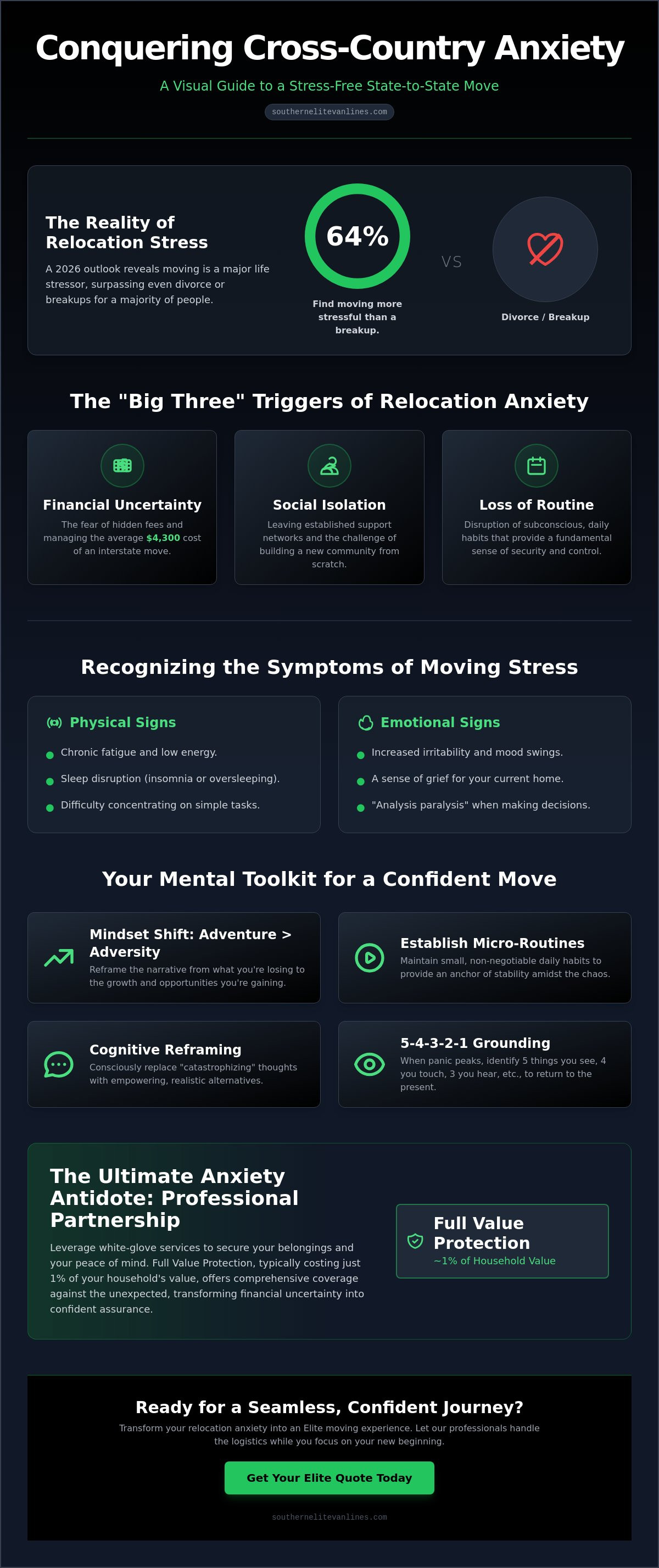
Did you know that 64% of people moving in 2026 find the process more stressful than a divorce or a breakup? It's a staggering figure that highlights why managing anxiety when moving to a new state is just as critical as finding the right neighborhood. You're likely feeling the weight of an overwhelming logistical checklist, from the $1.25 USPS address change fee to the $4,300 average cost of a long-distance relocation. We understand that the fear of the unknown can be paralyzing when you're leaving behind familiar social circles for a fresh start in a place like Idaho or Florida.
You deserve a transition that prioritizes your peace of mind as much as your physical cargo. Discover professional strategies and logistical frameworks designed to transform your relocation anxiety into a seamless, confident journey. This guide provides a clear, manageable timeline and expert insights on protecting your belongings through Full Value Protection, which typically costs about 1% of your total household value. We're here to ensure you reach your new home with your mental health intact and your future secured through an Elite moving experience.
Key Takeaways
Identify the "Big Three" psychological triggers of relocation and learn how to reframe your internal narrative from loss to opportunity.
Utilize a systematic 8-week logistical framework for managing anxiety when moving to a new state to maintain absolute control over every detail.
Establish immediate micro-routines in your new environment to protect your mental health and combat the "identity crisis" of being a newcomer.
Leverage the benefits of professional white-glove services to secure both your physical belongings and your emotional peace of mind during transit.
Table of Contents Understanding Relocation Anxiety: Why Moving to a New State Feels Overwhelming Mental Frameworks for a Confident State-to-State Transition Reducing Moving Stress Through Systematic Logistical Planning Managing the 'First Month' Jitters in Your New State Why Professional Partnership is the Ultimate Anxiety Antidote
Understanding Relocation Anxiety: Why Moving to a New State Feels Overwhelming
Relocation anxiety is a physiological and psychological response to a massive shift in your environment. It is widely recognized as one of the top stressors in life; often ranking higher than job loss or serious illness. When you leave your primary comfort zone, your brain enters a state of hyper-vigilance. This survival mechanism is designed to keep you safe in new surroundings, but it often manifests as a constant feeling of being "on edge." You aren't just moving boxes; you're uprooting your entire sense of security.
We identify three primary triggers that fuel this response. First, financial uncertainty stems from the $4,300 average cost of an interstate move and the fear of hidden fees. Second, social isolation occurs as you distance yourself from established support networks. Finally, the loss of routine disrupts the subconscious habits that provide your daily sense of security. Managing anxiety when moving to a new state requires acknowledging that these stressors are real and valid. Moving state-to-state introduces unique variables like differing tax laws, unfamiliar climates, and subtle cultural shifts that can make even a confident professional feel vulnerable.
Common Symptoms of Moving Stress
Physical signs: Chronic fatigue, sleep disruption, and a noticeable difficulty concentrating on simple, daily tasks.
Emotional signs: Increased irritability, a sense of grief for your current home, and "analysis paralysis" while sorting through your belongings.
Relocation anxiety is a temporary but manageable adjustment disorder triggered by significant environmental change.
The 2026 Impact: Why We Feel More Pressure Today
The 11-12% of Americans moving in 2026 face modern pressures that didn't exist a decade ago. Social media creates an unrealistic standard for "perfect," aesthetically pleasing moves, which often leads to unnecessary self-criticism. Additionally, managing remote work transitions while physically relocating adds a layer of cognitive load that can be exhausting. Digital connectivity often backfires as well. Seeing friends gather in your old city through a screen can amplify FOMO and delay your emotional integration into your new community. Recognizing these modern influences is the first step in managing anxiety when moving to a new state with clarity and precision.
Mental Frameworks for a Confident State-to-State Transition
Successfully managing anxiety when moving to a new state begins with the story you tell yourself. While the physical logistics are vital, your internal narrative dictates your stress levels throughout the journey. We recommend shifting from an "adversity" mindset to an "adventure" framework. Instead of focusing on the social circles you're leaving, focus on the professional and personal growth opportunities awaiting you in your new destination. This psychological shift is essential for avoiding Relocation Stress Syndrome, a clinical condition that can lead to physical illness and emotional exhaustion if left unmanaged.
To combat these feelings, establish "Micro-Routines." These are small, non-negotiable habits, like a 15-minute morning walk or a specific evening reading time, that remain consistent even when your home is in boxes. These routines provide an anchor for your brain, signaling that despite the external chaos, your core life remains intact. When panic peaks, use the modified 5-4-3-2-1 grounding technique. Identify five things you see in your current room, four things you can touch, like packing tape or a familiar sweater, three things you hear, two things you smell, and one thing you taste. This method pulls your focus out of future-based "what-if" scenarios and back into the present moment.
It's helpful to acknowledge that perfection is impossible during a move. Planning for flexibility allows you to handle minor delays with the same calm confidence that Southern Elite Van Lines brings to every interstate relocation. By setting realistic expectations, you protect your peace of mind from the inevitable hiccups of a long-distance transition.
Cognitive Reframing for Relocators
Identify "catastrophizing" thoughts before they take root. If you find yourself thinking, "I'll never find a community as good as this one," consciously replace it with, "I have the skills to build a new, vibrant network." We also suggest celebrating "Last Firsts." Visit your favorite local coffee shop one last time or have a final dinner in your favorite neighborhood spot. These moments of intentional closure help you process grief and prepare your mind for the next chapter. Managing anxiety when moving to a new state becomes much easier when you've properly said goodbye to the old one.
Maintaining Emotional Stability During the Transit
Prepare a "Peace of Mind" kit containing essential documents, medications, and sentimental items that stay in your personal vehicle rather than the moving truck. Having these items within reach prevents the "did I pack that?" panic. Additionally, schedule "No-Moving Zones." Designate specific times, such as dinner or Sunday mornings, where any talk of logistics or packing is strictly prohibited. This boundary ensures your move doesn't consume your entire identity. If the emotional weight becomes too heavy, lean on your support system or seek professional guidance to maintain your stability during this high-stakes transition.
Reducing Moving Stress Through Systematic Logistical Planning
Managing anxiety when moving to a new state becomes a structured process rather than an emotional burden when you anchor your plan in logistical precision. Anxiety often thrives in the gaps of an incomplete plan, but systematic control closes those gaps. By maintaining a master inventory list, you eliminate the "did I forget that?" panic that keeps 45% of relocators awake at night. We utilize digital tracking technology to provide real-time updates on your belongings, ensuring that transparency replaces the stress of the unknown.
Financial transparency is another critical pillar of emotional stability. A 2026 report indicates that unexpected fees are a primary source of moving stress for 29% of people. You can mitigate this fear by securing firm, weight-based or flat-rate quotes early in the process. This financial clarity allows you to protect your budget and your peace of mind simultaneously. When every dollar is accounted for, the "Elite" standard of service moves from a luxury to a functional tool for your mental well-being.
The 8-Week Stress-Reduction Timeline
Weeks 8 to 6: Focus on the decluttering phase. Purging unnecessary items lightens your future load and reduces your total shipment weight, which can lower your average cost from the 2026 baseline of $4,300.
Weeks 5 to 3: Transition into professional packing and administrative tasks. This is the time to pay the $1.25 USPS identity verification fee for your address change and transfer school or medical records.
Weeks 2 to 1: Finalize details and prepare your "Open First" boxes. These containers should hold the essentials needed to function for the first 48 hours in your new home.
Inventory Management as a Psychological Tool
A detailed long distant movers checklist provides instant relief by converting abstract worries into concrete, checkable tasks. High-value items, such as family heirlooms or pianos, benefit from professional crating, which removes the fear of damage during transit. Logistical precision acts as a shield against emotional overwhelm by ensuring that every variable is managed with expert care.
Managing the 'First Month' Jitters in Your New State
Managing anxiety when moving to a new state doesn't conclude once the moving truck departs. The arrival at your new residence marks the beginning of the "First Month" jitters, a period often defined by a temporary identity crisis. You're no longer the local expert; you're a newcomer navigating unfamiliar geography and social expectations. This shift can be jarring, but you can master it through a deliberate, phased integration strategy. We recommend starting with a methodical unpacking process that prioritizes your mental recovery over sheer speed.
Your first priority is the bedroom. Rest is the foundation of emotional resilience. Sleeping in a fully assembled, familiar environment on night one reduces the "displacement effect" and helps stabilize your circadian rhythm. While you're settling in, don't let the logistics of your previous life in states like California or New York hinder your progress in new growth hubs like Idaho or North Carolina. Focus on the present environment to anchor your mind in your new reality.
Establishing Your New Sanctuary
Adhere to the 72-hour rule: get your kitchen and bathroom fully functional within three days of arrival. These rooms represent your basic needs and daily routines. Once the essentials are in place, focus on personalization. Hanging art or family photos within the first week bridges the gap between a temporary house and a permanent home. We also suggest creating a "New State" bucket list. By identifying three local landmarks or restaurants you want to visit, you transform the fear of the unknown into a series of exciting milestones. This proactive approach is a cornerstone of managing anxiety when moving to a new state.
Building a New Support Network
Integration requires social momentum. Leverage local online communities and interest-based groups to find your new "third places." These are the gyms, cafes, and parks where you can exist outside of work and home. During your first month, enter the "Yes" phase. Say yes to neighborhood coffee invitations and local meetups, even if you feel tired. These early interactions are vital for building a new support network. It's also important to monitor your mental well-being. With 61.5 million U.S. adults facing mental health conditions as of 2024, recognizing the difference between normal adjustment stress and persistent relocation depression is crucial. If your irritability or fatigue lasts beyond six weeks, seek professional guidance. To speed up your transition and focus on your emotional health, consider utilizing our premium relocation services to handle the heavy lifting for you.
Why Professional Partnership is the Ultimate Anxiety Antidote
Managing anxiety when moving to a new state is often treated purely as a mental health challenge, but the root cause is frequently logistical chaos. While mindfulness and breathing exercises provide relief, the most direct solution to relocation stress is removing the physical and mental burden of the move itself. By outsourcing the heavy lifting through white-glove service, you eliminate the primary source of physical fatigue. This strategic delegation allows you to transition from being an exhausted "Moving Manager" to a focused "Future Resident" who is ready to embrace a new life in the Mountain West or Sunbelt.
The security provided by Southern Elite Van Lines addresses the deep-seated fear of property damage that affects 45% of people during a move. Knowing that high-value items, from family heirlooms to pianos, are handled with precision removes a significant cognitive load. When you aren't worrying about the integrity of your belongings during transit, you reclaim the mental bandwidth needed for emotional closure. Professional packing services don't just protect your furniture; they buy you the hours needed to visit your favorite local spots one last time, ensuring you leave your old state with a sense of peace.
The Elite Standard of Care
Our dedicated support teams provide a single point of contact to eliminate the communication stress of dealing with multiple departments. This streamlined approach ensures you always have a clear, authoritative answer to your questions. Additionally, our commitment to transparent pricing removes the financial "surprise" anxiety that 29% of people cite as their top stressor in 2026. If your move-in dates remain uncertain due to housing market delays, our professional storage solutions offer a secure safety net. These short-term and long-term options ensure your belongings are protected until your new home is ready.
Your Journey Starts Here
The transformation from an anxious mover to a confident settler is within your reach. By choosing a partner that values your peace of mind as much as your physical cargo, you turn a high-stakes life event into a manageable, professional transition. You've already prepared your mental frameworks and organized your timeline. Now, let the experts handle the execution so you can focus on the excitement of your destination. Reclaim your energy and start your next chapter with the support you deserve. Let Southern Elite handle the stress so you can focus on the journey.
Step Into Your Future With Confidence
Successfully managing anxiety when moving to a new state requires a balance of psychological resilience and logistical precision. You now possess the frameworks to reframe your move as an adventure rather than an adversity. You also have a systematic 8-week timeline to ensure every detail remains under your control. By establishing micro-routines and prioritizing your new sanctuary, you can navigate the first month in a new environment with absolute clarity. The transition to a premier 2026 destination should be a milestone to celebrate, not a source of chronic exhaustion.
Southern Elite Van Lines provides the specialized long-distance expertise necessary to protect your peace of mind throughout this journey. Our full-service packing and secure storage solutions allow you to delegate the most taxing aspects of relocation to a team of experts. We maintain a strict commitment to transparent, flat-rate pricing to ensure your financial security is never in question. Experience a Stress-Free Relocation with Southern Elite Van Lines and reclaim your energy for the road ahead. Your new chapter starts today, and we're ready to guide you home with the care and precision that defines an Elite experience.
Frequently Asked Questions
Is it normal to feel depressed after moving to a new state?
Yes, it's a recognized clinical phenomenon often called relocation depression. This emotional dip affects approximately 15% of relocators and stems from the loss of established social support and familiar routines. It's important to remember that these feelings are a temporary response to a significant life transition. You can combat this by focusing on small, daily integration goals and maintaining regular contact with your existing support network.
How long does relocation anxiety typically last?
The most acute phase of relocation anxiety usually lasts between 3 and 6 months. This period aligns with the time required to establish new "third places" like gyms or cafes and build a basic social circle. Most individuals report feeling fully integrated and "at home" by the 12-month mark. Consistency in your daily micro-routines can significantly speed up this adjustment period.
What is the best way to handle the fear of moving alone?
Focus on proactive social integration and digital connectivity to bridge the gap between your old and new lives. Scheduling regular video calls with friends provides an emotional anchor while you navigate your new surroundings. Simultaneously, joining interest-based local groups helps you build immediate ties in your new city. Having a professional moving partner also ensures you don't feel physically overwhelmed during the transition.
Can professional movers really help with my anxiety?
Professional movers directly alleviate stress by removing the physical triggers of the body's fight-or-flight response. When experts handle the packing and transport, you avoid the exhaustion and "analysis paralysis" that often lead to emotional breakdowns. Managing anxiety when moving to a new state is much easier when you delegate the heavy lifting. This partnership allows you to focus on your emotional well-being instead of logistical hurdles.
How do I help my children manage anxiety during a state-to-state move?
Maintain consistent routines and involve your children in the process to give them a sense of agency. Research indicates that keeping regular meal and bedtimes during a relocation reduces behavioral stress by 30%. Allow them to pack a "treasure box" of their most valued items to keep with them during the journey. This ensures they feel their personal world is being protected throughout the move.
What should I do if my moving anxiety becomes overwhelming?
Seek professional support from a therapist specializing in life transitions if your anxiety interferes with daily functioning. Data from 2024 shows that early intervention can prevent acute relocation stress from becoming a chronic condition. Don't hesitate to pause your unpacking and prioritize your mental health. Acknowledging that you need a break is a sign of strength and a key part of managing anxiety when moving to a new state.
How can I stay organized when moving to a new state?
Use a centralized digital planner and a master inventory list to track every variable of your relocation. Breaking the move into weekly tasks, as outlined in an 8-week timeline, prevents the "analysis paralysis" that often leads to panic. Logistical precision is your best defense against chaos. When every box is accounted for, your brain can rest, knowing the details are handled with Elite precision.
What are the first things I should do in a new state to feel settled?
Establish your "third place" and complete your official registrations immediately to anchor your identity. Visit a local coffee shop or park three times in your first week to build a sense of familiarity. Completing tasks like the $1.25 USPS address change provides a psychological sense of "official" arrival. These small, action-oriented steps help you transition from a temporary visitor to a permanent resident.


Comments