
How to Prepare for a Long Distance Move: The 2026 Strategic Guide
What if the most daunting part of your relocation isn't the thousand-mile journey, but the absence of a precise logistical strategy? You're likely feeling the weight of an overwhelming packing list and the anxiety of potential hidden costs. It's natural to worry about the safety of your family heirlooms during such a significant transition. Learning how to prepare for a long distance move requires more than just cardboard boxes. It demands a sophisticated approach to inventory management and a steady, expert hand to guide the process.
We understand that you seek a seamless experience where every detail is handled with moral character and exactness. This strategic guide provides a professional timeline and tactical packing methods to ensure your peace of mind. We'll preview the 2026 regulatory updates from the FMCSA, including new financial responsibility requirements for brokers effective as of January 16. You'll gain the confidence to coordinate complex logistics and choose a moving partner that values your new beginning as much as you do. This methodical approach ensures your transition to a new state is both practically informed and emotionally supported.
Key Takeaways
Establish a strategic 12-week timeline to manage the unique complexities of a nationwide relocation with calm confidence.
Master how to prepare for a long distance move by utilizing the "Weight vs. Value" equation to curate your inventory for maximum efficiency.
Utilize modern virtual surveys and safety ratings to vet moving partners, ensuring your belongings are managed by a dependable expert.
Implement professional packing techniques, such as the "Box-in-a-Box" method, to provide a higher standard of safety for fragile assets.
Navigate the final haul with a methodical walkthrough and clear driver coordination to ensure an effortless, uninterrupted experience.
Table of Contents
Establishing Your Relocation Strategy and Timeline
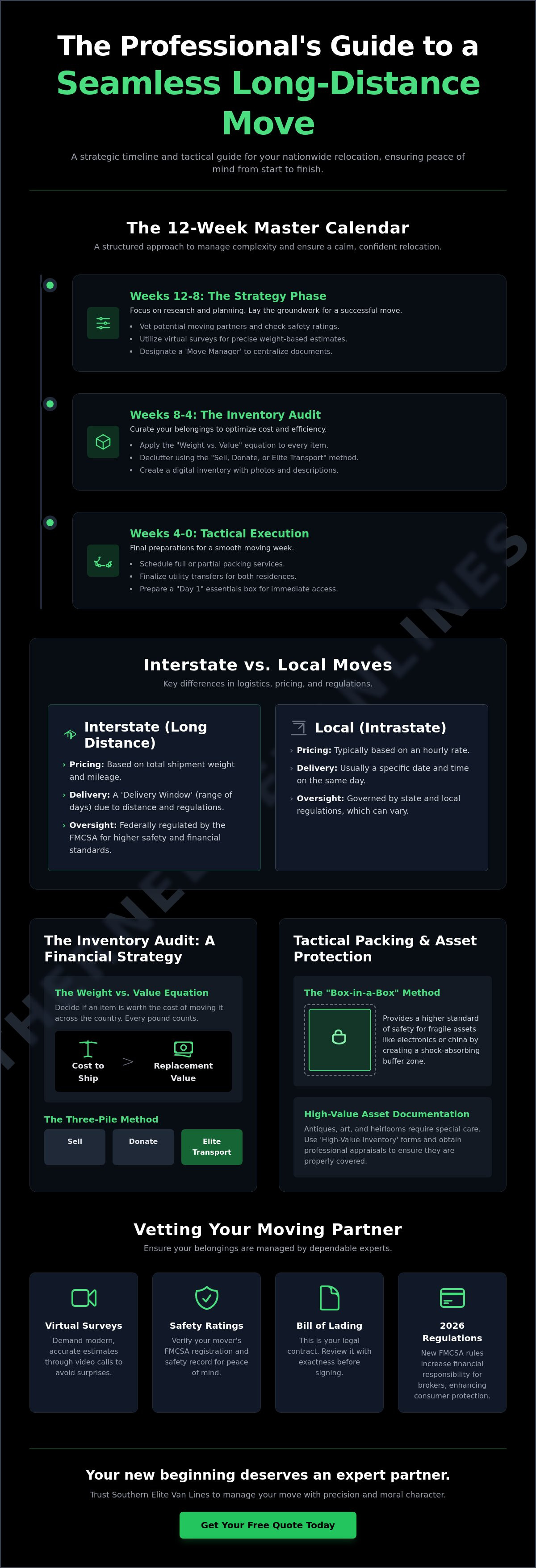
Successful relocation starts with a fundamental shift in perspective. While local moves often permit last-minute adjustments, understanding how to prepare for a long distance move requires a 12-week lead time to account for complex logistics and driver availability. This extended window provides the necessary space to address the psychological effects of moving while ensuring every asset is secured for the journey. You should designate a 'Move Manager' within your household immediately. This person centralizes all documentation, from digital inventory logs to service contracts, preventing the communication breakdowns that often derail cross-country transitions.
Your financial strategy relies on three primary variables: total shipment weight, total mileage, and specialized requirements such as piano moves or full packing services. Unlike local hourly rates, interstate relocations focus on volume and distance. It's vital to distinguish between your 'Launch Date'—the day the truck is loaded—and the 'Delivery Window.' Federal safety regulations and transit distances mean your delivery date is often a range rather than a specific hour. Establishing this expectation early reduces anxiety and allows for a more flexible, stress-free transition to your new home.
The 12-Week Master Calendar
Weeks 12-8 (The Strategy Phase): Focus on vetting your moving partner. A professional long distant movers strategy utilizes this time for virtual surveys to obtain precise weight-based estimates.
Weeks 8-4 (The Inventory Audit): Shipping weight directly impacts your bottom line. Use this month to declutter and decide which items are worth the cost of interstate transit.
Weeks 4-0 (The Tactical Execution): Transition to active preparation. This includes scheduling full or partial packing services and finalizing your utility transfers for both the old and new residences.
Understanding Interstate Moving Logistics
Interstate logistics differ significantly from intrastate moves due to federal FMCSA oversight. These regulations ensure a higher standard of safety and financial responsibility for the consumer. A sophisticated strategy always prioritizes security over speed. Long-haul transit involves specific weight limits and driver rest requirements that cannot be bypassed. The Bill of Lading serves as your primary legal contract during this journey. It's a declarative statement of the terms of service, inventory, and valuation coverage. Reviewing this document with exactness ensures your peace of mind from the moment the truck leaves your driveway until the final box is unpacked.
The Inventory Audit: Curating Your Life for Transit
Your inventory audit is more than a simple organizational task; it is a critical financial strategy. When you analyze how to prepare for a long distance move, you must recognize that every pound added to the truck increases your final cost. A professional relocation relies on the Weight vs. Value Equation. This formula requires you to calculate whether the cost of shipping an item across state lines exceeds its current replacement value or sentimental worth. By making these hard decisions early, you ensure your budget is allocated toward the items that truly matter for your new beginning.
Precision is paramount during this phase. We recommend creating a comprehensive digital inventory by capturing high-resolution photos and detailed descriptions of every asset. This documentation serves as an exact record of an item's condition before transit, providing clarity and security. As you sort through your belongings, utilize the three-pile method: Sell, Donate, or Elite Transport. For items that are climate-sensitive or if your move-in date is delayed, integrating secure storage solutions into your plan protects your investment from environmental stressors. This methodical approach transforms a chaotic process into a controlled, professional operation.
High-Value Asset Documentation
Certain items require a higher standard of care and specific documentation. Antiques, fine art, and family heirlooms should be identified early to complete 'High-Value Inventory' forms. These documents are essential for ensuring your most precious belongings are recognized within your valuation coverage. We suggest obtaining professional appraisals for these items prior to the move to establish their documented worth. Reviewing the official government guide clarifies your legal rights regarding these assets during interstate transit. Full Value Protection represents the gold standard for long-distance security, ensuring the mover is liable for the replacement value of lost or damaged goods.
Decluttering for a Lighter Bill
Reducing your shipment weight is the most effective way to lower your moving estimate. Strategic donation is a sophisticated way to handle unwanted furniture; many national charities coordinate large-scale pickups, allowing you to contribute to a cause while simplifying your logistics. Use 'Move-In Day' visualization to guide your choices. Ask yourself if a specific piece of furniture truly fits the aesthetic and floor plan of your new home. If it doesn't serve a purpose in your future, it shouldn't occupy space in your shipment. This discipline ensures that your transition is as light and efficient as possible, allowing you to focus on the excitement of your new destination.
Vetting and Coordinating with Professional Moving Partners
Selecting a moving partner is a strategic decision that goes far beyond comparing bottom-line numbers. When researching how to prepare for a long distance move, you must prioritize a company's safety profile and Department of Transportation (DOT) credentials. Reliable movers in 2026 utilize virtual surveys, leveraging high-definition video technology to provide precise, weight-based estimates without the need for an initial in-home visit. This digital transformation allows for a transparent, highly accurate quote that reflects the true scope of your inventory. You can verify a mover's current standing through the FMCSA's database, ensuring they comply with the updated financial responsibility requirements for property brokers that took effect on January 16, 2026. This level of scrutiny protects you from "rogue movers" who offer suspiciously low ballpark estimates only to hold assets hostage for additional fees later.
At Southern Elite, we believe in a premium nationwide relocation experience. This standard involves more than just transport; it represents a commitment to moral character and exactness at every stage. We recommend using a comprehensive moving checklist to track your interactions with potential partners, ensuring no detail is overlooked during the vetting process. Our approach treats your relocation as a shared journey, prioritizing your peace of mind through every mile.
Essential Questions for Interstate Movers
Transparency is the foundation of a stress-free move. Always ask if an estimate is "Binding" or "Non-Binding." A binding estimate provides a guaranteed price based on a specific inventory, while a non-binding estimate can fluctuate based on the final weight. You should also inquire about the "Delivery Spread." Cross-country hauls rarely have a single delivery date. Instead, they operate within a window that accounts for transit distance and federal driver rest requirements. Finally, confirm that the crew handling your belongings consists of background-checked, full-time professionals rather than temporary day laborers. This ensures that the hands packing your life are as committed to safety as the strategists planning the route.
Evaluating Valuation and Insurance Options
Standard liability, known as Released Value Protection, is provided at no extra cost but only covers 60 cents per pound per item. For a high-end relocation, this is rarely sufficient. Full Value Protection is the professional recommendation; it requires the mover to be liable for the replacement value of any lost or damaged goods. Many premium carriers require full packing services as a prerequisite for this level of coverage, ensuring that items are secured to industry standards before transit. If an issue arises, understand the documentation required to file a claim. Having your digital inventory from the previous section ready will expedite this process significantly and provide the evidence needed for a swift resolution.
Tactical Packing and Specialized Protection Strategies
Packing for a cross-country haul requires a higher standard of care than a cross-town trip. When you consider how to prepare for a long distance move, you must account for the constant vibrations and shifts inherent in thousand-mile transit. Professional packing services provide the first line of defense, utilizing materials specifically engineered for durability. The "Box-in-a-Box" method is a cornerstone of this approach. By nesting a smaller, cushioned container inside a larger, reinforced box, you create a shock-absorption zone that protects fragile electronics and glassware from impact. This technique ensures that your most delicate items remain undisturbed by the rigors of the road.
For assets that demand absolute exactness in protection, such as marble tabletops, fine art, or intricate chandeliers, specialty crating is essential. These custom-built wood containers eliminate movement entirely, providing a rigid sanctuary for high-value items during the journey. This level of meticulous care is a hallmark of a sophisticated relocation strategy. If your inventory includes a piano, specialized equipment and expertise are required to manage the weight and delicate internal mechanics. Every step of this process is designed to project competence and momentum, ensuring your belongings are treated with the moral character they deserve.
Room-by-Room Packing Priorities
In the kitchen, professional packers use vertical plate packing. Placing plates on their edges, rather than stacking them, significantly reduces the risk of breakage. For the home office, a commercial relocation standard is the ideal benchmark. Secure all data, organize cables with labeled ties, and use custom monitor boxes to protect screens from pressure. In bedrooms, wardrobe boxes allow you to transfer clothing directly from the closet while keeping them on hangers. This methodical approach ensures an effortless unpacking experience once you reach your destination.
Handling 'Non-Allowables' and Hazardous Materials
Federal regulations prohibit movers from transporting certain hazardous materials for safety reasons. This list includes cleaning supplies, aerosols, paint thinners, and propane tanks. You should also adhere to the "Personal Valuables" rule. Jewelry, passports, financial documents, and daily medications must always remain in your personal vehicle. Preparing your appliances is equally critical. Ensure water lines to refrigerators and washers are disconnected and drained at least 24 hours before the truck arrives. Moving parts inside these machines must be secured to prevent internal damage during the haul. This attention to detail is vital for how to prepare for a long distance move with confidence.
Finally, assemble a 72-hour essentials kit. This bag should contain everything your family needs for the first few days at the new residence, including toiletries, basic tools, and chargers. Having these items accessible prevents the stress of searching through hundreds of boxes on your first night. To ensure your belongings receive this level of professional care, consider scheduling full packing services with our expert team today.
The Final Countdown: Seamlessly Navigating Moving Week
The final week of your relocation represents the tactical culmination of months of strategy. As you finalize how to prepare for a long distance move, your focus shifts from planning to active execution. A meticulous final walkthrough is essential to maintain the higher standard of quality you’ve established. You must inspect every cabinet, crawlspace, and attic to ensure no asset is left behind. This level of exactness provides the closure needed for a successful transition. Establishing a clear line of communication with your driver is equally critical. This professional partnership ensures you remain informed throughout the haul, providing a sense of security while your belongings are in transit across state lines.
On moving day, providing a clear, organized workspace for the professional crew is the highest form of etiquette. Offer essential information regarding parking and access points immediately upon their arrival. This momentum allows the team to work with maximum efficiency and care. Once you reach your destination, the arrival protocol begins. You should manage the unloading process with the same level of organization you applied to the loading phase, verifying every item as it enters your new residence. This methodical approach prevents the reader from feeling overwhelmed during the final stages of the journey.
Loading Day Mastery
Precision on loading day prevents complications at your destination. You should personally verify every inventory tag against the driver’s log to ensure an exact match of all assets. Utilize a "First-On, Last-Off" strategy for your shipment. Items you’ll need immediately, such as basic kitchen tools or the 72-hour essentials kit discussed in previous sections, should be loaded last to ensure they are the first items off the truck. For the safety of everyone involved, keep children and pets in a secure, quiet area away from the heavy lifting. This allows the professional movers to navigate your home without interruption, maintaining a steady and safe cadence throughout the operation.
Settling into Your New State
Your new beginning starts with a high-priority unpack. Focus on the kitchen and bathrooms first to establish immediate functionality and comfort for your family. Once the physical aspects of the move are handled, transition to your administrative responsibilities. You should handle your new Driver’s License and voter registration within 30 days of arrival to comply with most state regulations and ensure a smooth legal transition. This integration into your new community is the final step in our shared journey. You must perform a full home inspection to check for any transit-related issues before the moving truck leaves the driveway. This proactive approach ensures that your transition is as seamless and transparent as the planning that preceded it.
Securing Your Future with Strategic Relocation
Mastering a 12-week timeline and executing a meticulous inventory audit are the cornerstones of a successful cross-country journey. These steps ensure you remain in control of both your budget and your assets. By prioritizing specialized protection and vetting your partners with exactness, you transform a complex operation into a series of manageable, confident steps. Understanding how to prepare for a long distance move is ultimately about choosing professional partnership over logistical guesswork. You've established a higher standard of care. It's time to ensure your movers meet it.
Southern Elite Van Lines stands ready as your dependable expert and supportive partner. As A+ Rated Professional Movers with nationwide interstate coverage, we provide the full-service packing and secure storage necessary for an effortless experience. Our team manages every detail with moral character, allowing you to focus on the excitement of your new home. Request Your Precision Long-Distance Moving Quote from Southern Elite Van Lines today. Your new beginning is on the horizon, and we're committed to making your transition seamless and supported.
Frequently Asked Questions
How far in advance should I start preparing for a long distance move?
You should begin the process at least 12 weeks before your desired launch date. This lead time is essential for securing a dependable moving partner and executing the detailed inventory audit required for a successful relocation. Starting early allows you to manage the logistical complexities with calm confidence and prevents the stress of last-minute adjustments.
What is the average cost of a long distance move in 2026?
Industry data for May 2026 indicates that moving a 2-3 bedroom home over 1,000 miles averages approximately $6,300. Smaller relocations, such as a one-bedroom apartment, typically average around $4,500 for a similar distance. These figures represent industry-wide averages; your specific investment will depend on the weight of your shipment and the specialized services you select.
Should I pack my own boxes or hire professional packers for a cross-country move?
Professional packing services are the superior choice for nationwide relocations because they provide a higher standard of safety for your assets. Most premium carriers require professional packing to qualify for Full Value Protection. This ensures your belongings are secured against the specific vibrations of long-haul transit using expert, methodical techniques.
What items are moving companies not allowed to transport across state lines?
Federal law prohibits movers from transporting hazardous materials, perishables, and plants across state lines. This includes common household items like aerosols, cleaning supplies, propane tanks, and ammunition. Understanding these restrictions is a vital part of learning how to prepare for a long distance move without encountering logistical delays or safety violations.
How do I protect my furniture from damage during a multi-day transit?
High-quality furniture pads and industrial-grade shrink wrap provide the primary defense against transit damage. Our professional crews utilize methodical loading patterns to prevent shifting during multi-day hauls across the country. For exceptionally fragile assets like marble tops or fine art, we employ custom wood crating to provide a rigid, secure environment.
What is the difference between a binding and non-binding moving estimate?
A binding estimate provides a guaranteed price based on a specific inventory list provided during your virtual survey. A non-binding estimate is a projection where the final cost is determined by the actual weight of your shipment after loading. We recommend a binding estimate to ensure financial transparency and eliminate surprise costs on delivery day.
How do I track my belongings while they are in transit to another state?
You should establish a direct line of communication with your driver to receive updates throughout the duration of the haul. While "delivery spreads" are standard for cross-country moves due to federal driver rest requirements, regular check-ins provide peace of mind. This shared journey relies on the expert coordination and transparency of your moving partner.
What should I include in my 'First Night' essentials box?
Your essentials box should include toiletries, daily medications, electronic chargers, and basic tools for reassembling furniture. Packing these items separately ensures you have immediate functionality and comfort upon arrival at your new residence. This kit is a critical component of how to prepare for a long distance move with minimal stress during your first 24 hours.


Comments