
Long Distant Movers: The 2026 Strategic Guide to Nationwide Relocation
- nadineharoon
- Aug 14
- 12 min read
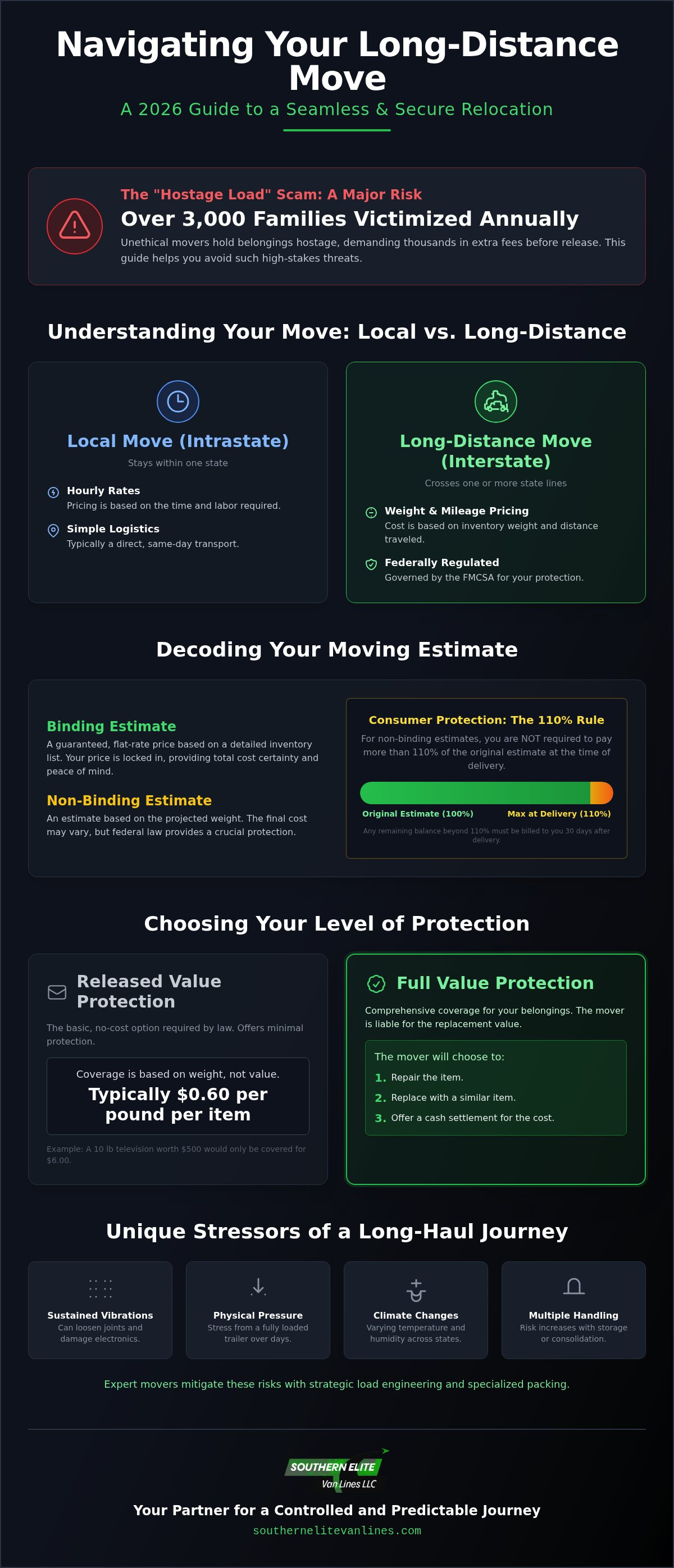
Over 3,000 people annually fall victim to "hostage load" scams, where unethical operators demand thousands in additional fees before releasing a family's belongings. It's a sobering statistic that highlights why choosing the right long distant movers is such a high-stakes decision. You deserve to feel excited about your new beginning, not worried about the safety of your fragile heirlooms or the transparency of your moving quote.
We understand that you're looking for more than just a truck; you need a strategic partner to handle the complexities of logistics and packing with expert precision. This 2026 guide promises to demystify the relocation process, providing you with the tools to secure a guaranteed price and a single point of contact for a seamless transition. Moving across state lines is a major operation, but with the right framework, it becomes a controlled and predictable journey.
We'll walk through the latest federal regulations, including the transition to USDOT numbers as the sole carrier identifier, and explain how to leverage the "110% Rule" for your protection. By the end of this article, you'll have the confidence to select a licensed, national-scale expert who treats your household goods with the moral character and exactness they deserve. Your peace of mind is our priority as we guide you through every mile of this transition.
Table of Contents
Defining Long-Distance Moving: More Than Just Miles
Most people view a move through the lens of hours spent loading a truck. However, the operation shifts from a simple labor task to a complex logistical maneuver for long distant movers. While many consumers believe a 50-mile radius defines a long-distance relocation, the legal boundary is the primary factor. A move is technically considered "long-distance" or "interstate" the moment a truck crosses a state line, regardless of the total mileage. This distinction changes everything from the way your quote is calculated to the federal laws that protect your belongings.
Understanding what is a moving company involves recognizing the difference between local service providers and nationwide carriers authorized to operate across state lines. Local moves typically rely on hourly labor rates. In contrast, long-distance relocations utilize "linehaul" planning. This method calculates costs based on the weight of your inventory and the total mileage. It's a methodical approach designed to ensure transparency and prevent the stress of unexpected hourly overages during a multi-day journey.
Interstate vs. Intrastate: Why the Distinction Matters
Interstate moving is a federally regulated logistics service. When your shipment crosses a state line, it triggers oversight from the Federal Motor Carrier Safety Administration (FMCSA). As of 2026, the USDOT number serves as the sole federal identifier for these carriers, following the phase-out of the old MC numbering system. This federal oversight ensures that national out-of-state movers adhere to strict safety and insurance standards. It also dictates how insurance and liability requirements change. You're entitled to choose between "Released Value Protection" and "Full Value Protection," a choice that directly impacts the security of your high-value items during a nationwide transit.
The Long-Haul Journey: What Happens During Transit
A nationwide transit involves more than just driving from one city to another. Efficiency in this sector often relies on consolidation, where a single large van carries multiple shipments traveling in the same direction. This process optimizes fuel and labor, but it requires a sophisticated tracking system to keep every item secure. Modern fleets use advanced suspension systems and climate-monitored environments to protect inventory over thousands of miles. Unlike a cross-town trip, a long-haul journey subjects household goods to unique stressors:
Sustained road vibrations that can loosen hardware or damage delicate joints.
Significant changes in humidity and temperature across different climate zones.
The physical pressure of a fully loaded trailer over several days of transit.
Multiple handling points if the move requires short-term storage or consolidation.
Expert long distant movers mitigate these risks through specialized loading techniques. They don't just stack boxes; they engineer a load that remains stable and secure across every mountain pass and highway stretch. This level of strategic planning is what separates a premium relocation experience from a standard transport service.
Understanding the Logistics: Weight-Based vs. Flat-Rate Pricing
Pricing for a nationwide relocation isn't a "one size fits all" figure. It's a precise calculation based on the physical weight of your goods and the distance they travel. Unlike local moves where you pay for time, long distant movers use a linehaul charge as the baseline for their quotes. This fee covers the actual transport from point A to point B. By understanding the math behind your estimate, you can avoid the "hidden fee" traps that often plague uneducated consumers during the stress of a move.
The Federal Motor Carrier Safety Administration (FMCSA) mandates that carriers provide clear documentation regarding consumer rights and responsibilities. This includes explaining the specific type of estimate you're signing. A binding estimate is a guaranteed price based on a specific inventory list. A non-binding estimate is a projection; however, the "110% Rule" protects you by ensuring you don't pay more than 110% of that estimate at the time of delivery. Any remaining balance must be billed 30 days after the service is completed. If you're looking for total clarity, requesting a detailed inventory assessment from a professional strategist is the best way to secure a transparent quote.
Weight-Based Fees: The Industry Standard
Weight-based pricing is the traditional pillar of the moving industry. It's often the most equitable choice for large, four-bedroom homes where the sheer mass of the inventory dictates the fuel and labor required. Movers use certified scales to weigh the truck before and after loading. This delta provides an exact, verifiable weight of your shipment. It ensures you only pay for the capacity your belongings actually consume. This method is transparent and verifiable, provided you're working with a licensed carrier that follows federal weighing protocols.
Flat-Rate Options: Predictability for Your Budget
A flat-rate fee offers a "guaranteed price" that remains unchanged, provided your inventory list stays the same. This option is increasingly popular for corporate relocations and cross-country moves where budget predictability is the top priority. It eliminates the anxiety of waiting for a weigh-in at a truck stop. Success with flat-rate pricing depends on extreme inventory precision. If you decide to add a piano or an extra bedroom set at the last minute, the rate will adjust. For many, the peace of mind that comes with a fixed total outweighs the potential for a lower weight-based final bill.
Vetting National Out-of-State Movers: Essential Standards
Identifying legitimate long distant movers requires more than a cursory glance at a website. You must look for concrete evidence of federal compliance. As of 2026, every interstate carrier must display a valid USDOT number, which is now the sole federal identifier for the industry. This number is your gateway to the carrier's safety record and complaint history. Avoid any company that provides only a PO Box or a vague "service area" without a verified physical headquarters. A legitimate operation maintains a brick-and-mortar presence where their fleet and equipment are managed with precision.
Verifying Credentials and Compliance
The FMCSA "Protect Your Move" portal is your most valuable tool for vetting national out-of-state movers. You can enter a company's USDOT number to see their crash history and any recent safety violations. While premium industry benchmarks provide a high bar for safety and logistics, you should apply the same rigorous checklist to any carrier you consider. This includes evaluating whether they follow a traditional "Van Line" model, which uses a network of agents, or an independent long-hauler model. Both have merits, but the independent model often provides a more consistent single point of contact. Watch for red flags such as low-ball quotes that seem too good to be true. These often lead to "hostage load" situations where the price suddenly triples once your goods are on the truck.
The Role of Professionalism and Character
A successful relocation depends on the moral character of the crew entering your home. There's a significant difference between seasonal, temporary labor and career movers who understand the exactness required for a 1,000-mile journey. Professionalism isn't just about moving boxes; it's about the meticulous care given to your most high-value items. You can see these standards in action by reviewing Southern Elite Van Lines: A Case Study in Premium Nationwide Relocation. Career movers treat your belongings as if they were their own, ensuring that fragile items are handled with a steady, expert hand.
Finally, you must understand your protection options. Federal law requires long distant movers to offer Released Value Protection at no extra cost, which covers $0.60 per pound per article. For most families, this is insufficient. Full Value Protection is the premium standard. It ensures that if an item is lost or damaged, the mover must either repair it, replace it with a similar item, or provide a cash settlement for the current market value. This choice provides the security and clarity necessary for a stress-free transition to your new home.
Strategic Packing and Secure Storage for Interstate Relocations
A cross-country journey is a physical endurance test for your household belongings. While standard cardboard boxes suffice for a trip across town, they often collapse under the sustained vibrations and shifting pressures of a 1,000-mile transit. Expert long distant movers recognize that strategic packing is an engineering task rather than a simple chore. It requires high-quality materials and a methodical approach to inventory management to ensure every heirloom and appliance survives the rigors of the road.
Meticulous care starts with a comprehensive inventory system. Every item is tagged and tracked from origin to destination, providing a transparent record that eliminates the anxiety of "lost" boxes. This level of precision is essential when your life's possessions are traveling through multiple climate zones and over varying road conditions. If you want to ensure your high-value inventory is handled with this level of exactness, explore our full packing services to secure your transition.
Full vs. Partial Packing Services
Choosing between full and partial packing services is a strategic decision that balances your budget with your need for protection. Full-service packing involves professional labor for the entire household, where specialists use heavy-duty pads and custom crates to secure everything from kitchenware to large furniture. For those who prefer a "fragile-only" approach, movers focus their expertise on high-risk items like mirrors, fine art, and electronics. Professional-grade materials are non-negotiable for long-haul safety. Custom-built wooden crates provide a rigid shield that standard corrugated cardboard simply cannot match, especially for items with irregular shapes or delicate finishes.
Secure Storage Solutions in 2026
Transitional gaps are common in nationwide moves. Your new home might not be ready the moment the van arrives, or you may be downsizing and need a temporary staging area. Secure warehouse facilities provide a vital buffer during these delays. In 2026, the premium standard for relocation includes climate-controlled storage. These facilities maintain stable temperature and humidity levels, which is critical for preserving the integrity of antique wood furniture, musical instruments, and sensitive electronics. Whether you require short-term staging or long-term storage, utilizing a single-source provider ensures your goods remain under a consistent chain of custody. This continuity provides peace of mind, knowing that the same expert hands guiding your transport are also overseeing the safety of your stored property.
Seamless Transitions: Why a Full-Service Approach Wins
Many people underestimate the hidden costs of a DIY move. Driving a large rental truck across multiple states isn't just a transport task; it's a grueling logistical challenge that demands constant attention. When you calculate the "stress tax," which includes equipment rentals, fuel, hotel stays, and the physical exhaustion of loading, the perceived savings often disappear. Choosing professional long distant movers eliminates these variables, replacing potential chaos with a methodical, well-planned operation that protects your time and your health.
A single-source provider streamlines the entire process, whether you're managing a residential transition or a complex Commercial Relocation Guide: Strategic Business Moving in 2026. Having one point of contact is invaluable for maintaining a clear chain of custody. This expert coordination prevents common interstate delays, such as scheduling conflicts or equipment failures that plague uncoordinated moves. Our approach is further detailed in our Long Distant Movers: The 2026 Guide to a Seamless Nationwide Relocation, which highlights how we manage every variable from origin to destination.
The Strategic Advantage of Professional Logistics
Centralizing your packing, transport, and storage needs reduces the risk of communication breakdowns. When you hire separate vendors for each stage, you're responsible for the gaps between them. A premium full-service partner takes ownership of the entire journey. We don't just move boxes; we engineer a solution that accounts for everything from fragile item crating to transitional storage windows. This level of strategic planning ensures that your household goods arrive on schedule and in the same condition they left, allowing you to focus on settling into your new community.
Your New Beginning Starts with the Right Partner
A successful move is the foundation of your new beginning. At Southern Elite, our philosophy centers on meticulous planning to create an effortless experience for every client. We treat your belongings with the moral character and exactness they deserve, ensuring that every high-value item is handled with a steady, expert hand. We project a sense of calm confidence because we've mastered the complexities of nationwide transport.
You've learned how to vet carriers, understand pricing math, and secure your inventory with specialized packing. The final step is to secure a transparent, guaranteed estimate that reflects your specific needs. Don't leave your nationwide relocation to chance or operators who compromise on safety standards. Contact Southern Elite Van Lines for your nationwide moving quote and let our strategists guide you through a stress-free transition.
Your Journey to a New Horizon Starts Here
Mastering a nationwide relocation requires more than just boxes and a truck; it demands a strategic approach to logistics and a commitment to transparency. You now have the tools to navigate the complexities of interstate regulations and the precision of weight-based or flat-rate pricing. By prioritizing carriers who uphold the highest standards of moral character and exactness, you protect your household's future and your own peace of mind.
Selecting the right long distant movers is the most critical step in ensuring your transition is an effortless experience. We provide nationwide coverage across all 48 contiguous states, specializing in the meticulous handling of high-value items and fragile inventory. From our professional full-service packing to our climate-controlled secure storage facilities, every detail is managed with the expert care you deserve.
Your new chapter should begin with confidence and clarity. Let our team of dependable strategists guide you through every mile of the journey with the supportive partnership you need for a successful move. Get Your Transparent Nationwide Moving Quote from Southern Elite Van Lines
Frequently Asked Questions
What is considered a long-distance move in 2026?
A long-distance move is legally defined as any relocation that crosses a state line, regardless of the physical mileage. In 2026, these are classified as interstate moves and are regulated by the Federal Motor Carrier Safety Administration (FMCSA). Even if you're only moving 20 miles across a border, the carrier must have valid USDOT authority to operate legally. This distinction ensures your rights are protected under federal law during the transition.
How do national out-of-state movers calculate their prices?
Professional carriers primarily use a combination of shipment weight and total mileage to determine costs. This is often called a linehaul charge. Some long distant movers also offer flat-rate pricing based on a comprehensive inventory of your belongings. Additional factors include packing services, storage needs, and specialized crating for fragile items. You'll always receive a written estimate detailing these specific charges before the loading process begins.
How far in advance should I book my long-distance movers?
You should aim to book your relocation at least 8 to 12 weeks in advance of your move date. This lead time is especially critical if you're planning a transition during the busy summer months when demand for a premium fleet is highest. Securing your date early allows for better logistical planning and ensures that your chosen strategist can dedicate the necessary resources to your specific residential or commercial requirements.
What is the difference between a binding and non-binding estimate?
A binding estimate provides a guaranteed, fixed price based on a specific list of items. If your inventory doesn't change, the price won't either. A non-binding estimate is an educated guess based on the projected weight of your shipment. While the final cost can fluctuate with a non-binding quote, federal law prevents movers from charging more than 110% of the original estimate at the time of delivery.
Are my items insured during a nationwide move?
Federal law requires all interstate movers to provide two levels of liability coverage for your household goods. Released Value Protection is the basic option, covering only 60 cents per pound per article. For true peace of mind, many families choose Full Value Protection. This premium standard ensures the mover is responsible for the replacement value of any lost or damaged items, offering a much higher level of security.
Can long-distance movers transport my car or piano?
Specialized transport for high-value items like pianos or vehicles is a core service for many long distant movers. Pianos require custom crating and climate-controlled environments to prevent damage to the delicate internal mechanisms during long-haul transit. Similarly, car transport involves specific equipment to ensure your vehicle arrives safely at its destination. Discussing these specific needs early helps your moving partner coordinate the necessary specialized logistics and equipment.
How long does a cross-country move typically take?
Most cross-country relocations take between 7 and 21 days from the initial pickup to the final delivery window. The exact timeline depends on the total distance, weather conditions, and whether your shipment is consolidated with others. Federal safety regulations also limit the number of hours a driver can spend on the road each day. Your moving coordinator will provide a delivery window to keep you informed throughout the journey.
What items are prohibited from being moved long-distance?
You cannot pack hazardous materials, perishables, or certain high-risk items for a long-haul journey. Prohibited goods include propane tanks, aerosol cans, ammunition, and household cleaners. Most carriers also refuse to transport live plants or open food containers to avoid pest infestations and spoilage. It's best to handle your own "survival kit" of personal documents, jewelry, and medications to ensure these essential items remain with you at all times.


Comments