
Corporate Moving Budget Approval: 2026 Strategic Guide
- nadineharoon
- Aug 8
- 11 min read
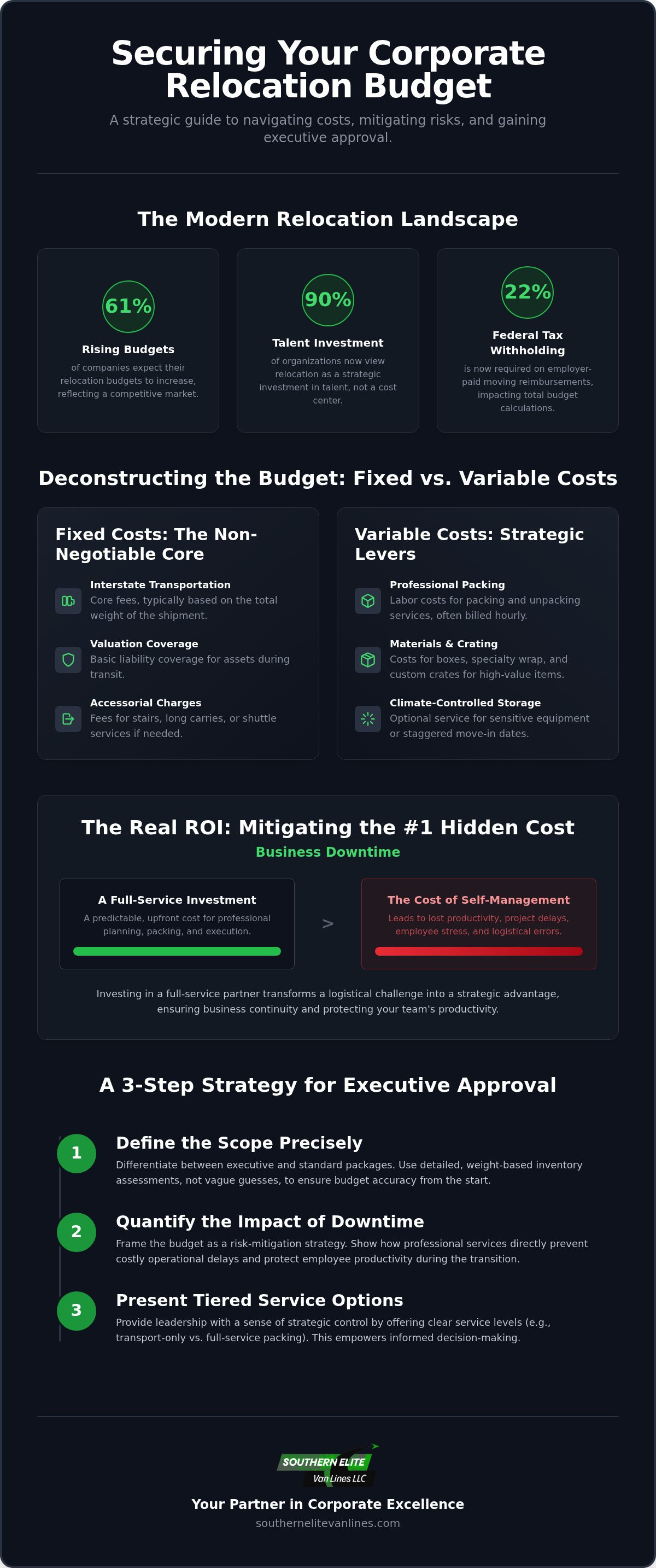
Did you know that 61% of companies expect their relocation budgets to increase this year, even as executive scrutiny reaches an all-time high? When you are presenting a moving budget for corporate approval, the difference between a "yes" and a "back to the drawing board" often comes down to how you frame the numbers. It's natural to feel anxious about justifying the premium costs of full-service moving or explaining why employee reimbursements now face a 22% federal withholding tax under the latest regulations. You want to protect the company's bottom line while ensuring your team remains productive and satisfied during the transition.
This guide will show you how to transform a simple list of expenses into a powerful strategic business case that mitigates risk and ensures continuity. We'll explore the 2026 tax landscape, the hidden costs of business downtime, and the exact data points your leadership needs to see to green-light your plan with confidence. By the end of this article, you'll have a clear roadmap to secure the resources necessary for a seamless, professional relocation that keeps your business moving forward without interruption.
Table of Contents
What is a Corporate Moving Budget and Why Scope Matters?
A corporate moving budget is a comprehensive financial plan that accounts for the physical transport of assets, specialized valuation coverage, and the complex administrative costs of a transition. When you're presenting a moving budget for corporate approval, you aren't just asking for funds; you're proposing a risk-management strategy. In 2026, this plan must account for rising fuel surcharges and the inflationary pressures impacting long-distance moving. Beyond logistics, successful proposals link the budget to organizational milestones like market expansion or talent acquisition. According to recent industry data, 90% of organizations now view relocation spending as an investment in talent recruitment rather than a simple cost center.
Defining the Relocation Scope
Scope determines everything from the approval timeline to the final cost. Relocation services vary significantly depending on whether you're moving a single new hire or an entire regional headquarters. You must differentiate between executive packages, which often require specialized crating for high-value assets, and standard employee transfers. To ensure accuracy, most professionals use weight-based estimates or detailed inventory counts rather than vague room-by-room guesses. Setting a realistic timeline is also vital. Aligning the move with specific fiscal quarters helps leadership manage cash flow and account for the 22% federal withholding tax now required on all employer-paid moving costs under the "One Big Beautiful Bill Act" of 2025.
Executive Relocation: Includes full packing, unpacking, and high-value asset protection.
Standard Transfers: Focused on essential transport and basic packing support.
Inventory Assessment: Detailed weight-based calculations to prevent mid-move cost spikes.
The Role of a Full-Service Partner
Fragmented local movers often lead to hidden costs and logistical gaps. A national van line provides the steady hand and budget predictability that executives demand. Having a single point of contact for nationwide moves reduces administrative friction and ensures accountability across state lines. Full-Service Moving is a comprehensive solution encompassing packing, transport, and unpacking. By utilizing a partner with nationwide coverage, you gain access to climate-controlled storage and specialized equipment that local entities can't always provide. This professional oversight minimizes the risk of business downtime, which is the most significant "hidden" cost in any corporate relocation budget. Predictability is the cornerstone of a successful approval process; a partner who offers transparent, flat-rate pricing helps you avoid the anxiety of unexpected 2026 fuel adjustments.
Categorizing Moving Costs: Fixed vs. Variable Expenses
Organizing your expenses into logical categories provides the transparency that CFOs demand. When you are presenting a moving budget for corporate approval, you must distinguish between non-negotiable fixed costs and variable service levels. Fixed costs typically include interstate transportation fees and basic valuation coverage. Variable expenses, such as professional packing labor and specialized crating, offer room for adjustment based on the company's risk tolerance. In 2026, you must also account for the Fuel Surcharge (FSC). This fee fluctuates based on national averages and can impact long-distance estimates mid-project if not properly forecasted.
Hard Costs: The Logistics Core
Transportation fees form the bedrock of your budget. For most nationwide moves, carriers use weight-based pricing, where the total mass of the shipment determines the base rate. Understanding the difference between binding and non-binding estimates is critical for corporate fiscal planning. A binding estimate provides a guaranteed price based on a specific inventory, whereas a non-binding estimate can shift if the shipment weight exceeds the initial guess. You should also consult federal guidelines on allowable relocation costs to ensure every line item meets compliance standards. Don't forget accessorial charges. These include fees for long carries, stair services, or shuttle needs if a full-sized van cannot reach the loading dock.
Soft Costs: Packing and Materials
Variable expenses often reside in the labor-intensive stages of a move. Professional packing fees are typically calculated by hourly labor or per-box rates. While it's tempting to cut costs here, high-quality materials and specialty crating for fragile electronics prevent expensive damage claims later. Secure storage is another variable to consider. Whether you need short-term warehouse space during a transition or long-term climate-controlled storage for surplus assets, these costs should be isolated in your proposal. Partnering with an expert for Commercial Moving ensures these variables are managed with precision, giving you a predictable total cost of ownership.
Predictable budgeting also requires looking at the duration of the move. If a relocation spans multiple weeks, you may need to allocate funds for temporary housing or extended storage-in-transit. By separating the logistics core from these service-based variables, you present a budget that is both flexible and defensible. This level of detail demonstrates that you've considered every operational hurdle, from the initial pack to the final delivery at the new corporate destination.
Beyond the Bottom Line: Calculating ROI and Risk Mitigation
When you're presenting a moving budget for corporate approval, the most persuasive argument isn't the lowest price. It's the highest return on investment. Executives view a move as a period of extreme vulnerability. Every hour an employee spends packing boxes or searching for lost hardware is an hour of lost revenue. By reframing the relocation as a risk-mitigation strategy, you show leadership how a premium service level protects the company's most valuable assets: its people and its time. A well-executed move ensures that business operations continue with minimal friction, turning a logistical hurdle into a competitive advantage.
Quantifying Business Continuity
Operational gaps are the silent killers of a corporate budget. A poorly managed move can result in days of lost productivity as staff struggle to set up their new workspaces. Utilizing Unpacking Services and professional Commercial Moving teams allows your employees to focus on their core responsibilities from day one. Instead of spending a week in transition, they return to full capacity within hours. This efficiency is a critical metric for ROI. When comparing service levels, consider a "Risk vs. Reward" perspective. A low-bid mover might save money upfront, but the total cost of ownership skyrockets if it results in a three-day operational blackout.
Elite Service: Minimal downtime, high employee morale, and immediate operational readiness.
Low-Bid Service: High risk of transit damage, extended downtime, and significant staff frustration.
Strategic Advantage: 90% of organizations now view relocation spending as a tool for talent recruitment and retention.
Insurance and Valuation Coverage
Security is the foundation of a professional relocation. Standard liability coverage often provides only minimal protection, which is rarely sufficient for high-value corporate assets. Full Value Protection is the standard for organizations that value peace of mind. This ensures that if an item is damaged, the carrier is responsible for its repair or replacement value. The risks of "Self-Moving" or using unvetted local labor are significant, often involving complex workers' comp and liability concerns that far outweigh the initial savings.
Secure, climate-controlled storage also acts as a necessary hedge against real estate delays. If a new office space isn't ready on schedule, having a seamless transition into a high-security warehouse prevents the chaos of temporary, unmonitored holding areas. This level of meticulous care reinforces the premium nature of the move, ensuring that your budget proposal reflects a commitment to safety, exactness, and moral character. By choosing a partner that prioritizes Full Packing Services and specialized crating, you eliminate the variables that lead to hidden costs and business disruption.
Presentation Strategy: Framing the Move for Executive Approval
Writing a budget is only half the battle; the real challenge lies in selling it to the C-suite. Executives don't view line items through the lens of logistics; they see them as trade-offs for growth. When you are presenting a moving budget for corporate approval, you must lead with the "Strategic Why." Connect the relocation to specific revenue targets, such as entering a more lucrative market or centralizing operations to reduce long-term overhead. By framing the move as a catalyst for expansion, you transform a cost center into a strategic investment.
To give leadership a sense of control, present three tiered options: Bronze, Silver, and Gold. The Bronze tier covers the essentials, while the Gold tier represents a fully managed, white-glove experience. This approach shifts the conversation from "Should we do this?" to "Which level of risk are we willing to accept?" Highlighting the "Cost of Inaction" is equally vital. Explain the financial consequences of a botched move, including lost billable hours and potential damage to high-value equipment. Using data-driven storytelling, such as citing the 61% of companies that increased relocation budgets in 2026 to stay competitive, helps justify the spend for a commercial relocation that supports the bottom line.
Visualizing the Data
Executives process information quickly, so skip the dense spreadsheets in favor of skimmable charts. Create a visual breakdown that clearly separates transportation costs from value-added services like packing and storage. A transparent timeline that aligns with the corporate calendar demonstrates that you've considered the impact on quarterly goals. A successful moving budget is a document that balances logistical precision with strategic business goals. This clarity builds immediate trust and positions you as a supportive partner in the company's success.
Handling Executive Objections
Be prepared for the "Lump Sum" argument, where leadership suggests giving employees a flat fee instead of a managed move. Counter this by showing the hidden administrative burden and the 2026 tax implications mentioned earlier; a managed move reduces the employee's stress and keeps them focused on their work. Defend premium services by linking professional packing directly to asset protection. Proving the reliability of a long distant movers partnership ensures the board that you have a steady, expert hand guiding this complex transition. If you're ready to build a defensible case for your next move, contact our corporate relocation specialists for a detailed consultation.
Southern Elite Van Lines: Your Partner in Corporate Excellence
Southern Elite Van Lines understands that a successful relocation is built on trust and transparency. When you are presenting a moving budget for corporate approval, you need a partner that provides more than just a truck. You need fixed costs and a proven track record to satisfy internal auditors. We specialize in Long Distance Moving and Commercial Moving, offering the flat-rate pricing models that CFOs demand in 2026. By eliminating the ambiguity of variable estimates, we empower HR and procurement teams to submit proposals with absolute confidence and clarity. Our team acts as a steady, expert hand, guiding you through the complexities of relocation logistics while ensuring your fiscal goals remain on track.
National Reach, Elite Service
Our nationwide coverage ensures a seamless transition across state lines, regardless of the destination. We utilize modern vehicles and high-quality materials to provide maximum asset protection for your company’s high-value equipment. As a dependable expert and supportive partner, we treat every move as a shared journey toward your organization’s next chapter. You can see our methodology in action by reviewing the Southern Elite Van Lines case study. From Full Packing Services to specialized Piano moves, our capabilities scale to meet the most demanding corporate requirements without compromising on meticulous care. We prioritize your peace of mind as much as the physical transport of your assets.
Getting Started with Your Estimate
The foundation of an approvable quote is a detailed inventory. Our specialists work closely with your team to assess the volume of goods and identify specialized needs like climate-controlled Storage or custom crating. This meticulous approach ensures that the budget you present is accurate, defensible, and free from the hidden costs that often trigger budget rejections. We help you refine the scope of the project to manage costs while maintaining the high-end service expectations of your executive team. By providing clear logistical facts paired with the emotional support your staff needs, we ensure the entire process is effortless and uninterrupted. We don't just move boxes; we move your business forward with precision and moral character.
Mastery of the corporate move requires a strategist who values your business continuity. We are here to help you bridge the gap between logistical necessity and executive approval. Contact our corporate relocation specialists for a customized quote today.
Securing a Seamless Transition for Your Organization
Mastering the nuances of corporate relocation in 2026 requires a shift from viewing moving as a cost to seeing it as a strategic investment. By defining a clear scope and categorizing expenses with precision, you provide the transparency that executive leadership demands. A well-structured proposal doesn't just list fees; it highlights the risk mitigation and business continuity that a professional partnership provides. When you are presenting a moving budget for corporate approval, your goal is to demonstrate how a managed transition protects the company's most valuable assets and maintains productivity during a period of change.
Southern Elite Van Lines stands ready to be your supportive partner in this journey. We offer nationwide long-distance moving expertise and comprehensive full-service packing and secure storage solutions to ensure your move is effortless and uninterrupted. Our professional, authoritative logistics management provides the steady hand needed for complex state-to-state transitions. Don't leave your next corporate move to chance. Secure Your Corporate Relocation Quote with Southern Elite Van Lines today and take the first step toward a successful, green-lit relocation. We're excited to help your team embark on its next chapter with total confidence.
Frequently Asked Questions
What are the most common hidden costs in a corporate moving budget?
Hidden costs frequently include accessorial charges like long carries, stair fees, or the need for a shuttle if a large van cannot access the building. You should also account for IT disconnection fees and the cost of disposing of surplus furniture. Identifying these variables early ensures that your budget remains transparent and prevents unexpected financial hurdles during the final stages of the relocation.
How far in advance should I present a moving budget for corporate approval?
You should aim to present your budget at least 90 to 180 days before the anticipated move date. When presenting a moving budget for corporate approval, this timeline allows for thorough internal fiscal reviews and ensures you secure a reliable national carrier. Early planning prevents the stress of last-minute price spikes and guarantees that your relocation aligns with the company's broader quarterly goals.
Is it better to offer employees a relocation lump sum or a managed move?
Managed moves are almost always superior for talent retention and business continuity. While a lump sum might seem simpler, it forces the employee to manage complex logistics during a stressful career transition. A managed move provides a steady, expert hand to guide the process, allowing your staff to remain productive and engaged with their new roles from day one.
How do I justify the cost of professional packing to my CFO?
When presenting a moving budget for corporate approval, you should justify professional packing as a productivity safeguard. Delegating the packing process to experts ensures that your employees remain focused on revenue-generating tasks rather than logistical chores. This strategic choice also reduces the likelihood of expensive transit damage, which can lead to costly replacement delays and operational interruptions.
What is the difference between binding and non-binding moving estimates?
A binding estimate provides a guaranteed price for the services listed in the quote, ensuring total budget predictability. A non-binding estimate is a flexible projection where the final cost depends on the actual weight of the shipment and the services performed. Most corporate procurement teams prefer binding estimates to avoid mid-move budget adjustments and ensure fiscal exactness for the organization.
How does weight-based pricing work for long-distance corporate moves?
Weight-based pricing relies on the tare weight of the moving vehicle. The carrier weighs the truck before loading your goods and again after the shipment is secured. The difference between these two measurements represents the net weight of your assets, which serves as the primary basis for your long-distance transportation charges. This transparent process ensures you only pay for the specific volume you transport.
Can I include storage costs in my corporate relocation budget?
Yes, you can and should include both short-term and long-term storage in your proposal. Storage-in-transit is often necessary when office renovations or residential closings don't align perfectly with the move dates. Including these costs upfront prevents the anxiety of seeking emergency funds later and ensures your assets remain in climate-controlled, secure facilities throughout the entire transition.
What insurance coverage is standard for corporate moves in 2026?
Full Value Protection is the standard for corporate relocations in 2026. Unlike basic carrier liability, which only pays a minimal amount per pound for damaged items, this coverage ensures the carrier is responsible for the replacement value or repair of lost or damaged goods. This level of protection provides the moral character and peace of mind necessary for a high-stakes corporate transition.


Comments