
Commercial Moving Logistics: A Strategic Guide to Business Relocation in 2026
- nadineharoon
- Aug 13
- 11 min read
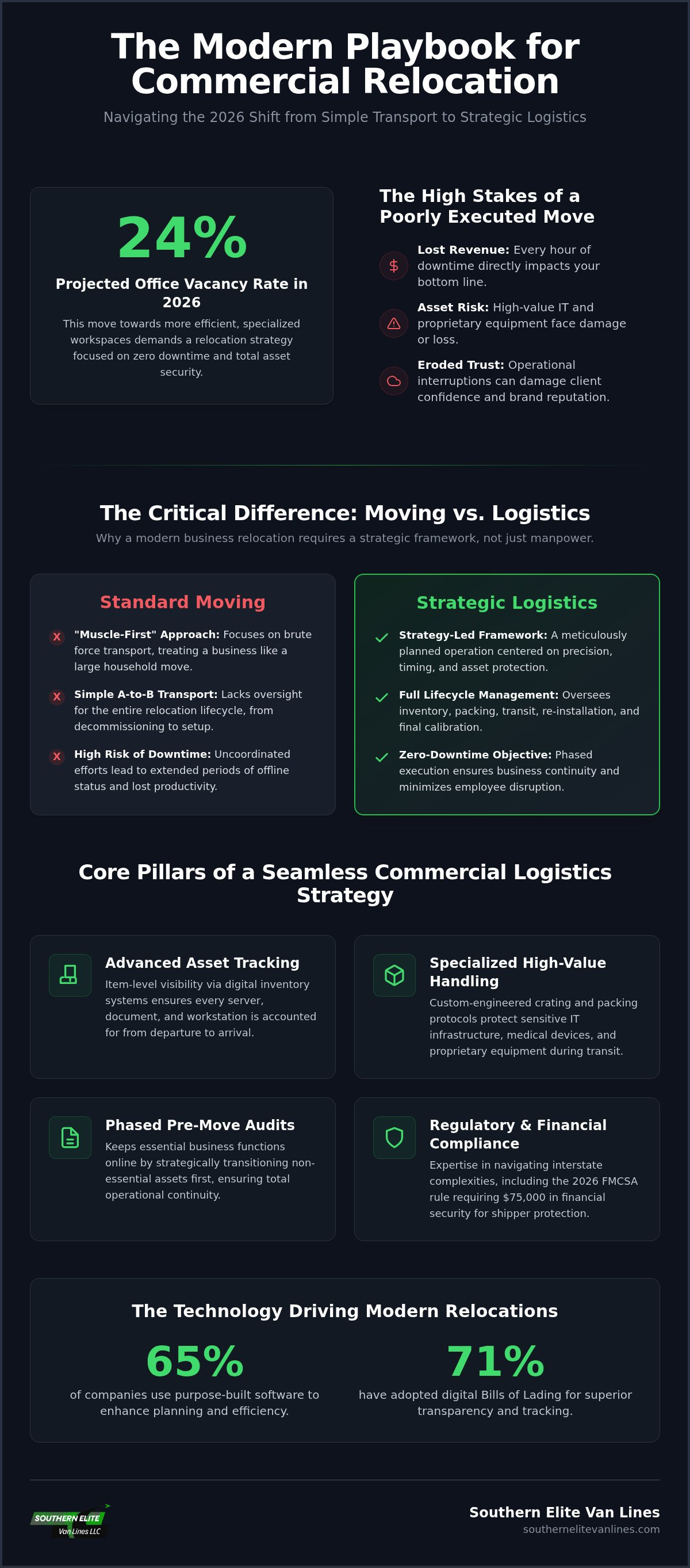
With office vacancy rates projected to reach 24% in 2026, your next move is likely part of a broader shift toward more efficient, specialized workspaces. In this environment, mastering commercial moving logistics has evolved from a simple chore into a critical strategic operation. You already know that every hour your team spends offline represents lost revenue and fractured momentum. It's a high-pressure scenario where the safety of your high-value assets and the continuity of your operations sit squarely on the line.
We understand the weight of coordinating multi-departmental shifts across state lines while keeping your staff focused on their core roles. This guide provides the roadmap you need to master the complexities of modern relocation, ensuring a transition defined by total asset security and zero downtime. You'll gain a clear understanding of the logistical process and the confidence to manage interstate complexities with ease. We'll explore the latest 2026 regulatory updates, technology-driven tracking, and proven strategies for a seamless, elite-level move that protects your bottom line.
Table of Contents
The Critical Role of Logistics in Modern Commercial Relocation
Moving a business in 2026 is no longer a simple matter of loading trucks and driving to a new zip code. Today, commercial moving logistics represents the strategic coordination of people, physical assets, and precise timing. Standard moving services often fail because they treat a corporate relocation like a residential move on a larger scale. A modern business is a complex ecosystem of high-value IT infrastructure, proprietary data, and human talent. If one element of the move falls out of sync, the entire operation risks a costly standstill.
Elite logistical planning serves as your primary risk mitigation tool. It replaces the "muscle-first" approach of traditional movers with a strategy-led framework. This transition ensures that your brand reputation remains intact and your team stays productive. By positioning the relocation as a precision logistics operation, you transform a potentially chaotic event into a controlled, professional transition that supports your long-term growth objectives.
Defining the Logistical Framework
There is a fundamental difference between simple transport and managed logistics. While transport focuses on getting items from point A to point B, managed logistics oversees the entire lifecycle of the move. This includes everything from initial inventory audits to the final calibration of workstations at the destination. Interstate moves add another layer of complexity, requiring deep knowledge of federal compliance. For instance, as of January 2026, the FMCSA requires brokers and freight forwarders to maintain $75,000 in financial security, a regulation designed to protect shippers from operational instability. Commercial logistics is the synchronized movement of physical assets and digital infrastructure.
The Stakes of Business Continuity
The true cost of a relocation isn't found in the service quote; it's found in the cost of downtime. With nationwide office vacancy rates projected to hit 24% in 2026, many firms are relocating to more efficient, high-tech spaces. A poorly executed move can lead to extended periods of offline status, which erodes client trust and damages your bottom line. Logistical precision preserves this continuity by ensuring that critical infrastructure is decommissioned and reinstalled in a phased, logical order.
Employee morale is another critical factor. Leadership must account for the human element of a transition. Easing the stress of relocating for your staff is a logistical priority that directly impacts long-term retention and productivity. When a move is handled with calm, expert hands, employees feel supported rather than disrupted. This sense of security allows your team to maintain their focus on the business while we handle the complexities of the physical transition.
Core Pillars of a Seamless Commercial Logistics Strategy
A successful relocation rests on four structural pillars. These elements ensure that your transition is not just a physical move but a strategic advancement. In 2026, technology plays a pivotal role in these operations. Industry data indicates that over 65% of moving companies now use purpose-built software, while 71% have adopted digital Bills of Lading to enhance transparency. By aligning your move with these industry best practices, you establish a baseline for security and efficiency that protects your corporate interests.
Advanced Asset Tracking and Inventory
Precision in commercial moving logistics starts with item-level visibility. We don't just count boxes; we track assets. Every piece of hardware and sensitive corporate document must be accounted for from the moment it leaves your old office until it's positioned in the new one. Southern Elite Van Lines utilizes meticulous documentation to eliminate the "lost asset" variable that plagues less organized moves. This level of detail is essential for maintaining your digital infrastructure and meeting strict regulatory compliance standards during a transition.
Specialized Handling for High-Value Items
Your high-value equipment requires more than standard packing materials. Medical devices, server racks, and industrial machinery demand custom crating solutions. These aren't off-the-shelf boxes; they're engineered containers designed to withstand the rigors of long-distance transit. Our modern fleet is specifically designed for high-value asset protection. We utilize climate-controlled environments to prevent damage from temperature fluctuations or humidity, ensuring your most sensitive electronics arrive in perfect working order. Professional packing standards must always match the inherent value of the inventory being moved.
Often, a gap exists between site decommissioning and new site readiness. Secure, climate-controlled storage provides the necessary bridge. This ensures your assets remain in a pristine, ready-to-install state regardless of construction delays or lease timing. Navigating nationwide transportation networks requires a partner who understands the shifting landscape of 2026 freight markets, where van spot rates are predicted to grow by 6% in Q4. If you're planning a complex relocation, choosing a strategic moving partner ensures that your budget and timeline remain secure.
Beyond Transport: Why Logistics Outperforms Standard Commercial Moving
Many business leaders assume hiring a moving company is a simple procurement task based on the lowest hourly rate. This misconception often leads to fragmented execution and hidden costs. High-end commercial moving logistics focuses on the "why" and "when" rather than just the "how." While basic labor provides the physical strength to lift furniture, a logistics partner provides the strategic intelligence to protect your organization's workflow. You aren't just paying for trucks; you're investing in a managed system designed to prevent operational friction.
A centralized point of contact is the hallmark of a professional logistics provider. Coordinating a move across multiple departments or long distances requires a steady hand to synchronize IT shutdowns, facility access, and transport schedules. By shifting the focus from muscle to strategy, you ensure that every decision serves the broader goal of business continuity. This approach transforms the moving process from a disruptive event into a controlled, professional milestone.
Strategic Planning vs. Basic Labor
Successful commercial relocation requires a dedicated project manager who understands your specific industry needs. This individual serves as the bridge between your executive team and the physical move crew. Unlike residential movers who might charge by the hour, premium logistics providers utilize flat-rate or weight-based pricing models for interstate moves. This provides your finance department with budgetary certainty. It also ensures the mover's incentives align with your need for efficiency rather than billable hours. A strategic plan accounts for every variable, from elevator reservations to specialized loading sequences for sensitive equipment.
Navigating Interstate Complexities
Crossing state lines introduces a maze of federal and local regulations that basic moving companies aren't equipped to handle. A national van line manages the heavy lifting of permits, weight station compliance, and state-specific requirements. The American Trucking Associations Moving & Storage Conference sets the industry standard for these operations, ensuring that providers adhere to rigorous safety and ethical benchmarks. Adhering to these standards is vital for maintaining federal compliance during long-haul transits.
Long-distance transportation for fragile assets involves specific risks that demand more than just heavy padding. We mitigate these risks through advanced suspension systems in our modern fleet and specialized loading techniques that prevent shifting during transit. This focus on commercial moving logistics allows your business to resume operations in a new state without the setbacks caused by damaged inventory or regulatory delays. Strategy, not just strength, is the key to a successful national move.
Minimizing Downtime: A Checklist for Logistical Precision
Ensuring business continuity requires more than just a moving date. It demands a phased approach where non-essential items move first, allowing your core operations to function until the final transition. A pre-move audit is the first step in this process. By identifying which assets are critical for daily output, you can schedule their transport during the final hours of the relocation. This logistical precision prevents the "dark period" where your team has neither a functioning old office nor a ready new one.
IT and infrastructure decommissioning must synchronize perfectly with the physical move. Servers, workstations, and networking equipment require specialized handling and a clear sequence of disconnection. If the IT team and the moving crew aren't in lockstep, you risk damaging high-value assets or losing data connectivity at the new site. Site readiness is equally vital. The destination must be fully prepared with active power, internet, and security systems before the first desk arrives. Effective commercial moving logistics ensures that your new facility is an asset from day one, not a bottleneck.
The 90-Day Relocation Roadmap
Planning begins 90 days before the move with a comprehensive site survey and inventory assessment. At the 60-day mark, you should finalize floor plans and begin the phased packing of non-essential archives or seasonal equipment. Scheduling the final transport during off-peak hours or over a weekend further reduces the impact on your clients and revenue. A successful national commercial move typically requires a 90 to 120-day planning cycle to ensure every logistical variable is accounted for before the first truck arrives.
Coordinating the Human Element
Relocation is often as much about people as it is about furniture. Clear communication prevents the internal friction that can slow down a move. Provide employees with specific training on how to pack their personal workspaces and label their equipment correctly. Managing expectations across different departments ensures everyone understands their role in the transition. Regular logistical updates to stakeholders build trust and keep the momentum high. If you want to eliminate the uncertainty of your next relocation, Southern Elite Van Lines offers the strategic oversight needed for a seamless transition.
Southern Elite Van Lines: Your Partner in National Commercial Logistics
Southern Elite Van Lines positions itself as a specialized partner for organizations requiring a higher standard of care. While other providers might focus on regional office shifts, our focus remains on the complexities of national commercial moving logistics. We provide a polished, high-end experience that mirrors your own corporate standards. Our team acts as a steady, expert hand, guiding your business through the intricate process of interstate relocation with calm authority. We view every relocation as a shared journey, prioritizing your operational security at every turn.
The Elite Standard of Asset Protection
We utilize premium materials and a modern transportation fleet specifically designed to safeguard sensitive equipment. Every packing strategy and crating solution reflects our commitment to perfection and exactness. Our crew members aren't just laborers; they're supportive partners who value your peace of mind as much as the physical safety of your assets. This personalized assistance ensures that your high-value IT assets and proprietary machinery arrive in pristine condition. You can learn more about our approach to long distant movers for commercial clients to see how we manage nationwide transitions without compromise.
Securing Your Business Future
Choosing a premium logistics partner is an investment in your company's future stability. An efficient move sets the tone for your new chapter, ensuring your team hits the ground running on day one. We specialize in providing that effortless, uninterrupted experience that allows you to maintain your focus on high-level goals. Our methodical rhythm ensures that every step, from the initial inquiry to the final equipment setup, is transparent and logical. We eliminate the clutter and confusion often associated with large-scale moves, replacing it with a sense of momentum and clarity.
The stakes of a national relocation are too high to leave to chance. By securing a comprehensive logistical assessment, you gain a clear roadmap for your transition. This proactive step identifies potential bottlenecks before they impact your timeline. We invite you to experience a relocation process defined by meticulous care and professional excellence. Start your transition today by requesting your tailored commercial moving logistics quote and discover the difference that a strategic partner makes in your business relocation.
Secure Your Business Continuity with Strategic Relocation
Your move represents a significant milestone in your organization's history. By prioritizing commercial moving logistics, you transform a complex transition into a streamlined operation that protects your revenue and your team. We've explored how a strategy-first approach replaces basic labor with precision, ensuring that high-value IT assets and sensitive digital infrastructure remain secure. Success in 2026 requires a partner who understands that zero downtime isn't just a goal; it's a requirement for maintaining your competitive edge.
Southern Elite Van Lines provides the expert interstate compliance and professional packing services necessary for a seamless national journey. Our secure climate-controlled storage solutions offer the flexibility you need during phased moves. We're here to act as your strategic partner, guiding you through every mile with calm confidence and meticulous care. It's time to focus on your new beginning while we manage the complexities of the physical shift.
Request Your Custom Commercial Logistics Quote from Southern Elite Van Lines and take the first step toward an effortless business relocation. We look forward to supporting your continued growth and success.
Frequently Asked Questions
What is the difference between commercial moving and commercial logistics?
Commercial moving focuses on the physical labor of transporting items, while commercial logistics involves the strategic coordination of assets, people, and data. Logistics manages the entire lifecycle of a relocation, ensuring business continuity through project management and phased timelines. It's the difference between simple transport and a synchronized operation designed to protect your organization's operational rhythm and long-term momentum.
How do commercial logistics providers minimize business downtime?
Providers minimize downtime through meticulous pre-move auditing and phased relocation strategies. By identifying your most essential assets, experts ensure your core team stays online while non-essential items move first. This strategic sequencing allows for a rolling transition where your digital infrastructure and physical workspace are ready simultaneously at the destination, preventing the dark periods that often plague unplanned moves.
Is climate-controlled storage necessary for commercial moves?
Climate-controlled storage is vital for protecting sensitive corporate assets such as IT servers, high-end electronics, and delicate paper archives. Temperature and humidity fluctuations can cause irreversible damage to internal circuitry or warp physical documents. Utilizing these specialized facilities ensures your inventory remains in peak condition during any gap between site decommissioning and new site readiness, providing essential peace of mind.
How are interstate moving fees calculated for commercial relocations?
Interstate fees are typically calculated based on the total weight of the shipment and the distance traveled across state lines. Unlike local moves that often use hourly rates, national commercial relocations utilize a weight-based or tariff-based system. This model provides budget certainty for your finance department by locking in costs based on verified inventory weight and strict federal compliance requirements.
What should be included in a commercial moving logistics plan?
A comprehensive commercial moving logistics plan must include a detailed asset inventory, an IT decommissioning schedule, and a 90-day relocation roadmap. It should also clearly outline employee communication protocols and site readiness checklists for the new facility. This document serves as the operational guide, ensuring that every department head and stakeholder understands their specific role throughout the transition process.
Can commercial movers handle specialized IT and data center equipment?
Specialized logistics providers are specifically trained to handle high-value IT infrastructure and complex data center equipment. This process involves custom crating, anti-static packing materials, and precision loading in modern vehicles equipped with air-ride suspension. These technical assets require a level of care that far exceeds standard office moving, focusing on the safe transport of sensitive hardware and server racks.
How do you track assets during a long-distance commercial move?
Asset tracking utilizes modern inventory management systems and item-level documentation to maintain visibility. Each piece of equipment is assigned a unique identifier that is scanned at every stage of the journey. This provides real-time oversight and ensures that high-value assets are accounted for from the initial loading until the final workstation installation at your new corporate headquarters.
What insurance coverage is required for a national commercial relocation?
National relocations require a combination of cargo insurance and general liability coverage to protect against transit risks. For high-value commercial moving logistics, we recommend full-value protection rather than basic released value. This ensures that your organization is fully reimbursed for the replacement cost of any asset in the unlikely event of damage during the interstate journey, safeguarding your financial interests.


Comments